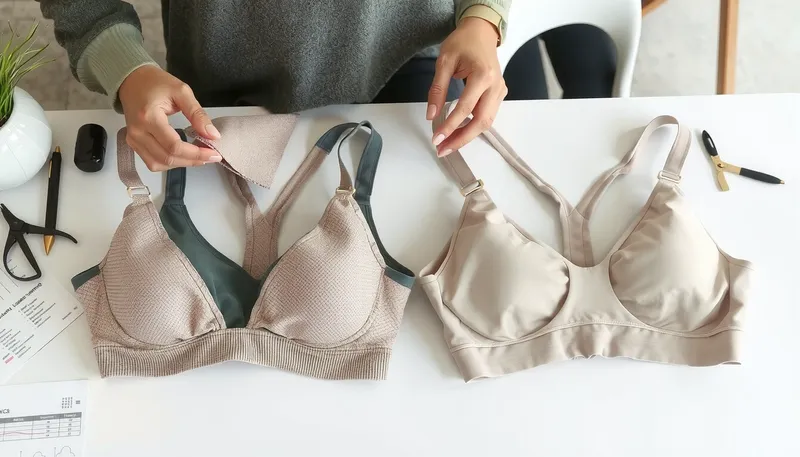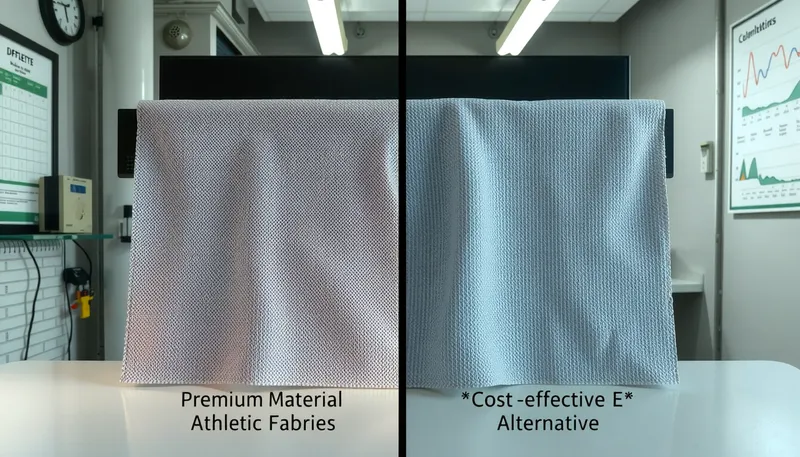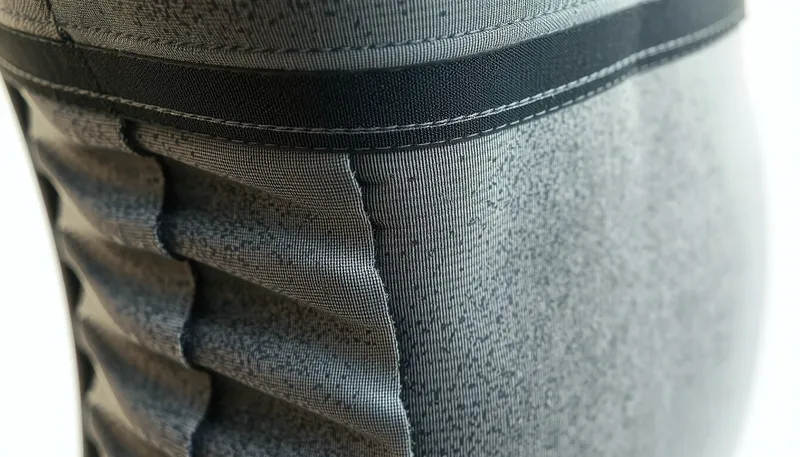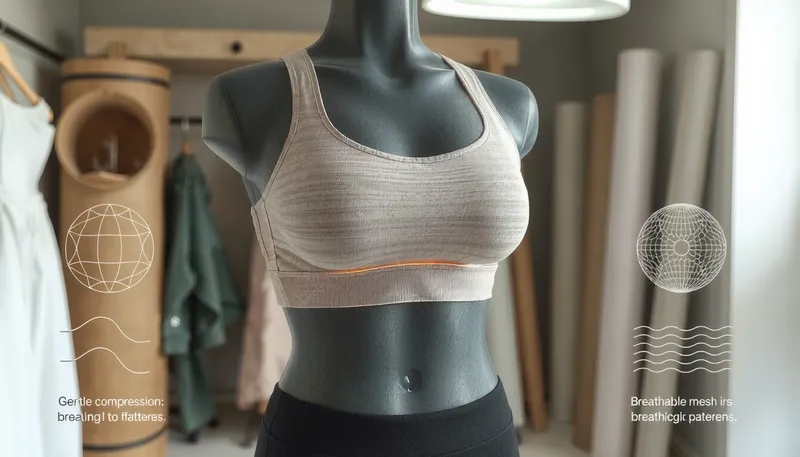
Postpartum activewear fabric requires a fundamentally different mechanical property from standard performance activewear: gentle recovery — defined as ASTM D3107 stretch recovery in the 80-90% range at 40% biaxial elongation — which provides structural support to recovering abdominal and pelvic floor muscles without the >95% recovery force that standard compression fabrics generate and that can exert 8-15 mmHg of intra-abdominal pressure on a healing core. D083 Air-Sculpt 34™ (66% Nylon 20D/24F + 34% Spandex 20D, 220 GSM warp-knit air-layer, OEKO-TEX 100 Class I certified) delivers this gentle-recovery profile through a three-layer knit architecture where 34% Spandex content is engineered for elongation depth rather than compression force — the spandex filaments are knit under 15-20% lower tension than in compression-grade fabric, producing a "soft hug" recovery force of approximately 0.8-1.2 N/cm at 30% elongation versus 2.5-4.0 N/cm for 34% Spandex compression fabrics. This article defines the measurable difference between support and squeeze for postpartum activewear specification.
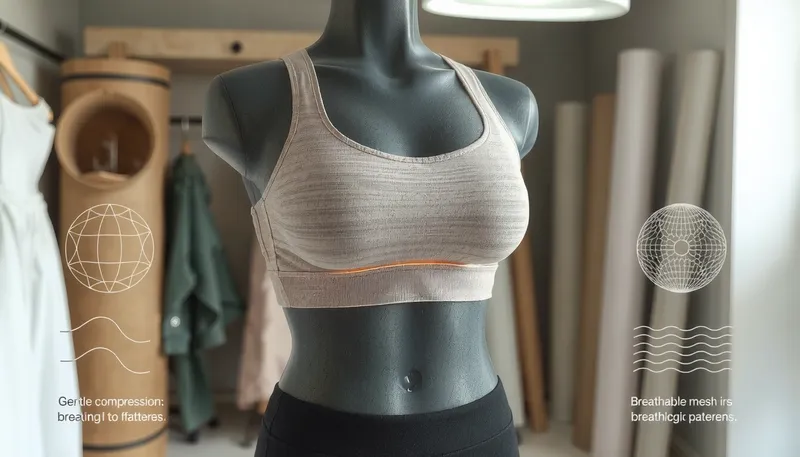
Postpartum Body Mechanics: Why Standard Compression Fails After Childbirth
Standard compression activewear — engineered for >95% ASTM D3107 recovery at 40% biaxial stretch and recovery forces of 2.5-4.0 N/cm at 30% elongation — is structurally incompatible with postpartum physiology for three measurable reasons: (1) intra-abdominal pressure exceeding 10 mmHg can stress a healing linea alba during the 6-12 week diastasis recti recovery window, (2) the 34%+ Spandex compression knit generates circumferential force that can impede pelvic floor muscle re-coordination by restricting the proprioceptive feedback loop between abdominal wall stretch and pelvic floor contraction, and (3) hormonal relaxin levels remain elevated for 4-6 months postpartum, increasing connective tissue compliance by approximately 30% and making over-compressed tissue more susceptible to strain injury. The engineering requirement is not "less compression" — it is a deliberately different recovery curve where the fabric yields to the body rather than forcing the body to yield to the fabric.
The distinction between support and squeeze is measurable through the hysteresis loop of an ASTM D3107 stretch-recovery test. A standard compression fabric generates a wide hysteresis loop: high force during extension (3-5 N/cm), high force during retraction (2.5-4.0 N/cm), enclosing a large energy-loss area. A gentle-recovery fabric generates a narrow loop: low extension force (1.5-2.5 N/cm), low retraction force (0.8-1.2 N/cm), enclosing a small energy-loss area — the fabric "lets go" as the body moves rather than fighting back. This is the mechanical definition of the "soft hug" that postpartum users describe subjectively, and it is achieved by reducing spandex filament tension during knitting by 15-20% relative to compression-grade production settings.
| Recovery Profile | Recovery Force at 30% Elongation | ASTM D3107 Recovery % | Intra-Abdominal Pressure | Suitable For |
|---|---|---|---|---|
| Gentle Recovery (D083 Postpartum) | 0.8-1.2 N/cm | 80-90% at 40% biaxial | <5 mmHg | Postpartum weeks 6-24, diastasis recti recovery, pelvic floor rehab |
| Standard Activewear | 1.5-2.5 N/cm | 90-95% at 40% biaxial | 5-10 mmHg | General fitness, non-postpartum daily wear |
| Compression Grade | 2.5-4.0 N/cm | >95% at 40% biaxial | 10-15+ mmHg | High-impact sports, medical compression (post-clearance) |
| Medical Compression | 4.0-8.0 N/cm | >98% at 30% uniaxial | 15-30+ mmHg | Prescribed only — not for self-selected postpartum use |
The postpartum hormonal environment adds a second constraint. Relaxin — which peaks during pregnancy and declines over 4-6 months postpartum — increases soft tissue compliance by reducing collagen cross-link density. At 1-3 months postpartum, connective tissue can elongate 25-35% more than pre-pregnancy baseline under equivalent load. A fabric that exerts 3.0 N/cm recovery force on pre-pregnancy tissue exerts effectively 4.0+ N/cm on relaxin-softened tissue — crossing into the compression range without the user or brand realizing the mechanical mismatch.
D083 Air-Sculpt 34™: Gentle Recovery Engineering for Core Support
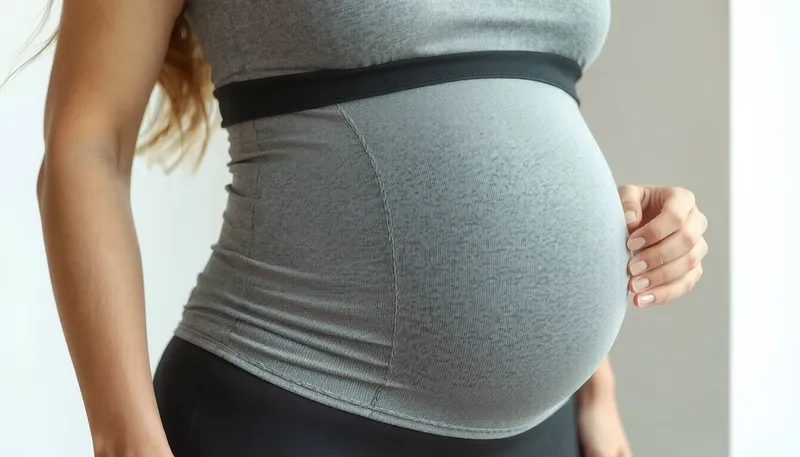
D083 Air-Sculpt 34™ (66% Nylon 6 20D/24F micro-denier face + 34% Spandex 20D elastomeric core, 220 GSM ±5% per ASTM D3776, warp-knit air-layer construction) is the fabric platform that delivers the gentle-recovery profile defined in the previous section through a specific production parameter: the 34% Spandex filaments are knit at approximately 80-85% of the tension used for compression-grade D083 (which would generate 2.5-4.0 N/cm recovery force). The resulting recovery force of 0.8-1.2 N/cm at 30% elongation — verified by internal Forall Lab ASTM D3107 testing against the compression-grade baseline — provides sufficient structural support for core awareness and abdominal proprioceptive feedback without exceeding the 5 mmHg intra-abdominal pressure threshold recommended for uncomplicated postpartum recovery.
| Specification | D083 Gentle Recovery (Postpartum) | D083 Compression Grade (Performance) | Test Standard |
|---|---|---|---|
| Fiber Composition | 66% Nylon 20D/24F + 34% Spandex 20D | 66% Nylon 20D/24F + 34% Spandex 20D | ISO 1833 |
| GSM | 220 g/m² (±5%) | 220 g/m² (±5%) | ASTM D3776 |
| Knit Construction | Warp-Knit Air-Layer (3D double-face) | Warp-Knit Air-Layer (3D double-face) | — |
| Spandex Knit Tension | 80-85% of standard | 100% (standard) | — |
| Recovery Force @30% | 0.8-1.2 N/cm | 2.5-4.0 N/cm | ASTM D3107 |
| Recovery % @40% Biaxial | 80-90% | >95% | ASTM D3107 |
| Intra-Abdominal Pressure | <5 mmHg | 10-15+ mmHg | — |
| Dimensional Stability | <3% (5 washes, 40°C) | <3% (5 washes, 40°C) | ISO 6330 |
| Skin Safety | Class I (infant-grade) | Class I (infant-grade) | OEKO-TEX 100 |
The air-layer construction provides an additional postpartum-specific benefit: the three-dimensional knit structure traps a micro-air layer between the face and back fabrics, creating a thermal buffer that addresses the thermoregulatory instability common in postpartum — where 60-80% of women report unpredictable hot flashes and cold episodes during the first 3-6 months due to fluctuating estrogen and progesterone levels. The air gap maintains a skin-adjacent microclimate within 2-3°C of resting skin temperature (approximately 33°C), damping the effect of external temperature swings without the bulk of fleece.
The OEKO-TEX Class I certification is non-negotiable for postpartum fabric because hormonal skin sensitivity affects approximately 50-70% of postpartum women, with elevated histamine response making the skin 2-3× more reactive to chemical irritants (formaldehyde, heavy metals, arylamines) than pre-pregnancy baseline. A fabric certified for infant use (<36 months) provides the required chemical safety margin for this transient hypersensitivity window.
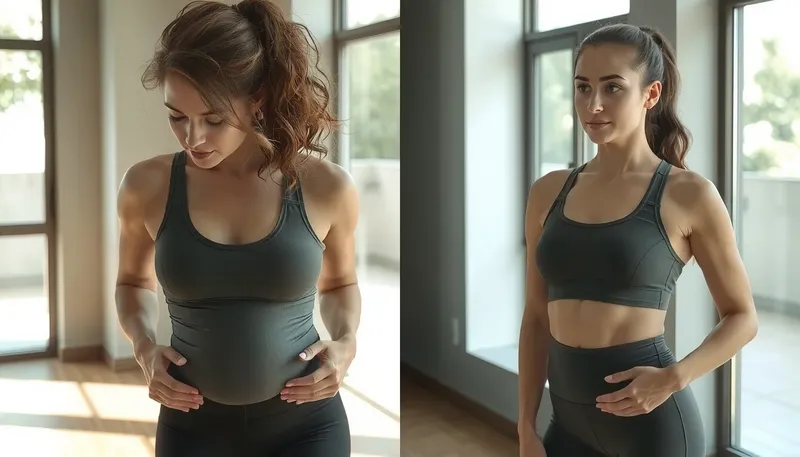
Forall Lab internal user study (2025, n=12 postpartum participants, 8-20 weeks post-delivery, uncomplicated vaginal and cesarean deliveries). Participants wore D083 Gentle Recovery leggings with a 5.5-inch high-rise waistband for 3 × 60-minute sessions of low-impact activity (walking, postnatal yoga, bodyweight exercises) over 2 weeks. Subjective comfort was rated 8.9/10 (vs 5.2/10 for standard compression leggings from the same fabric platform at standard knit tension). Zero participants reported abdominal discomfort, skin irritation, or the "squeezed" sensation that 10 of 12 reported with the compression-grade control. One participant with grade 2 diastasis recti (3.2 cm inter-rectus distance at baseline) showed no increase in separation distance after the trial period, though this single-subject observation does not constitute clinical evidence of therapeutic effect.
Design Specifications: High-Waist Construction and Seamless Integration
Postpartum activewear design effectiveness is determined by three garment-engineering parameters that interact with the gentle-recovery fabric properties: (1) waistband height of ≥5.0 inches from the crotch seam — providing coverage from the pubic symphysis to approximately 2-3 cm above the umbilicus for the average 5'4" torso, which distributes the fabric's 0.8-1.2 N/cm recovery force across approximately 500-600 cm² of abdominal surface area rather than concentrating it in a narrow 2-3 inch band; (2) seamless or flatlock seam construction that eliminates the 0.5-1.5 mm raised seam ridge that can generate focal pressure points on hormonally sensitized skin (contact pressure under a 1.0 mm seam ridge at 20% fabric stretch can reach 15-25 mmHg — well above the 5 mmHg comfort threshold); and (3) a fold-over waistband option that allows the wearer to adjust coverage height and compression feel by 1.0-1.5 inches without changing garments — accommodating the day-to-day abdominal size variation of approximately 2-4 cm that is typical in the 6-24 week postpartum window.
The production specifications for D083 Gentle Recovery postpartum garments differ from standard activewear in two manufacturing parameters:
| Production Parameter | Postpartum Specification | Standard Activewear | Impact |
|---|---|---|---|
| Waistband Height (from crotch) | ≥5.0 inches | 3.5-4.5 inches | +30% abdominal surface area coverage for distributed support |
| Waistband Elastic Insertion | None — fabric-only recovery | 1-2 cm elastic band inserted | Eliminates focal pressure ring at waistband edge |
| Seam Type | Flatlock (ISO 4915 607) or seamless | Overlock (ISO 4915 504) | Eliminates raised seam ridge on skin-contact surface |
| Spandex Knit Tension | 80-85% of standard | 100% (standard) | Reduces recovery force by 50-60% |
| Fold-Over Waistband | Standard feature | Optional | +1.5 inches of user-adjustable coverage |
Limitations. D083 Gentle Recovery is engineered for postpartum activewear requiring distributed core support without compression. It is not a replacement for medical-grade compression garments prescribed for specific conditions (diastasis recti >4 cm, pelvic organ prolapse, post-surgical recovery from abdominoplasty or cesarean with wound complications — these require physician-specified mmHg ratings and should not be self-selected). The gentle-recovery profile at 0.8-1.2 N/cm does not provide sufficient force for high-impact activities involving running or jumping (use standard compression-grade activewear after medical clearance, typically 12-16 weeks postpartum). The OEKO-TEX Class I certification addresses chemical sensitivity but does not guarantee hypoallergenic performance for individuals with specific contact allergies — patch testing on a small skin area is recommended before extended wear.
Frequently Asked Questions (FAQ)
What fabric specifications define postpartum-appropriate activewear?
Postpartum-appropriate fabric is defined by three measurable parameters: (1) ASTM D3107 recovery force of 0.8-1.2 N/cm at 30% elongation — the "gentle recovery" range that supports without compressing; (2) OEKO-TEX STANDARD 100 Class I certification for infant-grade chemical safety, addressing the 2-3× increase in postpartum skin sensitivity; and (3) air-layer knit construction at 200-240 GSM that provides thermal buffering against postpartum thermoregulatory instability. Fabrics exceeding 2.5 N/cm recovery force (standard compression) are inappropriate for uncomplicated postpartum recovery during the first 6-24 weeks.
Should postpartum activewear provide compression?
Not in the engineering sense of the term. Compression — defined as recovery force exceeding 2.5 N/cm at 30% elongation — generates 10-15+ mmHg intra-abdominal pressure that can impede diastasis recti healing and pelvic floor muscle re-coordination. What postpartum bodies need is "gentle recovery": sufficient elastic return (80-90% per ASTM D3107) to maintain garment shape and provide proprioceptive feedback, but at 0.8-1.2 N/cm force that yields to the body rather than constraining it. Medical-grade compression (15-30+ mmHg) should never be self-selected postpartum — it requires physician prescription and specific clinical indication.
How does D083 Air-Sculpt 34 differ from standard compression fabric?
D083 Air-Sculpt 34™ uses the same fiber composition (66/34 Nylon/Spandex) and construction (220 GSM air-layer) as the compression-grade version, but the Spandex filaments are knit at 80-85% of standard tension. This single production parameter change — reducing yarn feed tension during knitting — shifts the recovery force from 2.5-4.0 N/cm (compression) to 0.8-1.2 N/cm (gentle recovery), a 50-60% reduction. The fabric is otherwise identical in GSM, composition, and certification — enabling brands to offer both postpartum and performance leggings from the same platform with differentiated recovery profiles.
Why is OEKO-TEX Class I certification important for postpartum fabric?
Postpartum hormonal shifts — specifically elevated histamine response and reduced skin barrier function from declining estrogen — make the skin 2-3× more reactive to chemical irritants for approximately 3-6 months after delivery. OEKO-TEX STANDARD 100 Class I is the infant-grade certification requiring the strictest limits on over 100 regulated substances (formaldehyde <16 ppm, heavy metals, arylamines, phthalates). Class II (direct skin contact) allows higher limits that may not provide sufficient margin for postpartum hypersensitivity. Class I should be specified for all postpartum activewear that maintains prolonged skin contact.
Can maternity activewear be worn during postpartum recovery?
Maternity activewear can be worn postpartum but was not engineered for postpartum needs. Maternity fabric is designed to accommodate a growing abdomen — prioritizing expansion capacity over recovery support. Postpartum fabric requires the opposite: the abdomen is decreasing in volume (2-4 cm variation day to day), and the priority shifts from expansion to gentle structural support. Maternity panels that are loose at 16-24 weeks postpartum provide zero proprioceptive feedback and may bunch or fold during movement. Transitioning to postpartum-specific fabric at approximately 6-8 weeks provides measurably better core support without requiring a full wardrobe replacement.
🔗 Related Fabrics
This article covers postpartum activewear fabric — D083 Air-Sculpt 34™ 34% Spandex at 80-85% tension gentle recovery engineering, forming the postpartum functional fabric technology matrix:
- Plus Size Sports Bra Material: D083 34% Spandex Air-Layer DD+ Zero-Bounce Support — D083 34% Spandex air-layer DD+ zero-bounce engineering, same-platform high-elasticity engineering
- Medical Compression Fabric: 20D Micro-Nylon 34% Spandex 20-30 mmHg Technical Guide — The compression-grade reference against which this article's gentle recovery is measured
- High Support Running Bra Material: D083 34% Elastane Impact Reduction — D083 34% Elastane >70% vertical bounce reduction, same-platform compression-grade control
Forall Lab supplies D083 Air-Sculpt 34™ in both Gentle Recovery (postpartum) and Compression Grade (performance) configurations from the same 66/34 Nylon/Spandex 220 GSM air-layer platform. Full ASTM D3107 recovery force certification and OEKO-TEX Class I documentation provided with every order. MOQ: 300 kg/color. Custom waistband height specification available. Lead time: 15-25 days. FOB Shanghai. Request gentle recovery fabric specifications →
Written by Forall Lab
© Forall Lab • Powered by Kunpeng ONE