Your label might be spending too much on fabric. The activewear fabric wholesale rates for 2026 remain variable and are not fixed. They are a complicated mixture of different materials, manufacturing processes, and forceful addition of profit margins. The majority of brands are inflating the cost by middlemen. This could lead to leaving money behind. This publication is a great opportunity to learn about the industry’s cost structure. You'll have a clearer picture of where your funds go to. You will know how to reduce your fabric costs by 40% by securing smartly.
Key Takeaways
- Hidden Markups Are Your Biggest Cost: What you pay is often twice as much due to a chain of agents, importers, and distributors. Skipping them is the biggest chance for you to save.
- Direct-to-Mill Is the Solution: Buying from the fabric mill directly can save you 20-40% of your costs. This makes you competitive on premium materials.
- Not All Nylon Is Equal: Nylon price varies based on raw material (Nylon 6 vs. 6.6), yarn denier (thickness), knitting complexity, and special finishes.
- Premium Can Be Affordable: High-tech fabrics like our D083 and D036 lines are way easier to buy once the extra layers of the supply chain are removed.
The Market Forecast vs. Your Reality: Why 2026 Pricing Is a Black Box
Of course, you can find the stories you see and the headlines you read. Everything leads to a single conclusion, the conclusion is that material costs will be higher. However, that information is not generally of any use in your budget planning.
The Public Forecast: A Rising Tide for Activewear Fabrics
General market analysis for the year 2026 suggests a gradual advance in garment fabric taxes. The global activewear market keeps expanding. This drives demand. Projections frequently report a compound annual growth rate (CAGR) of around 5-8% for the sportswear fabric sector.
This trend comes from a growing health-conscious population. The continued popularity of athleisure also fuels it. While this data is true, it doesn't tell the whole story of your specific costs.
Why a General "Nylon Price" Is Useless for Your Business
A generic price index for nylon is a poor guide for your business. It doesn't account for the real-world factors that determine the final price per yard. The fabric you buy is not a simple commodity.
The price you are quoted is a bundle of costs. It includes both performance finishes and specific knitting structures. Most importantly, it includes several stages of supply chain markups. The final activewear fabric wholesale prices 2026 are far more negotiable than the suppliers want you to think.
【Unique Value Point】 Breaking Down the Price Tag: What REALLY Drives Your Nylon Fabric Cost in 2026?
For you to have more control over your fabric expenses, you first must know what you are paying for. From the long experience of the fabric-making art, we know that a price tag is not just a sticker but rather a design that builds in layers. Here is the insider breakdown.
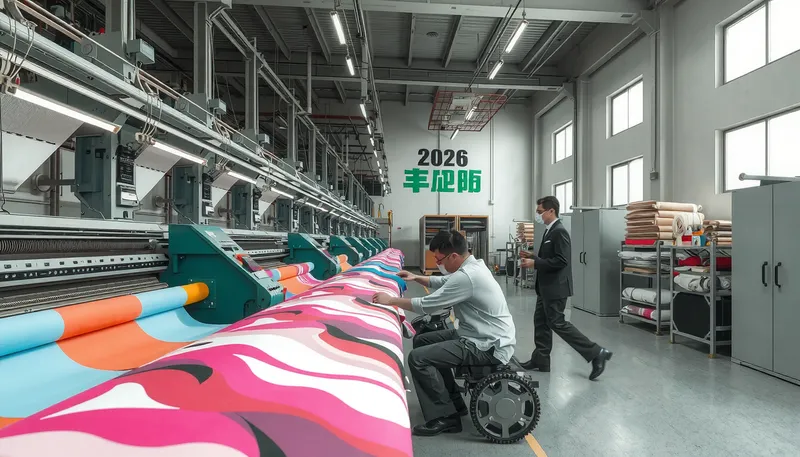
The Mill Cost: From Raw Material to Rolled Fabric
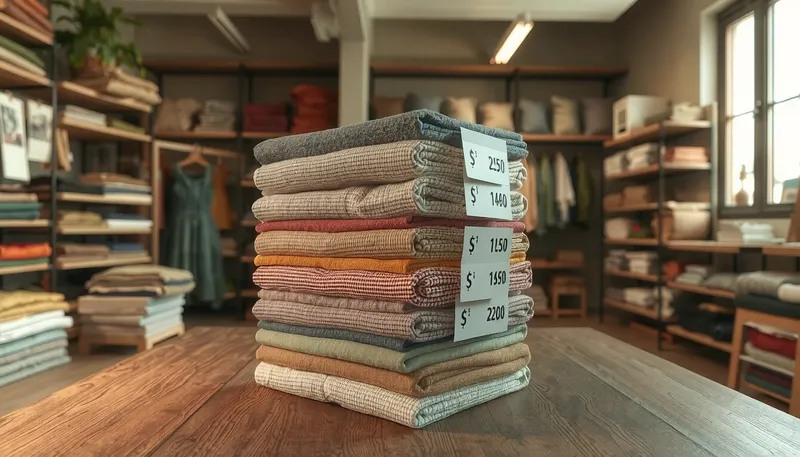
This is the very base cost of your fabric before adding anyone's margin. There are a few key pieces that make it distinct.
Feedstock & Polymerization
It starts with the raw chemical ingredients. The price difference between Nylon 6 and the more durable, heat-resistant Nylon 6.6 is considerable. Nylon 6.6 is the raw material of a premium grade. Its price plays a direct role in laying down the base cost for high-performance fabrics.
Yarn Spinning & Knitting
Secondly, the raw nylon turns into yarn. The thickness of the yarn is expressed in denier (D). This is where your biggest expense lies. A 20D yarn is significantly finer and more challenging to produce than the standard 70D yarn. This explains why "second-skin" fabrics are so rich and expensive.
The complexity of the knitting pattern increases costs too. A simple jersey knit is not as expensive to produce as a more complex interlock or air-layer construction. These take more time and specialized machines.
Dyeing & Finishing
The last phase at the mill is dyeing the fabric and applying performance finishes. Standard wicking is one price level. Adding high-performance wicking costs more. A light color anti-yellowing treatment costs more. A unique "mochi-touch" finish also increases the mill costs. These are real processes that add value.
The "Hidden" Markups: Where Your Budget Disappears
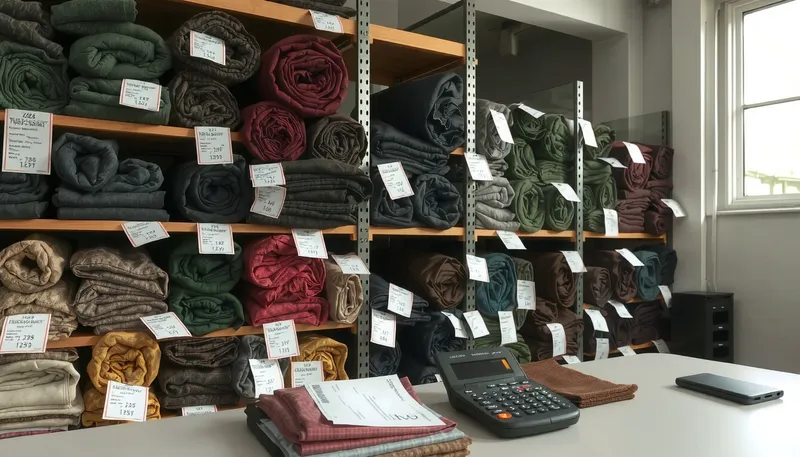
Milling costs are merely the baseline. What you pay is often a figure that is double the milling rate. This could happen because of a long and inefficient supply chain. This is where your budget disappears.
This is a typical example of how a fabric's cost can inflate before it gets to your brand.
| Stage | Action | Added Cost / Margin | Cumulative Price |
|---|---|---|---|
| Mill | Produces Fabric | $10.00 (Base Cost) | $10.00 |
| Export Agent | Handles Mill Communication | +10% Margin | $11.00 |
| Importer/Distributor | Buys in Bulk, Warehouses | +40% Margin | $15.40 |
| Local Wholesaler | Sells Smaller Lots | +30% Margin | $20.02 |
| Your Brand | Final Purchase Price | ~$20/kg |
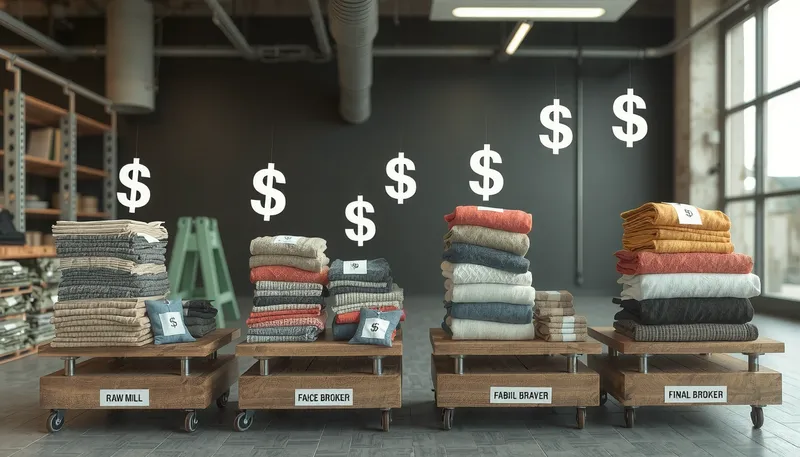
As depicted, a fabric that costs the mill $10/kg to make can easily be $20/kg for you. That's the common model. It is bringing a fortune to your brand.
【Unique Value Point】 The Magnet Strategy: Cut 20-40% Off Your 2026 Bill with Direct-to-Mill Pricing
What if you could not only skip agent and importer but also wholesaler? You can. This is the secret of top brands in handling their activewear fabric wholesale prices 2026 and, thus, elevating their profits.
Bypassing the Middlemen: The Power of Going Direct
The direct-to-mill model is easy to explain. You deal with the source that makes the fabric. By that, you eliminate all the markup layers that were shown in the table above.
Moreover, you get even more benefits that are beyond price. With a direct line to the mill, you can:
- Better Communication: Your quality requirements don't get lost in inappropriate translations.
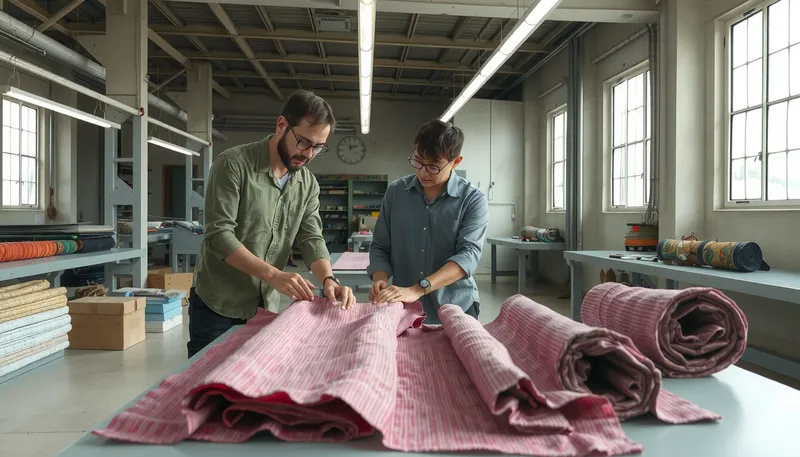
- Superior Quality Control: You're able to influence the quality and consistency of your product directly.
- Access to Innovation: You are the first to learn and use new technologies and fabric developments.
Case Study: Getting Premium Nylon Spandex Below Market Rate
We can take a look at an actual case. A brand is seeking a high-tech fabric that has 34 % spandex and an air-layer construction for a new line of premium ultimate yoga bras.
A wholesaler would typically give this fabric a quote of over $25/kg. They add their full margin because it's a particular item. However, when brand goes a direct-to-mill route, they can buy this exact same fabric for about $15/kg depending on the order amount. This is up to a whopping 40 % cost off!
The strategy to get premium articles is like this: for instance, the high recovery D036 performance line or D083 that just hit the market. These articles are the ones wholesalers will sell at a very high price over a pile.
For an evolutionary product feel, our Air-Sculpt 34™ fabric combines an engineered 'Mochi-Touch' fabric with a structure that can be molded cups. This 34% spandex 20D micro nylon fabric is the first in the world to give such high performance and a second skin feel. Sourcing it directly, you are not paying the extra markup and therefore getting an exclusive material at a fair price.
Navigating the Broader Wholesale Market
Although direct-to-mill offers the most advanced price, traditional wholesalers still make a provision in the sourcing ecosystem. To be a good buyer is to know when and how to use them.
When to Use Traditional Wholesalers
The wholesale model represents a long way to go in specific cases. You can use a traditional wholesaler for example:
- In urgent, low-volume needs (under 100 yards)
- When testing dozens of different fabric types for initial prototypes
- For accessing a wide variety of materials from a single source for sampling
In case of these small needs, the convenience might outweigh the extra cost. Large fabric markets like the ones in Guangzhou are one clear example. You can go to one place where you get to see and touch thousands of options available from various traders.
Finding Reputable Suppliers
In the aforementioned cases, large online directories and famous wholesalers are the best tools. You can find a well-curated lists of global fabric wholesale suppliers to shortlist reliable suppliers for your project or get a feel of the market offerings.
The platforms that provide Activewear Fabric By The Yard are perfect for small-scale sampling. This way, you can test the fabric's look and feel before going for a larger volume and a more cost-effective direct-to-mill order. This two steps strategy of getting samples first from a wholesaler and then going for a mill is a great weapon.
Your Final Word on 2026 Activewear Fabric Prices
Activewear fabric wholesale prices 2026 needn't be an enigma gnawing away at your margins. The cost is mostly dictated by your sourcing choice. Despite the market reports forecasting an overall cost increase, the situation for your brand can be so different.
The first step is comprehending the cost structure. The real value comes from understanding the difference between the hard mill cost and the final price manipulated by the middlemen. By changing to a direct-to-mill model for your main fabrics, you can essentially change your cost structure.
Stop solely buying fabric. Start sourcing it intelligently. You will see the difference that will come to your bottom line.
Frequently Asked Questions (FAQ)
What is a fair wholesale price for premium nylon spandex in 2026?
The fair price entirely relies on your sourcing strategy. Through traditional wholesale routes, the average cost would be $20-$30+ per kg for the premium nylon. On the contrary, a direct-to-mill can be as low as $14-$19/kg, based on the volume and specifications. The 2026 fabric pricing index is much lower when you are closer to the source.
How does fabric denier affect activewear fabric prices?
Fabric denier is key to pricing. The lower denier (like 20D) is made from yarns that are finer, costly, and complex to knit. This makes it more expensive than the standard 70D fabrics. The thin, "second-skin" feel of low-denier fabrics has achieved a premium in the market.
How much can I really save with direct-to-mill fabric pricing?
Brands that are already established and that can fulfill a mill's MOQs, are the ones that will save around 20-40%. That is because of the markups that are eliminated through agents, importers, and local distributors in the supply chain.
Will recycled nylon still be more expensive in 2026?
Yes, it is very likely. Even if the difference in price is not as wide, the certified recycled nylon (like GRS-certified) will still be more expensive by about 15-25% than virgin nylon in 2026. These additional expenses are due to the complicated stages of gathering, sorting, and reprocessing of the materials.
What's the most important factor in the 2026 Fabric Pricing Index for premium nylon?
The most important factor affecting the activewear fabric wholesale prices 2026 is not just the raw material cost but also the position in the supply chain. Direct sourcing from the mill will give buyers a clear and lower price index than those sourcing from local wholesalers for the same quality of fabric.
Written by Forall Lab
© Forall Lab • Powered by Kunpeng ONE