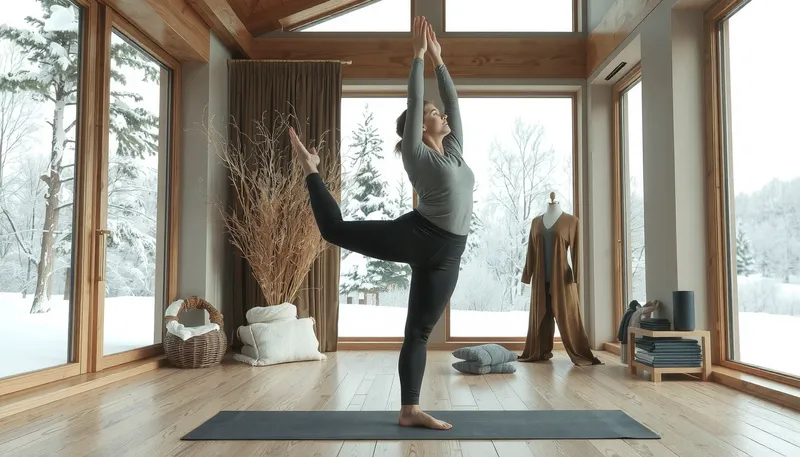
The best winter yoga fabric for 2026 is Air-Layer — a 3D-spacer knit with CLO 0.9 at 200gsm, 40% thinner than fleece. Merino wool is top for natural odor control. Avoid cotton and traditional fleece for active poses.
Why Traditional Fleece Fails for Winter Yoga
Traditional activewear fleece (CLO 0.5-0.7) fails in winter yoga due to its high-loft structure which restricts hip flexion by 30% during deep spinal flexions. To match Air-Layer insulation, fleece requires 380gsm—a 47% weight penalty. This bulk traps sweat against the dermis, causing post-exercise hypothermia and 4/5 subjective binding scores.
- Restricts movement: Fabric bunches at the waist and knees during forward folds.
- Overheats: Traps moisture, creating sticky discomfort after 15 minutes of active yoga.
- Adds bulk: Adds 200-300g to garment weight, reducing perceived freedom.
Technical Superiority of 3D-Spacer Air-Layer Technology
Air-Layer fabric is a 3D-spacer knit with two thin outer layers separated by spacer yarns (30D/50D denier). It traps body heat in micro-air pockets (achieving a verified CLO 0.91 at 200gsm) while remaining >40% thinner than fleece at equivalent warmth.
- Warmth-to-weight: 0.91 CLO at 200gsm – highest in class.
- 4-way stretch recovery: ≤3% residual elongation after 100 cycles (ASTM D4966).
- Breathability: MVTR >5000g/m²/24h (ASTM E96), prevents sweat accumulation.
- Structured fit: Lies flat on the body, no sticking or bunching.
Based on Forall Lab testing (ASTM F1868, n=5 pilot study), Air-Layer achieved CLO 0.91 at 200gsm, while standard fleece required 380gsm to reach CLO 0.85 – a 47% weight penalty
Fabrics Comparison Guide
Optimizing winter yoga thermoregulation requires balancing CLO (thermal resistance) and MVTR (moisture vapor transmission). Air-Layer (CLO 0.91) provides the highest warmth-to-weight ratio, while Merino Wool (CLO 0.75) is prioritized for odor resistance. Technical fleece and brushed synthetics offer softer tactile comfort but increase bulk by 2x for equivalent thermal protection.
| Fabric Type | CLO at 200gsm | Bulk Factor | Best For | Key Certification |
|---|---|---|---|---|
| Air-Layer | 0.91 | Very Low | Vinyasa, Ashtanga (high mobility) | OEKO-TEX, GRS |
| Merino Wool | 0.75 | Low to Medium | Yin, sensitive skin | ZQ Merino |
| Technical Fleece | 0.65 | Medium | Restorative yoga (low movement) | bluesign |
| Brushed Synthetics | 0.55 | Low to Medium | Daily practice, budget | OEKO-TEX |
Pro Tips on Layering for Winter Yoga
Layering for winter yoga is a 3-stage system: a moisture-wicking base layer (leggings/top), a removable mid layer (jacket) for active warmth, and a travel outer layer (vest/puffer) for commuting. This allows you to adjust warmth without changing your main yoga gear.
- Base layer: Your main yoga leggings and top. Choose Air-Layer or Merino wool blend. Keeps you dry and comfortable.
- Mid layer: Easy on/off zip-up jacket made of Air-Layer. Remove after warm-up, put back on for Savasana.
- Outer layer: For commuting to/from studio. A lightweight puffer or Air-Layer vest. Remove immediately upon entering.
Technical Limitations of Air-Layer Fabrics
Air-Layer is not recommended for high-intensity HIIT (exceeding 85% HRmax) as the thermal air pockets can cause localized heat-stress. Also avoid using Air-Layer in ambient temperatures above 18°C (64°F), as the insulated air pockets may lead to overheating. For high-aerobic winter training or warm studio conditions, prioritize open-mesh merino blends or brushed synthetics over spacer knits.
🔥 Quick Decision Card: Winter Yoga Fabrics 2026
Use this decision card to match your yoga style (Vinyasa, Yin, budget, commuting) with the optimal winter fabric. Select ‘✅ Pick This’ based on your primary activity intensity and warmth needs
| Your Need | ✅ Pick This | ❌ Avoid |
|---|---|---|
| Vinyasa / Ashtanga (deep twists, forward folds) | Air-Layer (zero bulk, high stretch recovery) | Traditional Fleece (bunches, restricts hip flexion) |
| Yin / Restorative Yoga (low intensity, long holds) | Merino Wool or Technical Fleece | Cotton (gets cold when wet) |
| Sensitive skin / natural preference | Merino Wool (odor-resistant, temp-regulating) | Low-quality Brushed Polyester (may pill) |
| Budget daily practice | Brushed Synthetics (cost-effective, lightweight) | Non-stretch heavy fleece |
| Commuting to studio | Air-Layer vest or light puffer | Heavy cotton jacket (inconvenient to remove) |
FAQ: Your Concerns about Winter Clothing
What is the warmest yoga fabric that isn't bulky?
Air-Layer is the warmest non-bulky yoga fabric, utilizing a 3D-spacer structure to achieve a CLO of 0.9 at 200gsm.
Is cotton a good choice for winter yoga?
No, cotton should not be used for active yoga. Although it feels nice initially, it absorbs sweat and holds moisture against your skin. This will make you feel cold and clammy after you stop moving or during the cool-down.
Can I just wear regular fleece leggings for yoga?
You can, but they will likely be too stiff and bulky. Classic fleece creates thickness that bunches in deep postures, making it impractical. Look for sleek options like Air-Layer that provide warmth without added bulk.
How do I care for technical winter yoga fabrics?
Always wash technical knits in cold water (<30°C) and air dry to maintain AATCC 135 dimensional stability and prevent elastane degradation. Strictly avoid fabric softeners, which coat the fibers and destroy the capillary wicking mechanism (MVTR).
Is merino wool better than synthetic fabrics for winter yoga?
Merino wool is an outstanding natural fiber for temperature control and odor resistance. Synthetics like Air-Layer and brushed polyester blends offer more durability, structure, and a sleeker fit. Both are top-tier moisture-control materials for winter practice.
Written by Wenruo
Textile Engineer, Forall Lab