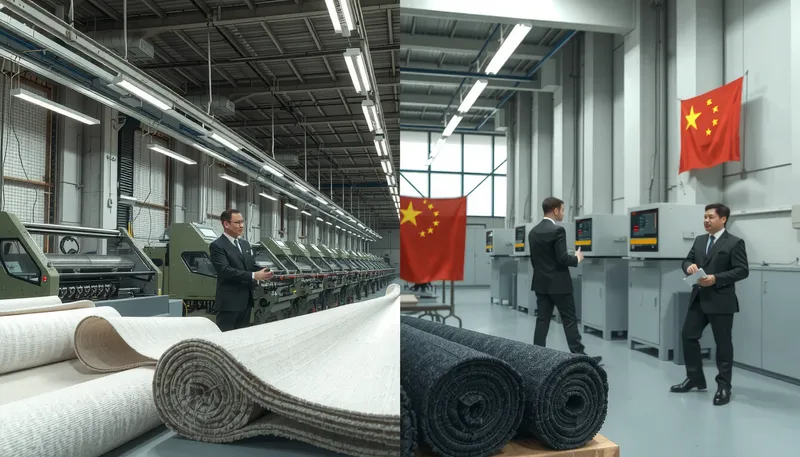
For an EU activewear brand in 2026, the sourcing question is not whether to use activewear fabric suppliers in Europe or China, but which route fits the program. European mills win on speed, flexible minimums, and a Made-in-Europe story, with REACH compliance built into a domestic regulatory system. Chinese specialist mills win on research and development in high-performance synthetics, such as high-spandex nylon and micro-denier knits, and on cost at volume. Match the supplier to the product, and verify compliance with documents either way.
This guide compares the two routes on the criteria an EU buyer puts into a sourcing scorecard: minimum order quantity, lead time, unit cost, import duty, compliance, and technical fabric capability. It is written from a Chinese performance-knit mill that exports nylon-spandex platforms to European brands, so the China side of the comparison is grounded in production experience rather than catalog copy.
What European Activewear Fabric Suppliers Do Best
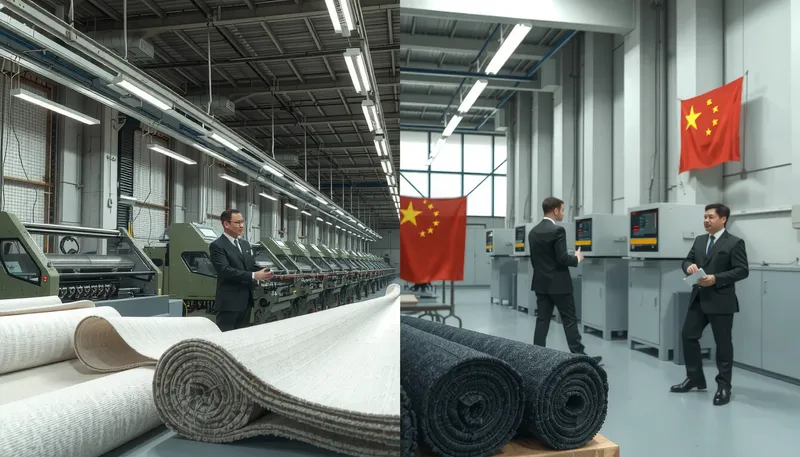
European activewear fabric suppliers compete on proximity, flexible minimums, and compliance certainty. A knit specialist in Portugal, Italy, or Turkey can start a custom program near one roll, deliver on a short restock cycle, and operate inside the EU regulatory system that its customers must answer to.
Nearshoring shortens the distance between a design decision and a finished roll. For a brand that sells into the EU, a European mill cuts the sample loop to days rather than weeks, and a restock can move by truck instead of by ocean container. That speed has real value for seasonal collections and for testing a new product in small batches.
The practical advantage is the minimum order quantity. European suppliers routinely accept custom runs that start near one roll, roughly 50 to 100 meters. A startup or a capsule line can hold real inventory without betting a season on it. Chinese mills quote larger minimums as a default, though specialist mills run low-MOQ programs, and the trade-off between the two is a documented decision rather than a rule.
Inside the single market, fabric produced in the EU circulates without import duty. Turkey sits in a customs union with the EU, so most industrial goods, including fabric, move duty-free, with rules-of-origin paperwork still attached. For a brand that wants a cleaner provenance story, the local route removes a whole class of customs questions.
The price of those advantages is visible. European mill pricing generally runs above Chinese pricing for comparable fabric, and the gap reflects shorter runs, higher labor cost, and the premium a Made-in-Europe label carries in the market.

Why EU Brands Still Source High-Performance Fabric from China
China supplies the advanced synthetic fabrics that European mills often do not run at scale. High-spandex nylon, micro-denier warp knits, and seamless platforms come from Chinese specialists whose vertical mills and engineering teams produce technical activewear fabric that competes on capability first, then wins on cost.
The relevant innovation is in yarn engineering. A 20-denier nylon knitted at 24 filaments puts more cover per gram on the machine than a conventional 40-denier yarn, which is how a high-elastane fabric reaches firm support at a moderate weight. At Foralltex we produce the D083 Air-Sculpt platform, a warp knit that carries 34% elastane on 20D/24F micro-filament nylon 6. European brands develop seamless and molded activewear on it because the yarn construction, not the country code, decides the result.
The cost-to-quality ratio follows from vertical integration. A Chinese mill that controls yarn supply, knitting, dyeing, and finishing in one site removes the margins that a fragmented supply chain adds. At volume, those savings fund higher-grade raw materials, so the finished fabric can sit at a lower price than the same specification built through a longer chain.
Compliance is not the reason to avoid China. Export mills that sell into the EU run restricted-substance testing as a standard step, and the documents are available to the buyer. The verification work is the subject of the REACH section below, and it is the same work a buyer does with any non-EU supplier.
Europe vs China: A Sourcing Scorecard for Activewear Fabric
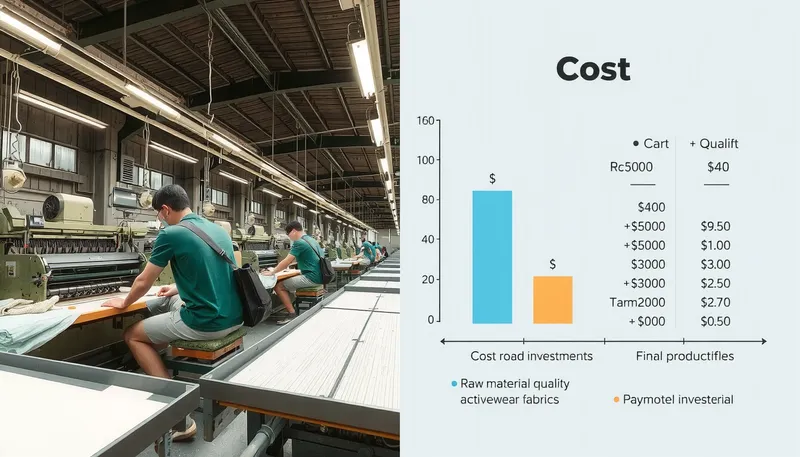
The two routes split cleanly on a sourcing scorecard. Europe leads on MOQ flexibility, restock speed, and provenance. China leads on technical fabric capability and cost at volume. Duty and compliance documents decide the rest.
| Criterion | European supplier | Chinese specialist mill |
|---|---|---|
| MOQ per custom color | From about one roll, 50–100 m | 500–1,000 m typical; 200–500 m on low-MOQ programs |
| Sample loop | Short, close to the design team | Fast technical sampling at export mills; bulk needs planning |
| Restock speed | Short distance, truck freight | Predictable after the mill is locked; add freight time |
| Unit cost | Higher | Lower at volume |
| Import duty into the EU | None for EU-made fabric | 6–12% typical by HS heading; confirm with a broker |
| REACH compliance | Built into domestic regulation | Verified with declarations and accredited lab reports |
| Technical synthetics | Premium finishing at smaller scale | Micro-denier and high-elastane R&D at scale |
| Brand story | Made in Europe | Innovation and value |
Apply the scorecard per program, not per brand. A small capsule with a Made-in-Europe label belongs with a European mill. A high-performance technical line, where the fabric innovation decides the product, belongs with a Chinese specialist that documents REACH compliance. Shortlist both routes, send the same specification sheet to each, and compare the documented offers, including duty and freight, before you commit.
Logistics: Shipping Performance Fabric from China to the EU
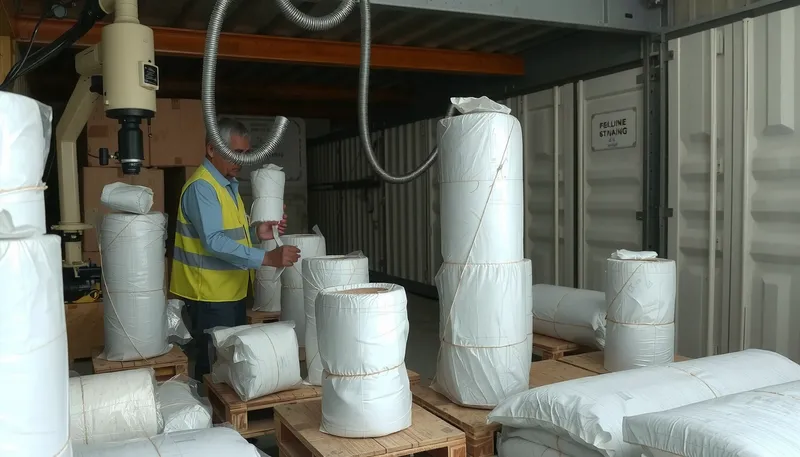
Three freight routes connect Chinese mills to the EU. Air moves urgent samples and lightweight fabric in 5 to 10 days, rail covers the middle ground in 15 to 25 days, and sea carries bulk in 30 to 45 days. Protect nylon-spandex rolls with vacuum sealing, desiccant, and roll packing so the fabric arrives as specified.
| Method | Typical Transit Time | Best For | Key Consideration |
|---|---|---|---|
| Air Freight | 5-10 days | Urgent orders, high-value samples, lightweight fabrics | Highest cost per kg |
| Sea Freight | 30-45 days | Bulk orders, cost-sensitive production | Longest lead time, requires careful planning |
| Rail Freight | 15-25 days | A balanced option for medium-to-large shipments | Good compromise between air and sea speed and cost |
High-end nylon and spandex blends are a capital investment, and ocean journeys test them. Long transit in humid air can degrade the elastane component and leave moisture in the roll. Ask the mill to vacuum-seal the packaging and to include desiccant packs that absorb moisture during the voyage.
Structured fabrics intended for molded bras must ship without bending. A crease in a molded-bra panel does not relax out at the factory. Specify that these fabrics travel on rolls, not folded, and confirm the packing method in writing before the order is placed.
Compliance documents travel with the shipment. A REACH declaration and test reports should be part of the shipping file, so customs clearance does not stall on a missing certificate.
REACH Compliance: The Non-Negotiable for EU Buyers
REACH is the EU regulation, EC 1907/2006, that restricts hazardous chemicals in products sold in the EU. Imported activewear fabric must meet its substance limits before it clears customs, and because the EU importer carries the legal responsibility, the buyer holds the documentation duty.
For textiles, REACH enforcement centers on restricted substances that can appear in dyes, finishes, and chemical treatments. Certain azo dyes, alkylphenol ethoxylates, formaldehyde, and phthalates are among the substance families an activewear fabric must be tested against. Activewear touches skin directly and carries performance finishes, so the restricted-substance list is not a formality.
Failure shows up at the border or in the market. A shipment that fails a customs check can be seized, and a brand that sells non-compliant goods faces fines or a market ban. The buyer does not need to become a chemist, but the buyer does need documents.
Verify a Chinese mill with three pieces of evidence. First, a restricted-substance test report from an accredited laboratory that follows ISO 17025 practice. Second, a REACH declaration that names the actual material and color being shipped. Third, repeat the request on every batch, because a certificate from a first order does not cover a later production run. The wider certification picture, including OEKO-TEX Standard 100 and the Global Recycled Standard, is covered in our fabric certification guide.
EU regulation is moving toward more documentation, not less. The EU textile strategy, ecodesign requirements, and the planned digital product passport will push origin, material, and compliance data further up the supply chain. A supplier that already keeps clean test records is the one that will clear the next regulatory bar without rework.
How to Vet an Activewear Fabric Supplier, Europe or China
Vet any activewear fabric supplier on documentation and physical samples, not on sales language. A qualified mill produces a written specification, certificates with numbers, and samples that pass your own wash and wear tests.
- Write the specification first. State composition, gsm, width, stretch and recovery targets, and the performance tests the fabric must pass. Send the same sheet to every candidate so the offers are comparable.
- Ask for documents. Request the MOQ per custom color, the production lead time, a full spec sheet, certificates with certificate numbers, and a REACH declaration for EU-bound goods.
- Verify the certificates. Check OEKO-TEX Standard 100 numbers in the OEKO-TEX Label Check database and GRS numbers in the Textile Exchange directory. Confirm REACH with an accredited lab report, not a logo in a PDF.
- Test physical samples. Feel the hand, stretch a swatch and watch the recovery, then sew a sample garment and wash and wear it. Compare the result against the spec sheet.
- Cost the whole route. Fabric price plus freight plus import duty plus financing equals the total landed cost. The cheapest meter does not always make the cheapest program.
At Foralltex we apply this same discipline to every export order. Contact our fabric engineering team for D083 Air-Sculpt samples with full spec sheets, OEKO-TEX documentation, and REACH test reports for your next EU program.
Contact our fabric engineering team →
FAQ: Sourcing Activewear Fabrics for the EU Market
Is it cheaper to source activewear fabric from China or Europe?
Generally yes for volume. Chinese mill pricing runs below European pricing for comparable fabric, and the gap grows with order size. Add freight and EU import duty to the meter price and the gap narrows. For a small premium program with a Made-in-Europe story, the European route can be the lower-risk choice once documents are included.
What are typical MOQs for activewear fabric suppliers in Europe and China?
European suppliers commonly start near one roll, around 50 to 100 meters, which suits startups and capsules. Chinese mills more often quote 500 to 1,000 meters per color, though specialist mills run low-MOQ programs from about 200 meters. Ask for the MOQ per custom color rather than a single catalog number.
How long does it take to ship fabric from China to the EU?
Air freight takes 5 to 10 days and suits urgent samples and lightweight fabric. Rail takes 15 to 25 days and offers a middle ground. Sea freight takes 30 to 45 days and is the standard for bulk. Add the production lead time on top of the transit figure.
What is REACH and can a Chinese fabric supplier meet it?
REACH is the EU regulation that restricts hazardous chemicals in products sold in the EU. Yes, a Chinese mill can meet it by running the fabric under restricted-substance limits and providing test reports and a REACH declaration. The EU importer holds the legal responsibility, so request the documents before you order.
How do I verify a supplier's REACH or OEKO-TEX compliance?
Ask for restricted-substance test reports from an accredited laboratory and a REACH declaration that names the actual material and color. For OEKO-TEX Standard 100, check the certificate number in the OEKO-TEX Label Check database. A logo without a verifiable number is a marketing claim.
Do I pay import duty on activewear fabric imported from China to the EU?
Yes. Fabric from China falls under the EU Common Customs Tariff, with rates that vary by HS heading, commonly in the 6 to 12 percent band. Confirm the exact rate for your HS code with a customs broker and include it in your landed-cost calculation.
Should an EU brand choose a European or a Chinese activewear fabric supplier?
Match the route to the program. Choose a European supplier for small batches, fast restocks, and a Made-in-Europe story. Choose a Chinese specialist for high-performance technical fabric at volume, where R&D and cost decide the product. Send both routes the same spec sheet and compare the documented offers.
🔗 Related Fabrics
This article explains activewear fabric sourcing for EU brands — the Europe vs China decision across MOQ, lead time, cost, import duty, and REACH compliance — forming the global fabric sourcing and logistics matrix:
- Fabric Certification Guide: OEKO-TEX, GRS, GOTS & Bluesign Explained — certification and restricted-substance verification for fabric entering EU markets
- Low MOQ Fabric Mills China: Identify Real Manufacturers — how to qualify real low-MOQ Chinese mills against the 500-1,000 m default
- Fabric Shipping Logistics Guide: Sea vs Air Freight 2026 — the freight decision that sets China-to-EU landed cost
- Back to Index
Written by Wenruo
Textile Engineer, Forall Lab