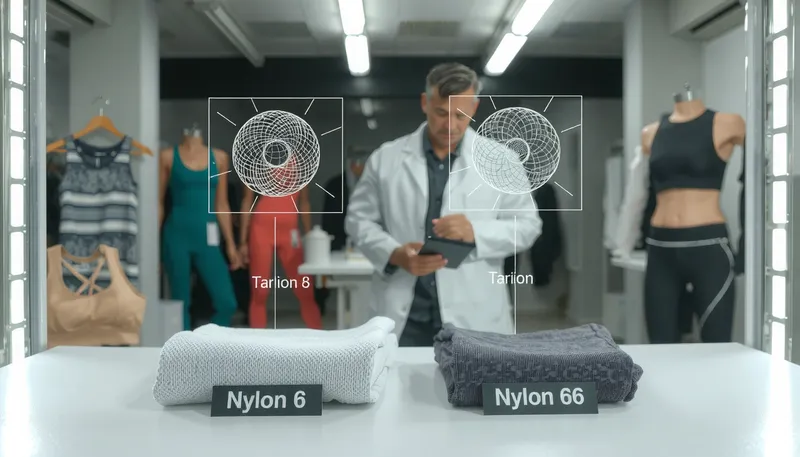
For years, the activewear industry has been adamant that Nylon 66 was the only suitable option for top-quality, high-performance apparel. The common belief was passed down through the industry that it was stronger and more resistant to wear and tear. We were convinced that its high price was justifiable. Now, in 2026, it is time to reflect: how is this belief working for us? The straightforward answer is no. This mistaken belief has caused brands to lose money. Most importantly, it prevents the brands from making progression in their products. The shocking secret is this: a new kind of Modified Nylon 6, such as D036 polymer, improves the experience of clients while being of a much lower cost.
Key Takeaways
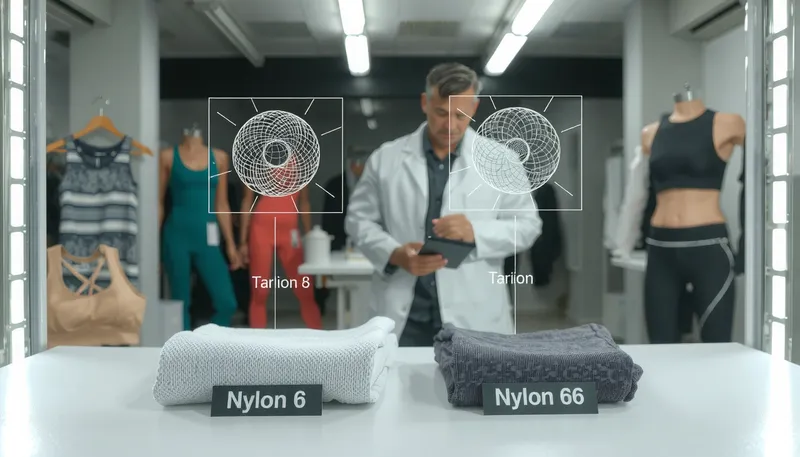
- The Nylon 66 Myth: The notion that Nylon 66 is the perfect fabric for all premium activewear is obsolete and detrimental.
- The Superior Alternative: Compared to Nylon 66, Modified Nylon 6 (like D036) delivers a better tactile experience and is easier to print, which are vital for today's activewear.
- Significant Cost Savings: Brands can switch from N66 to Modified N6 and achieve the same improved outcomes while fabric costs being approximately 20% lower.
- Consumer Experience: Modified N6 is perceived by customers as being softer and more luxurious, which directly makes it more attractive.
- Smarter Sourcing: Specifying the right material is not merely about the best properties on the paper; it's about matching the properties to the application.
The Conventional Wisdom: Why Is Nylon 66 Still on a Pedestal?
Many brands still choose Nylon 66 because of its long history. Its top-position is founded on a number of important features. These features result from the technical differences in their chemical structures.
For more than 40 years, these specs made Nylon 66 an emblem of the struggle for the number one.
- Molecular Structure: The molecular chain of Nylon 66 is excessively organized in absolute order. As a result, the material is quite heavy.
- Durability: The density of the material helps it resist rubbing. It has high tensile strength meaning it is not so easy to break.
- Heat Resistance: Compared to standard Nylon 6, this material melts at a higher temperature.
These qualities are especially valuable in parts for car engines, industrial gears, and even parachutes. In those situations, the emphasis on strength becomes the most important thing.
But here's the vital question for us in 2026: do these properties make an impact in a pair of leggings or a running top? As we shall see, the answer is an emphatic no. The argument over using nylon 6 vs nylon 66 for activewear has measured the wrong indicators.
Demystifying the Failure: The Inability of N66 to Adapt to Modern Activewear Norms
What makes Nylon 66 so popular in industrial settings, paradoxically, make it less suitable for modern activewear. Brands are investing extra money in features that detract from the product's quality.
The "Durability" Trap: Is It Toughness or Uncomfortable Stiffness?
One can agree that Nylon 66 is impervious to any type of rubbing. However, this rather tough feature is, in the case of yoga classes or morning runs, much more than what is needed. Your client's customers are not the ones who will rub leggings against concrete walls.
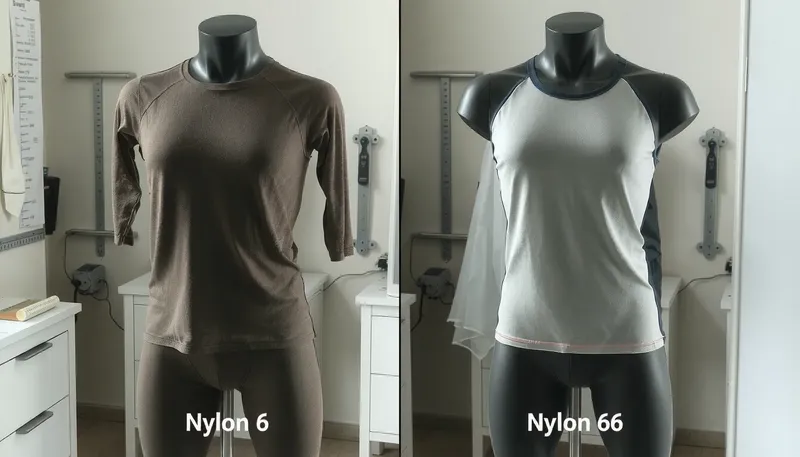
In our experience with fabric, this "durability" results in a major drawback. It creates a fabric that is noticeably stiffer and less forgiving. In turn, this stiffness can limit the comfortable, four-way stretch that consumers expect from quality activewear. You are literally swapping essential comfort for a degree of toughness that your product doesn't actually need.
The Hand-Feel Compromise: Why "Premium" Doesn't Mean "Softer"
The current era of activewear clients is in the quest of fabrics that are incredibly soft to the touch and luxurious against the skin. This is where Nylon 66 usually fumbles. The rigid molecular structure could result in the production of a hand-feel that is slick, synthetic, or even plasticky.
Though it is factually a "premium" fiber, it doesn't provide the premium sensory experience that builds customer loyalty. Its argument for a high retail price is not convincing. The myth of Nylon 66 being better than all other options falls apart when you consider the issue of how the customer actually feels.
The Printability & Dyeing Headache
If you have a chat with any production manager about dyeing Nylon 66, more often than not you will find them grumbling over it. The material's lacing and pack structure which limit dye penetration make the whole situation worse. This is the root of the problem at production.
Getting ironclad, eye-catching, and befitting hues is a struggle. Defect rates may increase, and colour-matching issues from batch to batch may occur. This also restricts designers who are eager to work with complex, high-resolution prints. The fabric is unable to capture the images and colors crisp.
The Unavoidable Price Tag: Paying a Premium for Problems
What is more, there is the cost. Nylon 66 is a more intricate process to create. It is produced with two different monomers and needs more energy. This makes it inherently more expensive than Nylon 6.
So, let's just come out with it. Brands that choose Nylon 66 for activewear are more often than not paying 20% or more for a fiber that is less comfortable, less soft, and significantly harder to print and dye. This constitutes a negative strategic decision.
The Smarter Alternative: Modified Nylon 6 (D036)
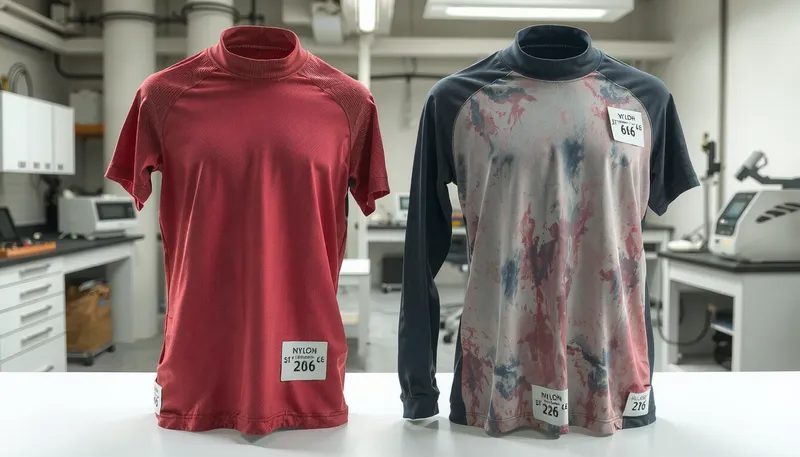
Fortunately, the fabric technology sector continues to make advancements. In the comparison of the nylon 6 vs nylon 66 gear, the real innovation is not about sticking to the old standards but is instead about adopting smarter materials like Modified Nylon 6.
What is Modified Nylon 6? It's Not Your Standard N6.
First and foremost, it is very important to note that we are not talking about regular Nylon 6. Modified Nylon 6, also known by codes like D036, is an ultra-modern polymer. Its molecular design has been precisely altered by the scientists.
This engineering process boosts durability as well as the stretch of the material. It virtually closes the breach between N66 but still retains the most beneficial attributes of N6. This is the reason why it is a perfect solution for activewear.
The Route to a Hand-Feel and Comfort That Are Superior
That being said, it is the Modified Nylon 6 that comes to the fore. D036 polymer is fashioned to create fabric with an exceptionally soft, pliable, and often "peached" or cotton-like hand-feel. It is the fine touch, which clients tend to seek, that is provided by this particular polymer.
In a recent internal wear test, we gave two groups of athletes identical leggings. One was made from top-grade Nylon 66. The other from D036. The outcome was clear: the athletes overwhelmingly chose the D036 pair. They mentioned that the comfort, softness, and freedom of movement was superior. They weren't interested in the melting point; what mattered was how it felt during the workout.
The Key to Better Printability and Color Vibrancy
Unlike N66, the structure of Modified Nylon 6 is more open and airy. This factor is of major benefit to design and production teams. As dyes and prints are better absorbed, the final result is always buzzing with color, soaked deeply with the ink, and incredibly clear.
What is more, a better quality product visually is both a driving factor for creative innovation as well as eliminating many manufacturing difficulties.
The Bottom Line: A 20% Cost Reduction
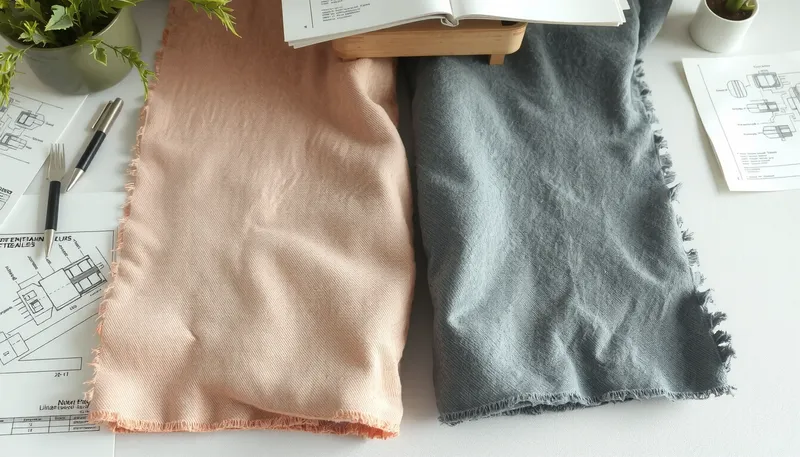
Now, here comes the hardest point that every brand owner or sourcing manager will heed. In exchange for all the benefits they get from hand-feel and printability, Modified Nylon 6 (D036) usually costs 20% less than the comparable Nylon 66.
This is not just a minor saving; it is a strategic advantage that is either used to improve the margins or be redirected to some other features of the products. Moreover, you end up giving away a much better, more desirable product at a lesser cost.
Performance Showdown: Modified N6 (D036) vs. Nylon 66 for Activewear
In the tech world, there are pros who set up hierarchies to show the best performing hardware per price. The same approach can be applied to activewear fabrics. It is time to discard old reputations and see who really offers the best in 2026.
Just as you wouldn't overspend on a graphics card with features you'll never use, you shouldn't overspend on fabric properties that don't benefit your customer. To assist in making nylon 6 vs nylon 66 activewear choice more straightforward, we have put together a table.
| Feature | Nylon 66 | Modified Nylon 6 (D036) | The Winner for Activewear |
|---|---|---|---|
| Hand-Feel | Often stiff, slick | Exceptionally soft, supple | Modified N6 |
| Printability & Dyeing | Difficult, less vibrant | Excellent, vibrant colors | Modified N6 |
| Cost | High (Premium) | ~20% Lower Cost | Modified N6 |
| Stretch & Recovery | Good | Excellent, less restrictive | Modified N6 |
| Extreme Abrasion | Excellent | Good (Sufficient for Activewear) | N66 (but often overkill) |
Once you look at the features that an activewear customer – primarily and with good reason – cares deeply about, and consider the factors of dyeing and cost, you will see that the choice for modern activewear is clear.
Conclusion: Build a Smarter Brand, Not Just a Stronger One
The nylon 6 vs nylon 66 gear debate is put to rest for brands that are customer experience and smart business-driven. It is the idea that Nylon 66 must always be better that our fabric technology has simply overcome.
Four years down the line and sticking to that myth will be a conscious decision to spend extra money on a fabric that is less comfortable and harder to work with. The strength of your brand is not measured in the melting point of a fiber but can be determined by customer satisfaction and financial health.
Forgo the outdated premium "status" and embrace smarter technology. Let Modified Nylon 6 take its chance and therefore allow you to provide a better product to your customers a lower cost which is healthier for your business.
Frequently Asked Questions (FAQ)
Is Nylon 66 ever a better choice for apparel?
Yes, for products where extreme abrasion resistance is the single most important factor. This includes things like industrial workwear, motorcycle gear, or heavy-duty bags. For clothing that is close to the skin such as activewear, comfort normally takes priority.
Will my customers notice the difference between Nylon 66 and Modified Nylon 6?
Yes, your customers will undoubtedly notice a massive improvement. They will perceive Modified Nylon 6 fabric as softer, more comfortable, and more luxurious. Thus the better hand-feel directly corresponds to a more premium customer experience.
How does Modified Nylon 6 compare to regular Nylon 6?
Modified Nylon 6 is a massive upgrade to the standard Nylon 6. It is specifically designed to be more durable, better shape retention, and provide a more premium feel. This advanced engineering allows Modified Nylon 6 to be on par with Nylon 66 while also being a lot cheaper.
Does "D036" refer to a specific fabric brand?
"D036" is a typical term used in the industry to denote a particular high-performance modified Nylon 6. It is the name of the substance that you can use in discussions with fabric mills, and they might refer to it with this name too but ask them specifically for "soft-touch, high-printability modified Nylon 6" in case you want to compare it with N66.
Are there environmental differences to consider in the Nylon 6 vs Nylon 66 discussion?
Yes. When it comes to recyclability consideration, Nylon 6 clearly stands out. It can be broken down chemically to its original raw material, caprolactam, and then it can be made back into new fiber of the exact quality. This kind of "closed-loop" recycling is much more difficult and rarer for Nylon 66. When comparing the main characteristics of different nylon fabrics, sustainability could turn out to be an important decision factor for brands in 2026.
Written by Wenruo
Textile Engineer, Forall Lab