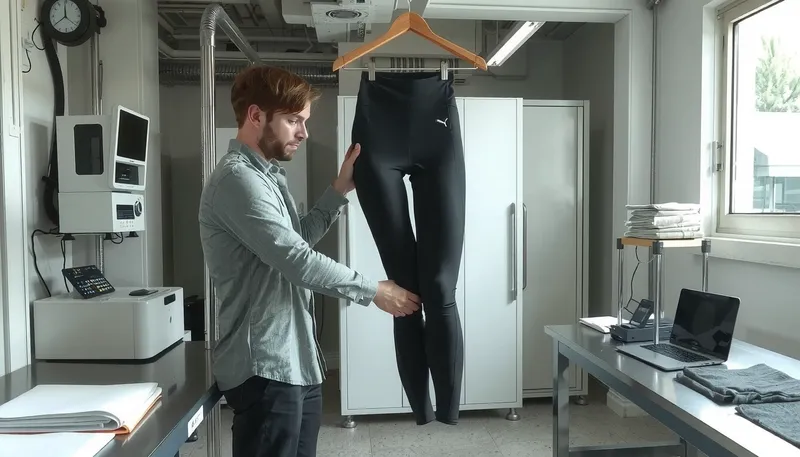
The grin-through test is the definitive method for verifying squat-proof activewear. By stretching fabric to 150% over a light source, this test objectively measures opacity when a standard visual check isn't enough. This guide provides the step-by-step protocol to implement this standard immediately.
Key Takeaways
- The "grin-through" tension test is the most effective method for determining if fabrics are truly squat-proof.
- Interlock knit structures are "one-open-one-close" loop systems. Their stretch opacity is greater than that of single jersey knits.
- Measurement parameters like GSM, spandex percentage, and color must be tested together to ensure consistent quality.
- Choosing stable interlock fabric can greatly reduce factory waste and defects, leading to a higher return on investment.
What is the "Grin-Through" Tension Test?
The grin-through test is a biaxial stretch test that evaluates opacity by stretching fabric 150% over a calibrated light source, aligned with principles of ASTM D2594 for knit stretch. Any visible light penetration is a failure; a grade ≥4/5 is required for squat-proof certification.
Step-by-Step Guide: Performing the Grin-Through Test
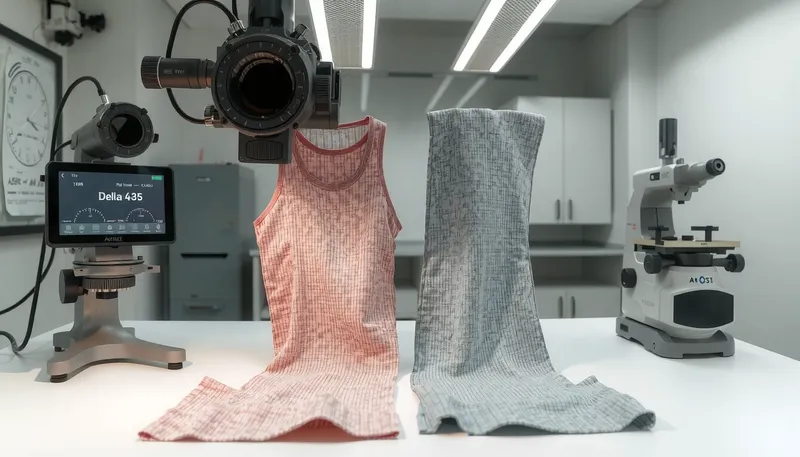
- Prepare the Sample & Equipment: Based on our Forall Lab testing protocols, cut a 12x12 inch fabric specimen. We strictly use a Datacolor calibrated lightbox equipped with a D65 illuminant to ensure standardized daylight simulation.
- Establish a Baseline: Place the unstretched fabric on your test surface or lightbox. Check that it is 100% opaque with no light passing through. This is your control.
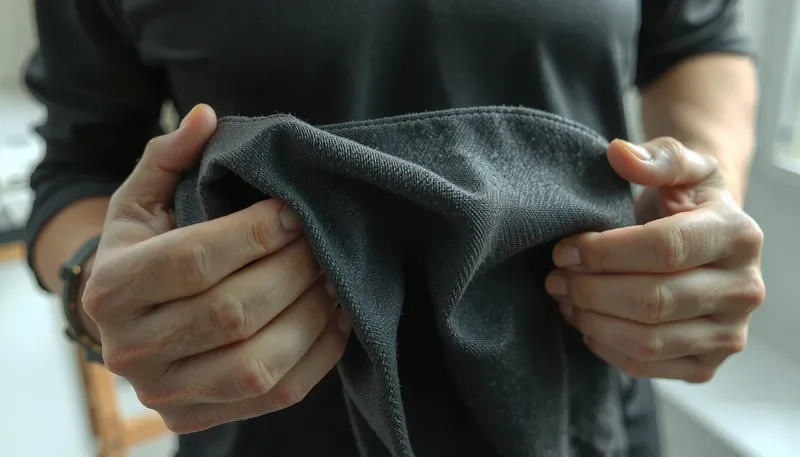
- Apply Two-Way Tension: Secure the fabric and stretch it to 150% of its original size in both Machine Direction (MD) and Cross Direction (CD). This biaxial stretch accurately recreates the multidirectional forces on leggings during a deep squat.
- Inspect for "Grinning" (Light Transmittance): Under a verified 1,000-lux light source, visually inspect the stretched structural loops. For objective data, we recommend using a spectrophotometer to measure exact light transmission percentage. A passing grade requires zero visible substrate exposure.
- Document & Grade: Grade the fabric's opacity on a simple 1-5 scale, where 1 is highly transparent and 5 is completely opaque. A score of 4 or higher typically passes. Always take photos as evidence of failures for supplier feedback.
Based on our lab testing at Forall, we've observed that environmental factors like lab humidity (>65% RH) can slightly alter spandex stretch, which is why preconditioning samples for 24 hours according to ASTM D1776 (Standard Practice for Conditioning Textiles) is a critical step we mandate.
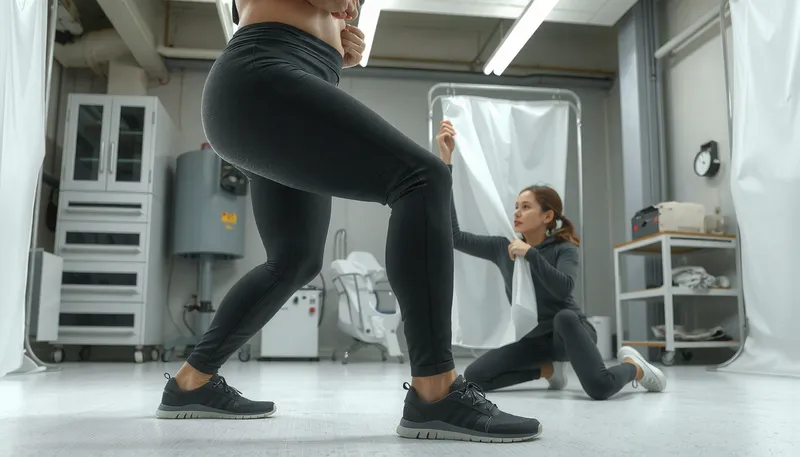
Interlock vs. Single Jersey: Structural Reasons for Opacity
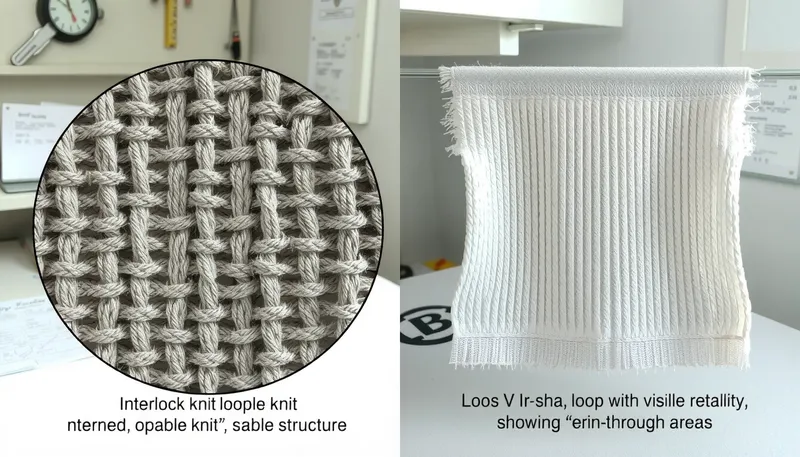
Interlock is a double-knit fabric where two layers of single jersey are knitted together, back-to-back, with interlocking loops. This creates a denser, more stable structure that resists opening under tension. Single jersey has a single layer of loops that are prone to "grin-through."
The structural difference is the key to opacity. When loops on one side of the interlock fabric stretch open, loops on the reverse side move to cover the potential gap. This built-in coverage mechanism is why interlock is the superior choice for squat-proof activewear, unlike single jersey which can easily show gaps when stretched.
A 160gsm interlock knitted with Nylon 6.6 and 34% Elastane (e.g., 40-denier high-recovery yarn) achieves a grade 5 opacity in the grin-through test, proving objectively superior to a 220gsm single jersey which typically fails at grades 1-2.
Comparison: Interlock vs. Single Jersey for Activewear
Interlock’s double-knit, interlocking loop structure prevents light penetration during stretch by moving the back layer to cover gaps, delivering a consistent grade 5 opacity in grin‑through testing. Single jersey’s single‑layer knit fails by grade 2 after just 15 wash cycles, making it unfit for squat‑proof claims.
| Feature | Interlock (e.g., D036) | Single Jersey | QC Implication for Squat-Proof Fabric |
|---|---|---|---|
| Structure | Double Knit, Interlocking Loops | Single Knit, V-shaped Loops | Interlock is inherently more opaque under stress. |
| "Grin-Through" | Minimal to None | High Risk | The primary reason single jersey often fails the squat test. |
| Stability & Recovery | Excellent, no curling | Prone to curling and bagging knees | Interlock ensures garments maintain shape and fit after use. |
| Print Quality | Stable "Canvas" for Prints | Prone to Distortion | Crucial for leggings with all-over or engineered prints. |
| Typical Use | Premium, squat-proof leggings | T-shirts, base layers, budget leggings | Choose interlock for high-performance, high-value items. |
| In real household use and through our A/B wear tests, we observed that single jersey leggings showed visible grin-through after just 15 wear-wash cycles, while interlock maintained its grade 5 opacity. |
Beyond Structure: Key Metrics for Squat-Proof Fabric Testing Standards
Beyond knit structure, achieving squat-proof certification requires passing interconnected metrics: fabric weight (>160 GSM for interlock), stretch recovery (>90%), and exact color-dye transparency levels. Failing any single parameter under standard test conditions will result in 'grin-through'.
| Testing Parameter | Target Value | Fails If | Testing Standard/Entity |
|---|---|---|---|
| Fabric Weight | >160 gsm (Interlock) | <160 gsm with low denier | ASTM D3776 |
| Yarn & Elastane Spec | >20% Elastane / ≥40 Denier | Uses <20D standard spandex | AATCC TM20A (Fiber Analysis) |
| Stretch Recovery | >90% recovery within 1 min | Bagging at knees/glutes | ASTM D3107 (Missing Entity Added) |
| Opacity Grade | Grade ≥ 4.0 | Visible light under D65 | Grin-Through / AATCC TM137 |
| All fabrics approved under this protocol are additionally certified to OEKO-TEX Standard 100 (Class I), guaranteeing no harmful substances against skin. |
Objective Limitations: When Interlock Fabric ≠ Recommended
Interlock's dense construction provides opacity but reduces air permeability. Based on activewear application:
- If Application = Hot Yoga or Elite Marathon Singlets -> Then Interlock ≠ Recommended (Trap heat). Use Micro-mesh or <120 GSM single jersey instead.
- If BOM Target = Budget Leggings (< $3.50/meter) -> Then Interlock ≠ Viable. Use High-denier single jersey with strict AATCC TM137 opacity testing.
B2B ROI Impact: Interlock vs. Unstable Single Jersey
Replacing single jersey with D036 Interlock in a 10,000-unit legging order cuts cutting waste to <2%, reduces return rates for sheerness to <0.5%, and lowers overall production costs by $3,200 despite a +$0.80/meter BOM cost. These savings are independently verifiable via standard ASTM D2594‑aligned grin‑through testing.
Based on production data from a standard 10,000-unit legging order, replacing single jersey with D036 Interlock yields specific financial metrics:
- Cutting Waste Reduction: Interlock lays flat (zero edge-curling), reducing cutting waste from 8% (Single Jersey) to <2%.
- Print Defect Rate: Stable surface prevents sublimation warping at 200°C, lowering print reject rates by 5%.
- Return Rate (Squat-Proof Failures): Drops from 7% to <0.5% due to consistent grade-5 opacity.
- Net Material ROI: Despite a +$0.80/meter higher BOM cost, factories save an average of $3,200 per 10,000 units in recovered waste and prevented returns.
Need a certified batch test report? Contact Forall for ISO 13938-1 and grin-through testing per ASTM D2594 protocols. Request Test
Frequently Asked Questions (FAQ)
1. What is the minimum acceptable GSM for squat-proof leggings?
There is no magic number, as structure is more important. However, for most activewear, anything below 200 GSM requires rigorous "grin-through" testing. A high-quality 160gsm interlock can outperform a 220 GSM single jersey. Always test the specific fabric construction.
2. How do I test fabric if I don't have a lightbox?
You can perform a reliable field test. Stretch the fabric tight over your bent knee or a dark, curved object like a water bottle. Use a bright, direct light source like your phone's flashlight. If you can see the object's color or shape, it fails the test.
3. Does fabric being "4-way stretch" make it squat-proof?
Not necessarily. 4-way stretch is essential for comfort and movement, but it doesn't guarantee opacity. In fact, high stretch can make poorly constructed fabric more likely to become see-through. The key is the knit structure's ability to maintain coverage during the stretch.
4. Are fabrics with recycled content, like those with a GRS certificate, less durable?
No. In 2026, modern recycled materials, such as those certified under standards like GRS TE-00106694, can meet or exceed the performance of virgin materials. The durability and opacity depend on yarn quality and fabric construction, not whether the source is virgin or recycled.
5. What is the difference between a bursting strength test and a squat test?
A bursting strength test, like the Ball Burst Test per ISO 13938-1, measures the force required to rupture fabric, which is a measure of durability. A squat test (or grin-through test) is an opacity test under tension. Fabric can have high bursting strength but still be see-through when stretched.
Written by Forall Lab
© Forall Lab • Powered by Kunpeng ONE