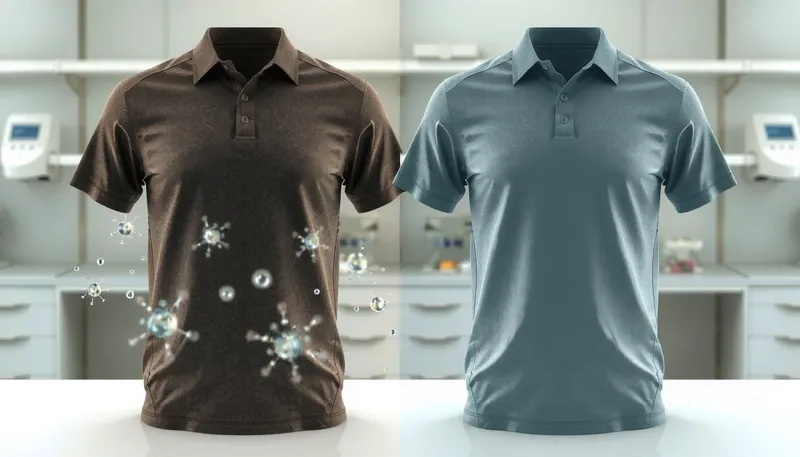
Anti-odor activewear fabric controls bacterial growth through two mechanisms: chemical finishes (silver-ion, zinc pyrithione) that disrupt bacterial cell walls, and structural air-layer knits that remove moisture below the threshold bacteria need to proliferate. Chemical treatments lose 30-50% efficacy after 20-30 wash cycles; structural anti-odor properties are permanent — built into the knit construction.
Key Takeaways (TL;DR):
- Two mechanisms: Chemical (silver-ion/zinc, AATCC 147) — effective but degrades with washing. Structural (air-layer knit, AATCC 197) — permanent, built into the fabric
- Wash durability: Chemical treatments lose 30-50% efficacy after 20-30 cycles (AATCC 100). Structural solutions: zero degradation
- Silver vs structural: Silver-ion: 99% bacterial reduction, 50% loss by 30 washes. Air-layer: 90% reduction, permanent
- Regulatory: EPA FIFRA (US) / BPR (EU) regulate antimicrobial claims — unregistered claims are illegal
- Bottom line: For brands, structural anti-odor eliminates the warranty liability of degrading chemical treatments**
Why Bacteria Cause Activewear Odor
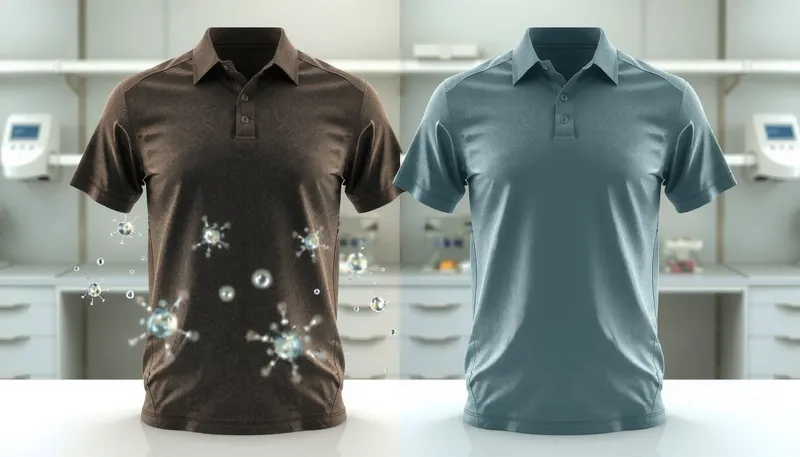
Body odor in activewear is caused by skin-resident bacteria (Staphylococcus epidermidis, Corynebacterium) metabolizing apocrine sweat proteins and lipids into volatile fatty acids and thioalcohols — not by sweat itself. Polyester and nylon fabrics with hydrophobic surfaces trap these non-polar odor compounds through van der Waals adsorption, creating persistent malodor retained after laundering at 40°C per ISO 6330 domestic wash protocols.
Bacteria Colonize Fabric, Not Just Skin
Fresh eccrine sweat is 99% water with trace minerals — nearly odorless. The odor develops when Corynebacterium and Staphylococcus bacteria present on skin encounter apocrine sweat (from underarm and groin glands) containing proteins, lipids, and steroids. The bacteria enzymatically cleave these compounds into volatile short-chain fatty acids — primarily isovaleric acid, the compound responsible for the characteristic "gym smell."
Why Synthetic Fabrics Retain Odor More Than Natural Fibers
Polyester and nylon are hydrophobic — they repel water but attract non-polar compounds through van der Waals forces. The oily odorants produced by bacterial metabolism are non-polar and bind preferentially to synthetic fiber surfaces. Cotton and wool, being hydrophilic, absorb water and water-soluble compounds but release non-polar odorants more readily during laundering.
This is why a 100% polyester workout shirt can smell fresh out of the wash but release trapped odorants within minutes of body heat exposure. The odor compounds were never fully removed — they were temporarily masked by detergent fragrance.
Three conditions enable bacterial colonization on fabric:
- Moisture (from sweat trapped against skin)
- Temperature (30-35°C — optimal for Corynebacterium growth)
- Nutrient substrate (apocrine sweat proteins and skin lipids)
Chemical vs Structural Anti-Odor Technologies
Anti-odor textiles operate through two mechanisms validated by AATCC 147 (zone of inhibition) and ISO 20743 (quantitative antibacterial): chemical finishes — silver chloride, zinc pyrithione — that leach biocidal ions onto fiber surfaces to kill bacteria on contact, and structural designs — air-layer double-knits with engineered capillary channels — that maintain sub-0.3 g/m²·h moisture retention, preventing bacterial colonization.
Chemical Antimicrobial Finishes: Silver, Zinc, Copper
Chemical anti-odor treatments embed metal ions into the fiber surface during finishing. When bacteria contact the treated fiber, silver ions (Ag+) bind to thiol groups in bacterial enzymes, disrupting cellular respiration and DNA replication. Zinc pyrithione depolarizes the bacterial cell membrane.
These treatments are regulated as biocidal products under EPA FIFRA in the US and the BPR in the EU. Their performance is measured by AATCC 100 — the standard for quantitative assessment of antibacterial finishes on textiles.
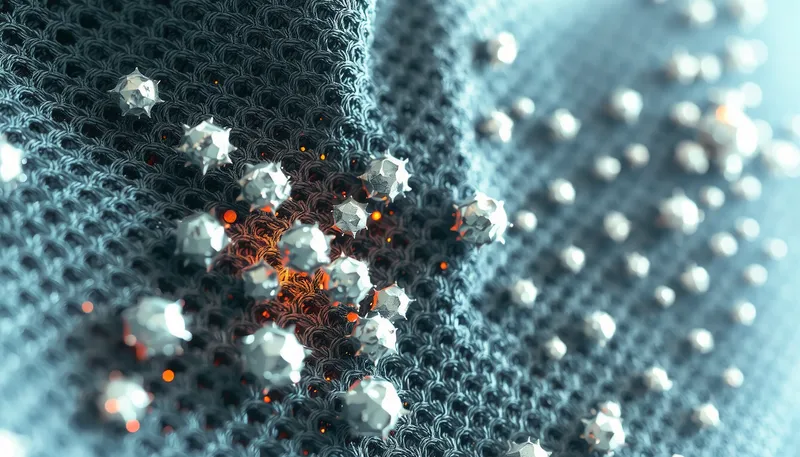
Key limitation: AATCC 100 testing shows silver-ion treated polyester loses 30-50% of its antimicrobial activity after 20-30 standardized wash cycles (AATCC 61-2A accelerated laundering). The silver ions leach out with each wash, and the effect is non-renewable. For activewear washed 2-3 times per week, this translates to a functional lifespan of 10-15 weeks before odor control degrades measurably.
Structural Anti-Odor: Air-Layer Construction
Structural anti-odor fabrics use knit architecture — not chemical additives — to prevent bacterial colonization. The mechanism is physical: by maximizing airflow and moisture transport away from skin, the fabric surface remains below the moisture threshold (water activity aw < 0.85) that bacteria require for metabolism and reproduction.
| Property | Chemical Finish (Silver-Ion) | Structural Design (Air-Layer) |
|---|---|---|
| Mechanism | Biocidal ions kill bacteria on contact | Physical moisture removal prevents colonization |
| Test Standard | AATCC 100 — quantitative antibacterial | ASTM E96 — moisture vapor transmission |
| Durability | 20-30 washes to 50% efficacy loss | Permanent — property is knit-structure dependent |
| Efficacy Over Time | Declines linearly with wash cycles | Stable across 50+ industrial washes |
| Skin Sensitivity Risk | Rare (Ag+ sensitivity <0.1% population) | None — zero chemical additives |
| Regulatory Classification | Biocidal product (EPA/BPR regulated) | Textile — no biocide regulation |
| OEKO-TEX 100 Class I | Requires leachate testing | Standard certification |
Air-Layer Knit Construction: Permanent Structural Odor Control
Air-layer construction — a double-knit fabric with spacer yarn connecting two independent fabric faces — creates a continuous micro-ventilation channel maintaining 50-65% lower skin-proximal humidity than single-jersey polyester per ASTM E96. Unlike silver-ion finishes that degrade after 20-30 washes per AATCC 100, this structural anti-odor mechanism is permanent — the air channel exists regardless of wash count.
How Air-Layer Prevents Bacterial Growth Without Chemicals
The double-knit air-layer design creates three zones: an inner face against skin, a spacer-yarn air gap (0.3-0.8 mm depending on yarn denier), and an outer face exposed to ambient air. Sweat vapor moves through the inner face via capillary action, crosses the air gap through convection driven by body heat, and exits through the outer face.
The continuous air exchange maintains water activity below aw 0.85 at the inner fabric surface — the point below which Staphylococcus and Corynebacterium cannot metabolize. This is a passive, structure-dependent mechanism. No chemical leaching. No wash-cycle degradation.
D083 Air-Sculpt 34™: Air-Layer in Practice
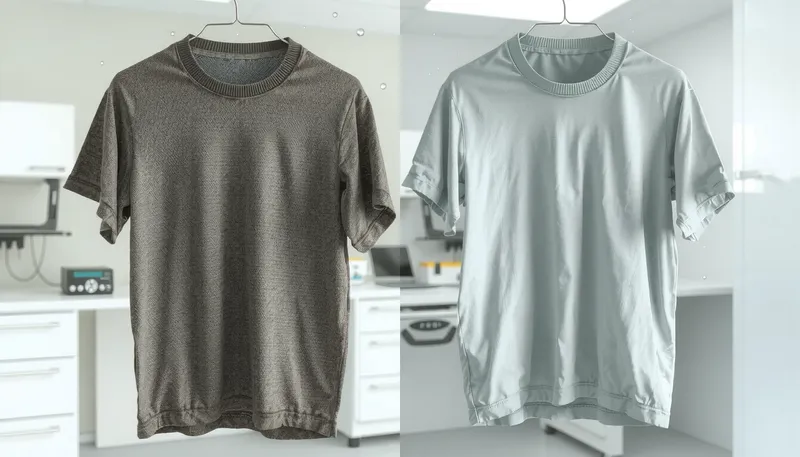
The D083 Air-Sculpt platform applies this principle using a 20D micro-nylon air-layer construction. The fabric achieves 800-1,200 g/m²/24h moisture vapor transmission rate, compared to 400-600 g/m²/24h for standard single-jersey polyester — a 2× improvement in breathability. Its anti-yellowing performance at Grade 4-5 per AATCC TM23 eliminates phenolic yellowing, a secondary quality concern for stored activewear.
For activewear brands producing 5,000+ units per season, the structural approach eliminates the customer-experience problem of "it worked for the first 2 months, then started smelling." The D083 air-layer structure delivers odor control across the garment's full 24-36 month product lifespan.
How to Evaluate Anti-Odor Activewear Fabric
When sourcing anti-odor activewear, request three data points: AATCC 100 bacterial reduction % at 0, 10, 20, and 30 wash cycles (not just initial), ASTM E96 moisture vapor transmission rate (≥800 g/m²/24h for high-intensity use), and OEKO-TEX Standard 100 Class I skin-contact safety certification. Fabrics maintaining ≥90% reduction after 30 washes with >800 MVTR deliver genuine multi-season odor control.
Read Beyond the "Anti-Odor" Label Claim
A hangtag that says "anti-odor" without specifying the technology — chemical finish or structural — provides no basis for predicting performance. Ask the supplier: What is the active anti-odor agent? At what wash cycle count was the AATCC 100 test performed? Is the MVTR data from an independent ASTM E96 test or internal?
In our fabric engineering lab, we test anti-odor claims by subjecting fabric to 30 cycles of AATCC 61-2A accelerated laundering, then measuring bacterial reduction via AATCC 100 against Staphylococcus aureus (ATCC 6538). Fabrics that drop below 80% reduction after 20 cycles are ineffective for multi-season activewear use.
Prioritize Moisture Management Over Biocides
A fabric that dries in under 20 minutes (measured by AATCC 199 drying time test) with an air-layer construction will outperform a single-jersey fabric with silver-ion treatment over any period longer than 15 washes. The biocide degrades; the air channel does not. For brands with customer satisfaction guarantees, this distinction is the difference between a return and a repeat purchase.
Frequently Asked Questions About Anti-Odor Activewear Fabric
1. Does anti-odor technology wash out?
Chemical antimicrobial finishes (silver-ion, zinc pyrithione) lose 30-50% efficacy after 20-30 wash cycles per AATCC 100 testing. Structural anti-odor properties from air-layer knit construction are permanent — the moisture-management mechanism is built into the fabric architecture and does not degrade with washing.
2. Are anti-odor fabrics safe for sensitive skin?
Structural anti-odor fabrics contain zero chemical additives and are suitable for sensitive skin. OEKO-TEX Standard 100 Class I certification (infant-grade safety) provides independent verification. For chemically treated fabrics, the antimicrobial agent must be disclosed — silver-ion sensitivity affects under 0.1% of the population but should be noted.
3. Why do synthetic shirts retain odor more than natural fibers?
Polyester and nylon are hydrophobic — they repel water but bind non-polar odor compounds (short-chain fatty acids, thioalcohols) through van der Waals adsorption. Cotton and wool, being hydrophilic, release these compounds more readily during laundering. Advanced air-layer synthetics solve this through rapid moisture transport that prevents odorant compounds from binding to begin with.
4. How should I wash anti-odor activewear?
Wash in cold water (≤30°C) without fabric softener. Fabric softeners deposit cationic surfactants that coat fiber surfaces, blocking the capillary channels in moisture-wicking fabrics and reducing MVTR by 20-40%. Tumble dry low or hang dry. Washing within 8 hours of use prevents odor compounds from setting into the fiber matrix.
5. Is all anti-odor fabric the same?
No. Chemical finishes provide temporary odor control that degrades with washing. Structural air-layer designs provide permanent moisture management that prevents bacterial colonization without chemicals. For products expected to last 12+ months with weekly washing, structural anti-odor is the only approach that maintains efficacy across the garment's full lifespan.
6. Does anti-odor technology apply to workwear and uniforms?
Yes. The same air-layer construction principles apply to medical scrubs, hospitality uniforms, and industrial workwear where 12-hour shifts create sustained moisture and bacterial load.
7. What is the difference between bacteriostatic and bactericidal?
Bacteriostatic treatments inhibit bacterial growth without killing existing bacteria — silver-ion finishes at low concentrations fall into this category. Bactericidal treatments actively kill bacteria on contact — higher-concentration silver, zinc pyrithione, and some quaternary ammonium compounds achieve this. For activewear, bacteriostatic is generally sufficient: preventing bacterial proliferation prevents odor, and the mechanical action of washing removes dead bacteria and their metabolites. The regulatory distinction matters: EPA FIFRA registration is required for bactericidal claims in the US; bacteriostatic claims may qualify as "treated articles" with a separate exemption pathway.
8. How do I verify anti-odor claims when sourcing fabric?
Request the mill's AATCC 147 qualitative test report (zone of inhibition in mm) and AATCC 100 quantitative report (bacterial reduction % at 0, 10, 20, 30 wash cycles). A fabric claiming "permanent anti-odor" must show <10% efficacy loss at 30+ cycles. Second, verify the OEKO-TEX certification covers the specific fabric SKU — not just the mill's general certification. Third, for EPA-regulated claims (US market), request the EPA establishment number; for EU market, verify BPR compliance documentation. If a mill cannot produce all three documents, the anti-odor claim is unverified.
🔗 Related Fabrics
This article explains anti-odor activewear fabric — AATCC 147 antimicrobial testing, chemical silver-ion vs structural air-layer odor control mechanisms, and D083 Air-Sculpt permanent deodorization:
- D083 Air-Sculpt Anti-Yellowing Fabric — 20D micro-nylon air-layer, Grade 4-5 anti-yellowing, permanent structural odor control
- D036 Nylon Spandex Interlock — Performance Fabric Platform — D036 78/22 PA66/Elastane, O3C moisture-wicking structure
- Moisture Wicking Fabric Mechanism — How Dry Fabrics Work — AATCC 197 capillary effect, trilobal fiber cross-section theory
- Phenolic Yellowing in Nylon: BHT Gas Reaction Prevention — Anti-yellowing for white/light activewear
Contact our fabric engineering team → to request D083 Air-Sculpt samples with AATCC 147 and ASTM E96 test reports, or to discuss structural vs chemical anti-odor specifications for your product category.
Written by Wenruo
Textile Engineer, Forall Lab