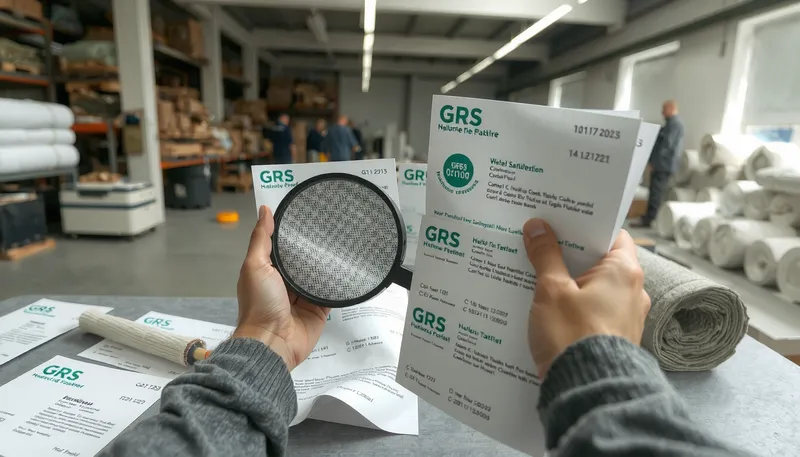
GRS certified nylon spandex is a recycled-content stretch fabric whose claim is verified through the Global Recycled Standard (GRS) — a Textile Exchange certification covering recycled content, chain of custody, social and environmental practices, and chemical limits. To vet grs certified nylon spandex suppliers, confirm three things: an active Scope Certificate (SC), a matching TE-ID in the Textile Exchange public database, and a Transaction Certificate (TC) for every batch you order.
Trust is not the issue — proof is. The three-step check in this guide turns any supplier's sustainability claim into a verifiable record, so your brand can make a GRS claim downstream without greenwashing risk.
Key Takeaways
- Verification is Required: You should never blindly trust suppliers. Always re-verify GRS certification through the provided official channels.
- Know Your Documents: The Scope Certificate (SC) and Transaction Certificate (TC) are widely misunderstood. The SC tells a supplier they are able to produce the certified products. The TC proves your own fabric batch is certified.
- Use the Public Database: The Textile Exchange is your best tool. You can use the supplier's TE-ID (license number) to check the validity of their certification instantly.
- Request a TC for Every Order: The Transaction Certificate is the only document that can validate that your specific purchase is GRS compliant. You need it in order to make downstream claims.
The GRS Standard: More Than a Buzzword
The Global Recycled Standard (GRS) is a third-party certification for textile products with recycled content, administered by Textile Exchange. A GRS audit covers recycled content percentage, chain of custody from recycler to finished roll, social criteria such as labor rights, and environmental criteria including chemical limits — so a GRS claim on a recycled nylon spandex fabric can be traced back to the source of the recycled waste.
This matters for stretch fabrics in particular. A recycled nylon spandex fabric usually carries recycled content in the nylon component while the spandex filament remains virgin, so the certificate must state which component is recycled and at what percentage. For the GRS logo on a finished product, that product must contain a minimum of 50% recycled material — and every certified site from yarn spinner to finishing mill must hold a valid scope certificate for the chain of custody to stay intact.
The Two Certificates That Matter
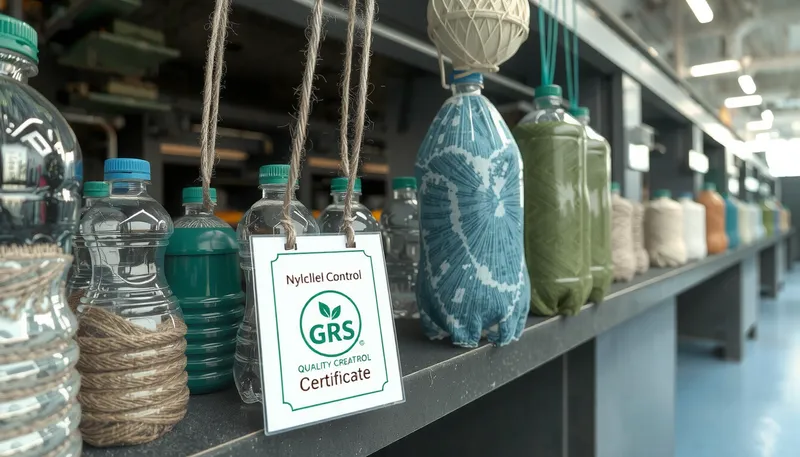
Two certificates govern any grs certified nylon spandex order. The Scope Certificate (SC) proves a supplier is audited and approved to produce GRS goods; the Transaction Certificate (TC) proves one specific shipment is certified. They answer different questions, and you need both.
A Scope Certificate (SC) is the one proving a company has gone through an audit and is able to produce GRS compliant products. It is like a business license. The supplier has the right systems, but it does not certify any specific product or shipment.
A Transaction Certificate (TC) is the most critical document. It is the single piece that shows that a specific batch of the fabric you bought is GRS certified. It directly links your order to the GRS system and serves as direct evidence of authenticity within the chain of custody.
Breaking it down simply:
| Certificate Type | What It Verifies | Analogy | When You Need It |
|---|---|---|---|
| Scope Certificate (SC) | The Supplier's capability | A company's business license | During supplier vetting |
| Transaction Certificate (TC) | A specific shipment/batch | A receipt for your purchase | With every GRS fabric order |
How to Verify a GRS Certificate in 4 Simple Steps
Verifying grs certified nylon spandex is a four-step check: request the supplier's Scope Certificate, locate the TE-ID license number on it, confirm the certificate on the Textile Exchange public database, and demand a Transaction Certificate with every order. Work through them in order — each step closes a different gap in the supplier's claim.
Step 1: Request the Supplier's Scope Certificate (SC)
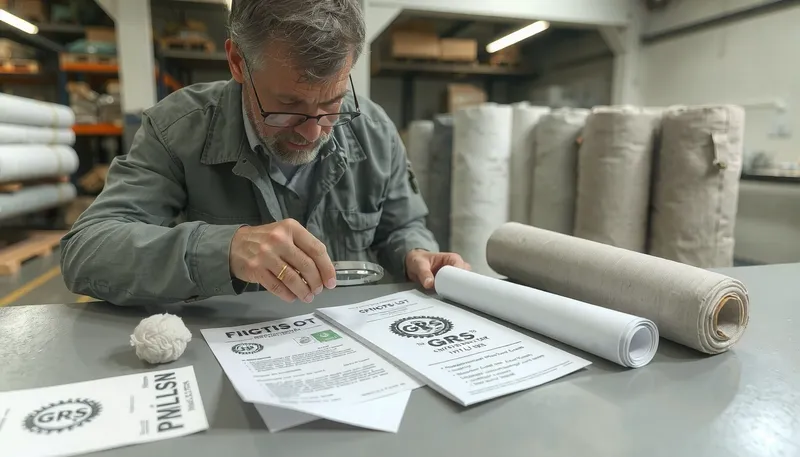
Before you proceed with the order, ask your potential supplier for their current GRS Scope Certificate. Then, receive it and check four key details. The company name, the registered address, the scope of certification (like knitting or dyeing), and the expiration date should all match those of the company you are dealing with.
Step 2: Locate the TE-ID / License Number
Every GRS Scope Certificate carries a unique license number — the TE-ID (Textile Exchange ID), also called a license number or certificate number. Think of the relationship this way: the SC proves a site is certified, the TC proves a specific batch is certified, and the TE-ID is the single look-up key that connects both to the Textile Exchange database. This is the number you enter to check a certificate's live status.
Step 3: Verify on the Textile Exchange Public Database
Next, navigate to Textile Exchange's official database — Find a Certified Company. This public search tool is the authoritative source for checking whether a GRS scope certificate is active.
Once again, enter the license number from the SC into the search bar. Should the certificate actually be valid, the database will reflect a result. It will confirm the supplier's name, location, and certification status. No result or incorrect information will indicate serious problems.
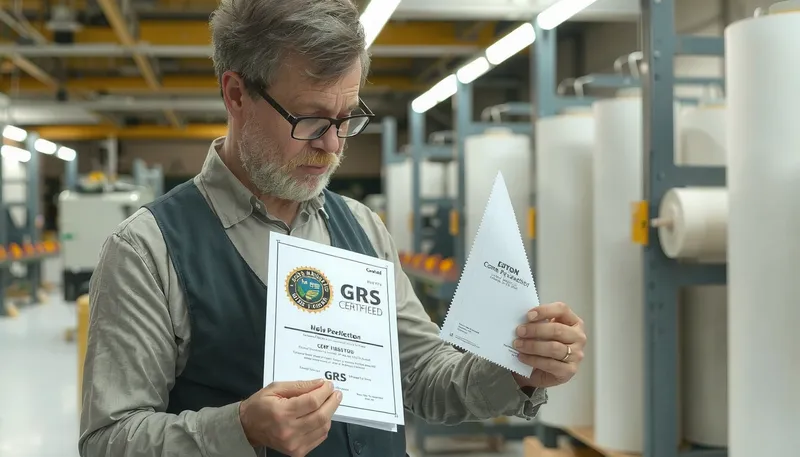
Example — a live TE-ID lookup. To show how Step 3 works, enter our own certificate. Our Textile Exchange ID is TE-00106694, and our company, Forall-Material, is listed as certified. If a supplier hesitates to share a TE-ID that you can verify in the database, treat that as a red flag.
Step 4: Always Request a Transaction Certificate (TC)
When the order is produced and shipped, make sure to request a Transaction Certificate for that specific shipment. The TC is indispensable as it is the only assurance that the fabric in your hand is GRS compliant. Without it, you cannot make official GRS claims on your final products. One caveat: certification documents prove provenance, not physical quality — pair this check with lab testing of the fabric's own performance.
Our Commitment to Verifiable Sustainability
Our standard for recycled-content fabrics is verifiable data, not blind trust: an SC on file, a public TE-ID record, and a TC for every order we ship — the same bar we set for grs certified fabric suppliers.
We apply these same verification rules to every fabric we label with recycled content. When we say a fabric is sustainable, the claim holds because the SC and TC documents say so.
Our fabric platforms are built on this pledge. Air-Sculpt 34™ | Anti-Yellowing Nylon Spandex Air-Layer Fabric (Molded Bra Cup Ready), for example, uses 20D micro-nylon for a soft "Mochi-Touch" surface with 34% spandex for the recovery that molded bra cups require. Every unit of recycled content on the platform is 100% GRS certified — the performance is measurable, and so is the claim.
GRS-certified recycled nylon now reaches high-performance categories, from activewear to swimwear. For a mill-level look at how recycled nylon behaves in stretch fabrics — and what a recycled nylon fabric supplier should disclose about PA66 quality, cost, and virgin-fiber content — see Recycled Nylon Fabric China: Mechanical vs Virgin PA66 Quality, Cost & Lifecycle Analysis.
FAQ: Your GRS Certified Nylon Spandex Questions Answered
The most frequent GRS sourcing questions, answered directly: what the standard covers, how SC and TC certificates work, and how recycled-content claims apply to nylon spandex.
Q1: What's the difference between GRS and RCS (Recycled Claim Standard)?
A: Both standards trace recycled content. However, GRS is much stricter. GRS includes social and environmental rules, like water use and labor rights, plus chemical restrictions. RCS only verifies the chain of custody for the recycled material itself.
Q2: Does GRS certified nylon spandex perform differently from virgin fabric?
A: No. When made by a quality manufacturer, GRS certified nylon spandex offers the same performance. You get the same stretch, recovery, durability, and feel as fabrics made from new materials. The GRS certification is about the material's origin, not a compromise on quality.
Q3: Why is a Transaction Certificate (TC) so important if the supplier has a Scope Certificate (SC)?
A: The SC proves a supplier can make GRS goods. The TC proves they did for your specific order. Without a TC, you have no official document linking your fabric back to the GRS system. This means you cannot legally make a GRS claim on your final product.
Q4: Can I use the GRS logo on my finished products?
A: To use the GRS logo, your final product must have at least 50% certified material. More importantly, your own brand must also be certified through the GRS standard. The certification must cover every step of the supply chain, including your company.
Q5: Is all recycled nylon GRS certified?
A: No. "Recycled" is a general term. GRS certification is a specific, high-level standard that guarantees the recycled claim through third-party audits. Always ask for GRS certification to ensure full traceability and responsible production, not just a generic "recycled" claim.
Q6: Is the spandex in GRS certified nylon spandex recycled?
A: Not necessarily — and the certificate tells you which component is recycled. In a typical GRS recycled nylon spandex fabric, the recycled content is in the nylon face (for example, 76-80% recycled nylon), while the spandex is virgin elastane; a fully recycled spandex fabric, where the elastane itself is regenerated, is still uncommon. The GRS Scope Certificate and Transaction Certificate state the recycled percentage for the certified component, so verify that the number covers the fabric you are buying. When the spandex is virgin, it still counts toward total fabric weight in the finished-product calculation for the GRS logo threshold.
Q7: What is a TE-ID, and how is it different from an SC or a TC?
A: A TE-ID (Textile Exchange ID) is the unique license number printed on a Scope Certificate that identifies a certified company or site in the Textile Exchange database. The SC proves that a site is certified to produce GRS goods; the TC proves that one specific shipment is GRS certified; the TE-ID is the look-up key that lets you verify both online.
Q8: Can a finished garment be GRS certified if I use GRS certified fabric?
A: Not automatically. For the finished garment to carry a GRS claim, every site that handles it — including the factory that cuts and sews the fabric — must hold a valid GRS scope certificate, and the finished product must still meet the GRS minimum of 50% recycled content. The fabric's own certification is necessary but not sufficient for a garment-level claim.
Q9: How do I prove my product's GRS status to my customers?
A: Use an official GRS hangtag that carries the certifier's logo and details — but only once your entire supply chain, including your own company, is certified. The Transaction Certificate (TC) for each order is your internal B2B proof of compliance; the hangtag is the customer-facing proof.
Q10: Does sourcing GRS certified recycled fabric cost more?
A: At the material level, yes — certified recycled yarn and ethical production carry a small premium over conventional equivalents. That premium is often recovered downstream: a higher-quality GRS fabric with a wider usable width and fewer defects yields more garments per kilogram, so the true cost per finished piece can end up equal or lower.
Conclusion: Source with Confidence
Sourcing authentic grs certified nylon spandex is not a matter of blind trust — it is a repeatable verification process.
Ask for the Scope Certificate. Confirm the TE-ID on the Textile Exchange database. Demand a Transaction Certificate with every order. These three checks turn a supplier's sustainability claim into documents your brand can rely on.
By holding suppliers to this standard, you protect your brand from greenwashing while supporting a more honest and verifiable recycled-textile supply chain.
🔗 Related Fabrics
This article covers GRS certified nylon spandex supplier verification: Scope Certificate (SC), TE-ID lookup on the Textile Exchange database, and a Transaction Certificate (TC) per order. Referenced platform: D083 Air-Sculpt 34 (recycled-content nylon spandex).
- GRS Certified Fabric Traceability: A 2026 Check — 🥇 Most relevant: SC/TC chain-of-custody deep dive, GRS limitations, fraud-reporting workflow
- Fabric Certification Guide: OEKO-TEX, GRS, GOTS & Bluesign Explained — Multi-standard certification landscape + the three-step database check
- Brushed Nylon Spandex Fabric: Engineered 20D Microfiber vs. Mechanical Brushing — 2026 Technical Guide — D083 Air-Sculpt 34 platform: nylon-spandex mechanics with OEKO-TEX 100 + GRS
- Recycled Nylon Fabric China: Mechanical vs Virgin PA66 Quality, Cost & Lifecycle Analysis — Recycled vs. virgin nylon technical comparison for stretch fabrics
- D083 Air-Sculpt 34 — Product Page — 34% spandex air-layer nylon, recycled content 100% GRS certified
Ready to verify a GRS certified nylon spandex supplier for your production line?
- Request our current GRS Scope Certificate and TE-ID (TE-00106694) for your records
- Order a 5-yard swatch of GRS-certified recycled nylon spandex for lab testing
- Speak with a textile engineer about recycled-content claims for your finished product
Written by Wenruo
Textile Engineer, Forall Lab