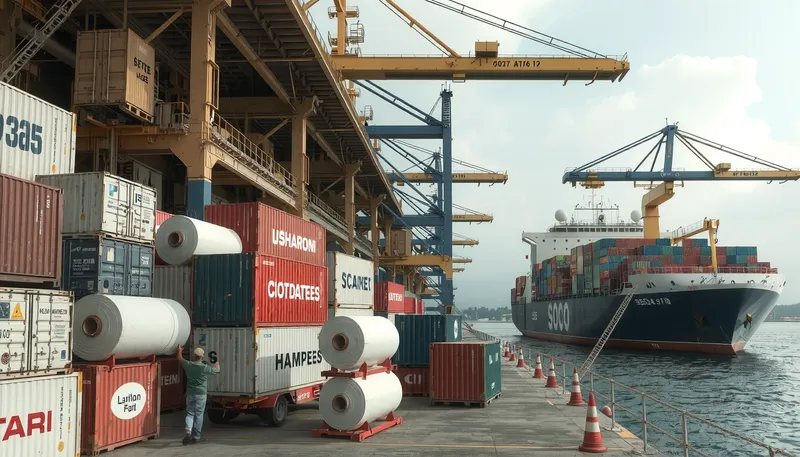
Indonesia garment manufacturing fabric sourcing for US brands follows a documented import pathway: HS code classification, factory Import Approval (PI), import duties of 5-20%, VAT/PPN of 11%, PPh 22 income tax of 2.5-7.5%, and customs clearance through Jakarta's Green or Red Lane system in 3-14 days. This playbook is recommended when your activewear requires technical fabrics unavailable from local Indonesian mills. It is not suitable for commodity textiles best sourced domestically at lower landed cost.
Indonesia is the world's 10th largest textile producer and a leading apparel manufacturing base, with well-trained labor for sportswear sewing. The critical risk for US brands is logistics: fabric import errors — wrong HS codes, a missing Import Approval, mismatched documentation — can stall production for weeks. This guide covers the sourcing decision, the shipping process, true landed cost, and the direct-to-Jakarta shipping model.
Main Takeaways
- The Problem at Hand: Bringing your own high-specification fabric to Indonesia gives you control over quality, but involves shipping, duties, and potential customs delays.
- Documentation is Essential: Most shipping delays are made due to incorrect or incomplete documentation. These include Harmonized System (HS) Codes and the factory's Import Approval (PI).
- True Cost Calculation: You need to plan for import duties (5-20%), VAT (11% in 2026), and income tax (2.5% to 7.5%) to safeguard your profits.
- Straightforward Approach: When you deal with a fabric supplier who directly ships to Jakarta, you remove the risks. It also simplifies your supply chain.
Sourcing Decisions: Local vs. Imported Fabric
Fabric sourcing for Indonesian garment manufacturing is a two-option decision: buy locally from Indonesian mills or import from a global supplier in the US, China, or Taiwan. The choice is driven by product quality requirements and supply-chain control — import when your activewear needs technical fabrics or certified quality, source locally for basic materials where faster transit and simpler paperwork outweigh fabric limitations.
Local Fabric Sourcing Option
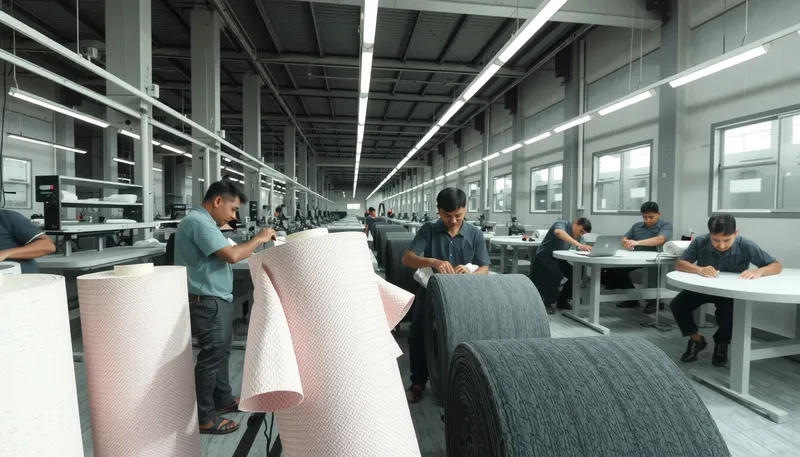
Purchasing fabric locally shortens transit times and simplifies the supply chain on paper, and the experience of local mills reduces onboarding risk.
However, local sourcing has limits. Indonesia's fabric mills are strong in commodity knits but offer few advanced technical textiles. If you manufacture performance activewear, specific high-stretch or engineered materials are often unavailable. Fastness and hue consistency can vary between batches, and the larger mills typically sell only in bulk quantities.
Importing Your Own Fabrics Option
Importing fabric from a specialist supplier in the US, China, or Taiwan gives you control over fiber composition and certified quality. This is often the only way to secure the specific materials needed for performance activewear.
Nonetheless, shipping logistics present a huge problem. The process of fabrics entering Indonesia is not that straightforward. You will face the customs clearance, import duties, and specific taxes. If you make even a minor error in documentation, your shipment could be held up for a long time. Consequently, this would impact the production schedule negatively. This is the case with many US companies using fabric supply chains from Indonesia.
| Feature | Sourcing Locally in Indonesia | Importing Your Own Fabric |
|---|---|---|
| Fabric Options | Good for basic materials, limited for tech fabrics. | Almost unlimited. Access to global innovation. |
| Quality Control | Can be inconsistent. Needs strong local quality checks. | Complete control over fabric quality and details. |
| Cost | Lower shipping costs, but maybe higher fabric cost for quality. | Maybe lower fabric cost, but higher total cost due to duties and taxes. |
| Shipping Complexity | Simpler. Less cross-border paperwork. | High. Involves customs, duties, taxes, and risk of delays. |
The Shipping Guide: How to Ship Fabric to Indonesia
Shipping fabric to Indonesia for garment manufacturing follows three documented steps: pre-shipment paperwork (HS codes, factory Import Approval, matched documents), true landed-cost calculation (import duty 5-20%, VAT 11%, PPh 22), and customs clearance through the Green or Red Lane. A single documentation error can add 1-2 weeks to clearance, so document accuracy is the controlling factor. The steps below reflect our logistics handling for US brands importing to Jakarta.
Step 1: Pre-Shipment Paperwork is Everything
Basically, the success of your shipment solely lies in the perfection of your documentation. It must be spot on.
The Harmonized System (HS) Code is a number that classifies your fabric for customs. If you should use the wrong code, that is a common mistake. It will lead to your shipment being subjected to inspection and thus cause delays.
Your Indonesian factory has to get an Import Approval (Persetujuan Impor - PI) for textiles. This is the kind of license you need to have and without it, your fabric won't be able to enter the country legally. So before you ship anything get this clarified from your factory.
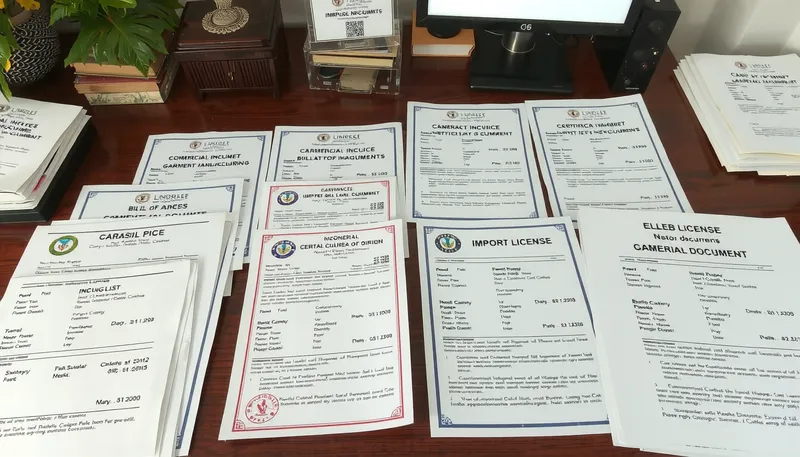
Your shipping documents should match each other perfectly. This includes that:
- Commercial Invoice
- Packing List
- Bill of Lading (B/L) for ocean freight or Air Waybill (AWB) for air freight
- Certificate of Origin
- Proof of your factory's import license (PI)
The Indonesian government requires detailed paperwork for importing goods. Work closely with your factory and freight company, and be meticulous on every field.
Step 2: Calculating Your True Cost
The cost of the fabric isn't the overall cost. You must take into account the duties and the taxes in order to discover your true "landed cost." If you forget this step, you risk an unprofitable order.
- The Import Duty: This is normally 5-20% of the value of the fabric according to the HS code.
- Value Added Tax (VAT/PPN): It will be 11% in 2026.
- Income Tax (PPh 22): This can be between 2.5% and 7.5%.
Before shipping, always request a through quote from a customs broker. This step ensures you are not blind to the total landed cost of your Indonesia garment manufacturing fabric until it arrives.
Step 3: The Shipping & Customs Process
The fabric arrives at customs and Indonesian customs carry out the customs clearance. Usually, a customs broker does it, your freight company, or your factory hires them.
Indonesian customs have a lane system. If you have perfect documentation, your shipment is likely to go through the "Green Lane" (Jalur Hijau) that has a quick release. If there are mistakes, it may go to the "Red Lane" (Jalur Merah) which means a full inspection of your container.
The customs clearance can take anywhere from 3 to 14 days or even longer. The time depends on how accurate your documents are. It also depends on whether your shipment was flagged for inspection. The best way to avoid the problematic lane is to ensure you have accurate paperwork.
A Simple Solution: Direct-to-Jakarta Fabric Shipping
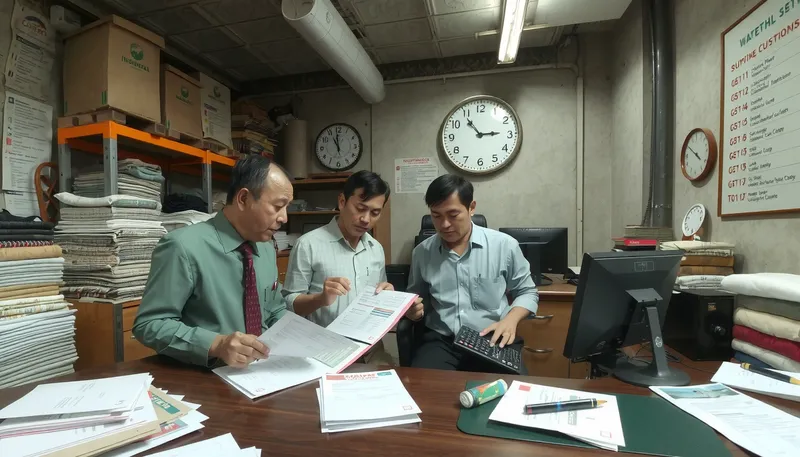
A direct-to-Jakarta fabric shipping model consolidates supplier, freight, customs, and final delivery into one accountable partner, giving you a single point of contact, one invoice, and a guaranteed total price. It is recommended for US activewear brands importing technical fabric on a repeat production schedule. It is not suitable for one-off small shipments where air freight with a local broker is more economical.
The Problem with a Broken Supply Chain
A broken supply chain splits risk across multiple partners. A small paperwork error from the supplier stops everything; a freight delay does too; a licensing issue at the factory adds another failure point. You end up solving problems that arise thousands of miles away.
The Power of an All-in-One Partner
There is a better alternative. Picture a fabric supplier who also takes care of the shipping, customs, and final delivery for you. This is what an all-in-one partner can bring. You have one point of contact, one invoice, and a guaranteed total price. The supplier carries the risk of shipping. On your end, you can concentrate on your brand growth.
For performance activewear brands this model is decisive. When shipping a high-performance base such as the D036 Nylon Interlock — engineered for strict warp and curl control of prints — getting it cleared and production-ready is critical. The fabric uses a "One-Open-One-Close" double-jersey structure that creates a strong, canvas-like surface for sublimation and acid printing. D036 is shipped direct-to-Jakarta, bringing the fabric to your factory's doorstep with customs handled by the supplier.
The Managed Near-Shore Line: China-Cambodia-Indonesia
A managed near-shore line extends the direct-to-Jakarta model across three countries: fabric is sourced in China, where technical-fabric innovation and high-efficiency printing live; cut-and-sew or component work can sit in Cambodia at a cost advantage; and finished fabric is consolidated and imported into Indonesia under one accountable partner. For a US brand, this is the version of the model that matters when your Indonesian factory runs intricate printing or needs a repeat supply of an engineered base such as D036 Nylon Interlock — the "One-Open-One-Close" interlock that holds a clean print surface even at a lightweight 160 gsm. The partner consolidates multiple factories' orders into one container, runs on-the-ground quality checks before anything ships, and manages Indonesian customs, including the KITE bonded-zone (Bonded Zone) license where it lowers your landed cost. Because buying power spans several factories, MOQs become flexible — newer brands are not locked into full-container commitments.
How to Vet an All-in-One Partner
When a fabric supplier offers to run Indonesian shipping for you, verify four capabilities before trusting them with your production calendar: proven China-Cambodia-Indonesia freight experience, on-the-ground QC technicians in the sourcing country, working knowledge of Indonesian import rules (including the KITE bonded-zone license), and a technical portfolio beyond commodity knits. Use this checklist in your first supplier conversation:
| Criteria | What to Ask |
|---|---|
| Proven Experience | Can they demonstrate how they move goods from China and Cambodia into Indonesia? |
| On-the-Ground QC | Do their own technicians sit in the sourcing country and inspect before shipment? |
| Regulatory Knowledge | Do they know Indonesian import rules cold — including the KITE bonded-zone license and when it reduces your duty? |
| Technical Portfolio | Can they source and advise on engineered fabrics such as D036 interlock, not only commodity knits? |
Learning Indonesia's Garment Systems
Indonesia is the world's 10th largest textile producer, with garment manufacturing clustered in the West Java and Central Java industrial zones. Most plants now offer full-package services — design, sourcing, and logistics — beyond cut-and-make (C&T), making them capable partners for US brands importing performance fabric. This ecosystem is a key reason the Indonesian garment manufacturing fabric supply chain remains competitive for sportswear.
Based on our sourcing experience, the largest garment clusters — Bandung, Semarang, and the Jakarta region — account for most export-oriented activewear production, which shortens factory-audit travel time for US brands. Selecting a partner inside a cluster also simplifies fabric delivery, since the same customs brokers and freight lanes serve the whole industrial zone.
FAQ: Shipping Activewear Fabric to Indonesia
Importing fabric to Indonesia for garment manufacturing requires correct HS classification, a factory Import Approval (PI), and matched shipping documents; import duty (5-20%), VAT/PPN (11%), and PPh 22 (2.5-7.5%) determine the true landed cost, and customs clearance runs 3-14 days through the Green or Red Lane.
1. What are the common import duties for activewear fabric in Indonesia?
Import duties range from 5-20% of the fabric's value depending on the HS code. On top, budget 11% VAT (PPN) and 2.5-7.5% PPh 22 income tax — a combined landed-cost uplift of roughly 20-35% for activewear knits. A Form E certificate under the ASEAN-China FTA can cut Chapter 60 knit duties to 0% (VAT still applies). Always get a customs broker quote before shipping.
2. How long does it take to ship from the US or China to Jakarta?
Ocean freight takes 4-6 weeks port-to-port, plus 1-2 weeks for customs clearance. Air freight takes 5-10 days but is significantly more expensive — practical for small, urgent shipments only.
3. What is the most common mistake US brands make when sending fabric to Indonesia?
Paperwork that is wrong or missing. When the commercial invoice, packing list, and container contents do not match, customs moves the shipment to full inspection and clearance can stretch to weeks.
4. Can my factory handle the import process?
Yes — and they must. The Indonesian factory must act as importer of record and hold the Import Approval (PI). You are still responsible for delivering perfect documentation from the fabric supplier's side.
5. Why not just source all my activewear fabric in Indonesia?
Local mills offer strong commodity knits but limited technical fabrics. High-performance activewear — innovative blends, specific weights, advanced finishes — is often unavailable locally, making import the only route to the required quality and function.
6. What documents do I need to ship fabric to Indonesia?
Five documents must match each other exactly: Commercial Invoice, Packing List, Bill of Lading (B/L) or Air Waybill (AWB), Certificate of Origin, and the factory's Import Approval (PI). A mismatch in any field (HS code, value, weight) triggers inspection.
7. What is the difference between the Green Lane and Red Lane in Indonesian customs?
The Green Lane (Jalur Hijau) releases containers quickly when documentation is complete and accurate. The Red Lane (Jalur Merah) triggers a full container inspection — 3-14 days or longer. Accurate paperwork keeps you out of the Red Lane.
8. Can a Form E certificate reduce import duties on fabric to Indonesia?
Yes. Under the ASEAN-China Free Trade Area, a valid Form E certificate reduces import duties for HS Chapter 60 knitted fabrics from 15-20% to 0% (PPN VAT still applies). This is the same tariff mechanism used in direct-to-mill sourcing from Chinese mills.
9. Should I manage shipping myself or use an all-in-one partner?
For repeat production of technical fabric, an all-in-one partner removes the risk that a single paperwork error halts your line — you get one point of contact, one invoice, a guaranteed landed price, on-the-ground QC at the source, and consolidated container rates. The service fee is usually offset by fewer defects, less waste, fewer delays, and better fabric pricing from consolidated buying. For one-off small shipments, air freight with a local broker can be more economical.
As specialized performance fabric suppliers with direct-to-Jakarta shipping capability, our sourcing team provides HS classification support, landed-cost quotes, and D036 Nylon Interlock samples for Indonesian garment manufacturing. Contact us for a consultation and fabric sample.
🔗 Related Fabrics
This article extends Forall Lab's D036 Nylon Interlock platform into Indonesian garment manufacturing logistics, connecting fabric import, direct-to-mill sourcing, and shipping:
- D036 Nylon Interlock — Product Page — The direct-to-Jakarta fabric platform referenced throughout this guide
- Top Activewear Fabric Manufacturer Indonesia — Form E direct-to-mill sourcing from Indonesian factories
- Fabric Elongation & Recovery Test — Stretch-recovery methodology for performance fabrics shipped to production
Written by Wenruo
Textile Engineer, Forall Lab