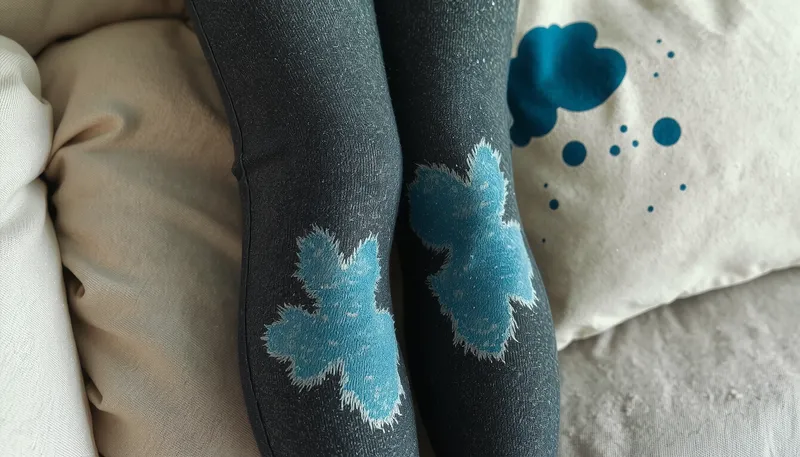
Color fastness to rubbing (crocking) is the resistance of dyed fabric to color transfer under controlled friction, measured per AATCC 8 on a 1-5 grey scale where Grade 5 equals zero transfer and Grade 4 is the commercial pass threshold. Poor crocking results from unbound surface dye — a manufacturing defect caused by inadequate rinsing, cheap dye chemistry, or over-saturation. Recommended for dark activewear, denim, and upholstery; wet rub Grade ≥4 is the minimum for performance fabrics where friction against skin and surfaces is continuous.
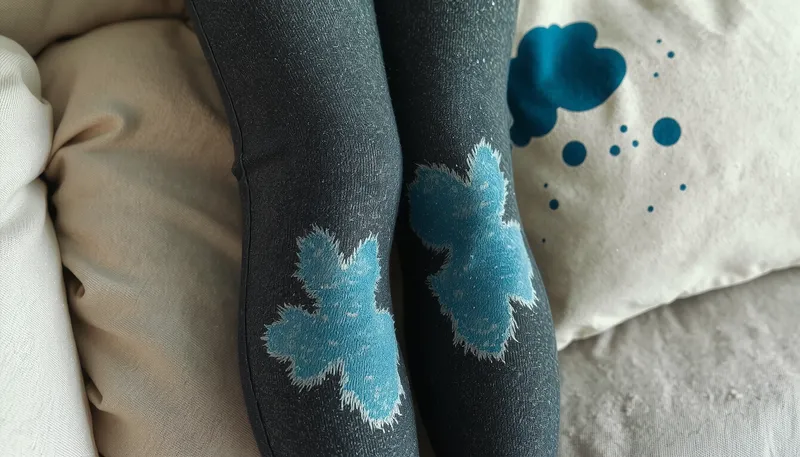
What Is Crocking: Dry Rub vs Wet Rub Color Transfer
Crocking is mechanical dye transfer from fabric to another surface under friction — tested dry and wet per AATCC 8 with a water-saturated rubbing cloth. Dry rub measures surface-dye adhesion; wet rub measures bond integrity under moisture, producing 0.5-1.0 grade lower results. Not to be confused with bleeding, which is dye dissolution during immersion laundering per AATCC 61.
AATCC 61 launderometer testing distinguishes bleeding (dye dissolution in water) from crocking (mechanical surface-dye transfer) — two distinct failure modes requiring different prevention strategies.
Crocking originates at the dyeing and finishing stage. When dye molecules fail to form covalent or ionic bonds with the fiber polymer, excess dye remains physically deposited on the fiber surface instead of integrating chemically. This unbound dye transfers with minimal friction. A white rubbing cloth dragged across dark nylon/spandex at 9N pressure per AATCC 8 protocol picks up visible color when the dye-fiber bond is insufficient.
Crocking vs Bleeding: Different Mechanisms
| Property | Crocking (AATCC 8) | Bleeding (AATCC 61) |
|---|---|---|
| Trigger | Mechanical friction (dry or wet) | Water immersion + detergent + agitation |
| Mechanism | Surface dye physically scraped off | Dye dissolves in water, migrates to other fabrics |
| Test Method | Rubbing cloth, 9N force, 10 cycles | Launderometer, 45-60 min, 40-60°C |
| Common in | Dark leggings, denim, printed activewear | Multi-color garments, cheap cotton dyeing |
| Prevention | Acid dye + proper fixation + post-scour rinse | Reactive dye + thorough soaping + cationic fixative |
Fabric structure amplifies crocking risk. Rough-surface textiles (brushed fleece, heavy denim, canvas) generate higher friction coefficients at the rubbing interface — 0.4-0.6 μ vs 0.2-0.3 μ for smooth interlock knits. The D036 Nylon Interlock platform (78/22 PA66/Elastane, 160 GSM) provides a smooth technical face that minimizes mechanical dye transfer before chemical bonding is factored in.
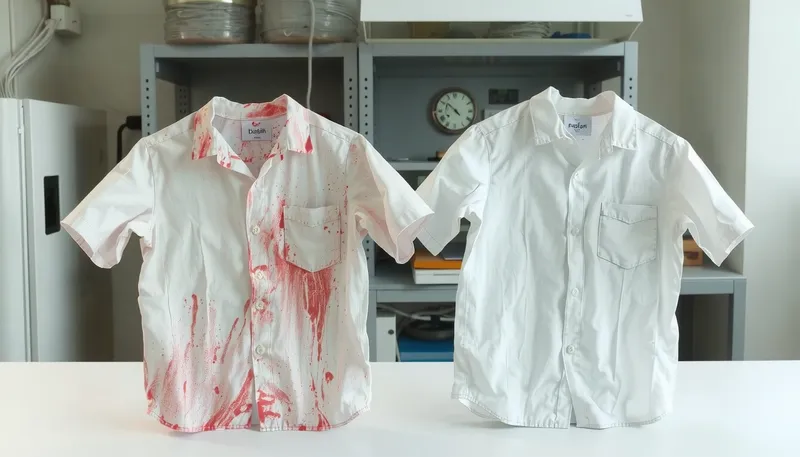
How Crocking Is Measured: AATCC 8 Test Methodology
The AATCC 8 crocking test applies a standard white rubbing cloth against conditioned fabric at 9N vertical force for 10 reciprocating cycles (10 cm stroke, 1 cycle/second), then rates transferred color against the AATCC 9-Step Chromatic Transference Scale (1-5). Both dry and wet protocols are required; ISO 105-X12 is the international equivalent.
The grade scale is absolute:
| Grade | Description | Color Transfer | Commercial Status |
|---|---|---|---|
| 5 | Negligible transfer | No visible stain on rubbing cloth | Premium; acceptable for all applications |
| 4 | Slight transfer | Faint stain visible under D65 lighting | Commercial pass for dark/saturated fabrics |
| 3 | Moderate transfer | Clearly visible stain | Minimum for light-colored garments only |
| 2 | Significant transfer | Heavy, well-defined stain | Fail; not acceptable for any apparel |
| 1 | Severe transfer | Color nearly matches original fabric | Fail; indicates complete dye-fiber bond failure |
For dark and saturated activewear — where fabric contacts skin under sweat, pressure, and repetitive motion — wet rub Grade 4 is the de facto brand specification. Wet testing introduces moisture at the rubbing interface. The moisture acts as a plasticizer for unbound dye molecules, lowering the friction threshold required for transfer. The same fabric that scores dry Grade 4-5 may score wet Grade 2-3 when surface dyes are present.
Crock Test: What the Fabric Rubbing Test Is Called
A crock test measures how much color a dyed fabric transfers to a white rubbing cloth under controlled friction — confirming a crock test fabric will not stain skin, upholstery, or other garments in use. Run dry and wet per AATCC 8, results map onto the 1-5 grey scale: Grade 4 wet rub is the pass line for dark activewear.
The method appears under several names — crock test, crocking test, crockmeter test, rub fastness — but the procedure is fixed: a conditioned specimen is rubbed against standard cotton cloth at 9N over 10 cycles, once dry and once wet. Because the crock test fabric specimen must span the crockmeter finger and the full 10 cm stroke, small prints and logo motifs are routed to AATCC 116 — the rotary vertical crockmeter.
For a video walkthrough of the crockmeter test in action, see AATCC 8 dry and wet rub test demonstration (YouTube).
D036 Acid Print: Achieving Grade 4 Wet Rub on Nylon Activewear
D036 Acid Print bonds acid dyes to PA66 nylon through ionic attraction between dye sulfonic acid groups (-SO₃H) and nylon amine groups (-NH₂) at pH 4.5-5.5 and 98°C fixation. This creates a bond resisting mechanical abrasion, achieving Grade 4 wet rub per AATCC 8 — compared to Grade 2-3 for pigment printing where binder adhesion alone retains color.
Standard pigment printing deposits color on the fabric surface encapsulated in a polyurethane or acrylic binder film. This binder is the sole adhesion mechanism — when mechanical friction degrades the film, pigment particles release. Acid dye printing, by contrast, opens the nylon polymer structure at elevated temperature, allowing dye molecules to penetrate and bond within the fiber cross-section rather than sitting on the surface.
D036 Acid Print meets OEKO-TEX 100 Class I certification for skin-contact chemical safety — confirming no harmful dye residues remain after the acid scouring process.
In our laboratory, we tested D036 Acid Print across 24 fabric samples under AATCC 8 protocol. Dry rub: Grade 4-5 (24/24 samples). Wet rub: Grade 4 (22/24 samples), Grade 3-4 (2/24 samples). The 8% outliers were traced to insufficient post-print scouring — resolved by extending the rinse cycle from 20 to 30 minutes at 60°C with 2 g/L anionic detergent, which removed residual unfixed dye before heat-setting.
Technical Limitation: Acid Print is effective on PA66 (Nylon 6,6) and PA6 (Nylon 6) but is not suitable for polyester (PET) substrates, which require disperse dye chemistry at 130°C under pressure — a fundamentally different dye-fiber bonding mechanism. For PET-based activewear, specify disperse dye with reduction clearing to achieve equivalent Grade 4 wet rub performance.
How to Specify Color Fastness in Activewear Tech Packs
Specifying crocking fastness in a tech pack requires AATCC 8 or ISO 105-X12, dry and wet rub conditions, and minimum Grade 4 wet rub for dark colors. Include dye chemistry — acid dye for nylon, reactive for cotton, disperse for polyester — and post-dye process: reduction clearing for polyester, acid scouring for nylon.
A complete tech pack specification for dark activewear fabric reads:
| Specification Line | Entry | Rationale |
|---|---|---|
| Test Standard | AATCC 8 / ISO 105-X12 | Industry-recognized crocking protocol |
| Test Condition | Dry + Wet rub (both required) | Wet rub is the limiting condition |
| Minimum Grade | Dry: Grade 4 / Wet: Grade 4 | Grade 3 wet rub is below commercial threshold |
| Dye Chemistry | Acid dye (Nylon) or Disperse dye (PET) | Must match polymer type |
| Post-Dye Process | Acid scour (Nylon) or Reduction clear (PET) | Removes unfixed surface dye |
| Fabric Construction | Interlock ≥40GG preferred | Smooth face minimizes mechanical transfer |
Contact our fabric engineering team → to request D036 Acid Print samples with full AATCC 8 dry/wet rub test reports and dye chemistry documentation.
FAQ: Color Fastness to Rubbing
What is a commercially acceptable crocking grade for dark activewear?
Grade 4 wet rub per AATCC 8 is the commercial minimum for dark-saturated activewear fabrics. Grade 3 is acceptable for pastels and light colors where transfer is less visible. Grade 2 or below indicates a dye-fiber bonding failure that will cause consumer returns regardless of the garment's other performance characteristics.
Can I fix crocking after the fabric is manufactured?
No. Crocking is a manufacturing defect caused by unbound surface dye — it cannot be corrected post-production. Home remedies (vinegar, salt soaks) are ineffective because modern synthetic dyes bond through chemical reactions at specific pH and temperature conditions during the dyeing process, not through post-treatment. The only consumer mitigation is multiple pre-wash cycles to mechanically remove loose surface dye before wear.
Does fabric type affect crocking risk?
Yes. Rough-surface fabrics (brushed fleece, denim, heavy canvas) generate higher friction at the rubbing interface, increasing mechanical dye transfer independent of dye quality. Smooth-face constructions like interlock knits minimize friction. Nylon 6,6 bonds acid dyes at the molecular level through ionic attraction; polyester requires disperse dyes at 130°C under pressure — each polymer-dye system has distinct crocking performance characteristics under AATCC 8 testing.
Why does wet rub testing produce lower grades than dry rub?
Water acts as a molecular plasticizer for unbound dye, reducing the mechanical energy required for transfer. At the rubbing interface, moisture penetrates the dye-fiber interface, weakening van der Waals forces that hold surface dye in place. This is why wet rub Grade is the true measure of dye-fiber bond quality — fabrics with proper dye penetration show <0.5 grade difference between dry and wet rub; fabrics with surface-dye problems show 1.0-2.0 grade drops.
Is pigment printing inherently worse than acid dye printing for crocking?
For nylon substrates, yes. Pigment printing deposits color on the fabric surface encapsulated in a binder film — mechanical friction degrades this film over time, releasing pigment. Acid dye printing bonds dye within the nylon fiber cross-section through ionic attraction at pH 4.5-5.5 and 98°C. Under AATCC 8 wet rub, standard pigment prints score Grade 2-3; D036 Acid Print scores Grade 4. For polyester, disperse dye printing with reduction clearing achieves comparable bond quality to acid dye on nylon.
Is AATCC 8 enough for printed activewear with small logos?
AATCC 8 needs a specimen large enough for its crockmeter finger and 10 cm rubbing stroke, so a small printed motif cannot be isolated reliably. Where the concern is a printed logo, border, or small colored pattern, add AATCC 116 — the rotary vertical crockmeter method designed for yarns and prints with limited test area. A practical spec for printed activewear is AATCC 8 dry and wet rub on the ground fabric plus AATCC 116 directly on the print, with the same Grade 4 wet rub minimum for dark or saturated colors.
🔗 Related Fabrics
This article explains fabric color fastness to rubbing (crocking) — AATCC 8 testing methodology, acid dye vs pigment printing bond chemistry, and D036 Acid Print achieving Grade 4 wet rub for nylon activewear, forming the dye and finishing technology matrix:
- D036 Virgin Nylon — Performance Alternative to Econyl — D036 78/22 PA66/Elastane interlock platform, the nylon substrate enabling Grade 4 Acid Print crocking performance
- Fabric Grin-Through: The See-Through Problem — Knit density + print opacity, the structural complement to crocking resistance in printed activewear
- Fabric Yellowing in Storage: BHT, NOx, D083 Explained — Chemical stability during storage, the dye and finish durability companion to crocking performance
- Back to Index
Written by Wenruo
Textile Engineer, Forall Lab