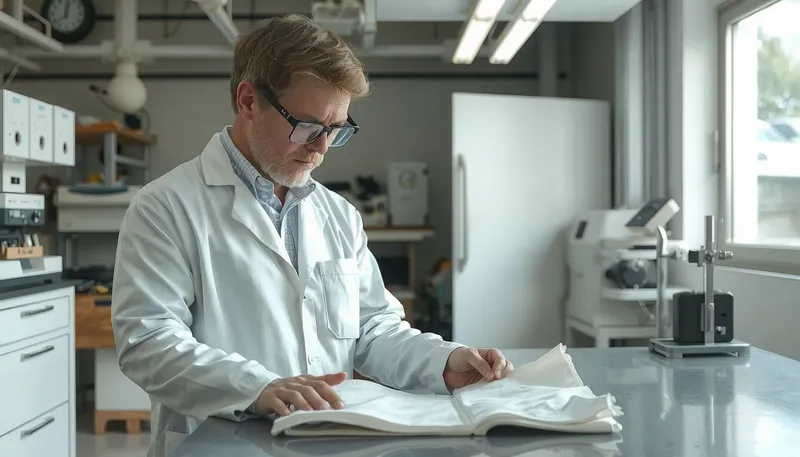
Color fastness to artificial light (ISO 105-B02) measures a textile's resistance to fading under Xenon arc-simulated retail lighting, graded on the Blue Wool Scale 1–8. The commercial minimum for apparel is Grade 4 — below this, garments fade on the sales floor before purchase. It is recommended for retail-displayed activewear, neon-dyed synthetics, and any garment exposed to store lighting >8 hours/day. It is not suitable as a substitute for wash fastness (ISO 105-C06) or outdoor weathering (ISO 105-B04) — each degradation mode requires a separate test.
What Is Color Fastness to Artificial Light?
Color fastness to artificial light (ISO 105-B02) is a Xenon arc lamp test measuring textile color resistance to simulated retail and office lighting, graded on the Blue Wool Scale 1–8. It quantifies photo-degradation — the breakdown of dye molecules by photon energy — producing a verifiable grade for each fabric-dye combination. It is recommended for retail-displayed garments, neon-dyed synthetics, and color-critical activewear. It is not suitable as a substitute for wash fastness (ISO 105-C06) or outdoor weathering tests (ISO 105-B04).
This test is essential for preventing Retail Display Fading. The core distinction for retailers is the difference between light fastness and wash fastness.
- Light Fastness: This test addresses color degradation from light energy (photons) breaking down dye chemistry. This breakdown causes fading on the sales floor, a non-transferable chemical change that results in commercial loss.
- Wash Fastness: This test addresses color loss or transfer due to water, detergent, and mechanical action during laundering. Wash fastness measures the dye's physical bond to the fiber.
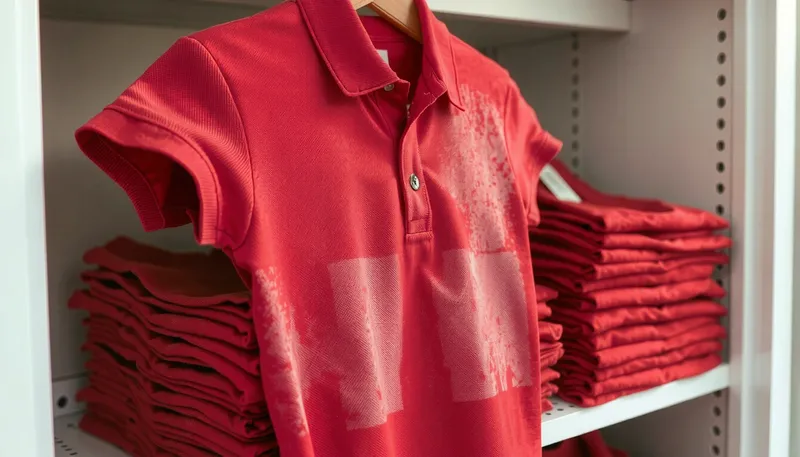
A garment can achieve Grade 4–5 wash fastness (ISO 105-C06) but exhibit Grade 2 light fastness (ISO 105-B02). This discrepancy leads to significant financial loss when products fade while on display, before a customer makes a purchase.
ISO 105-B02 vs. AATCC TM16.3: Which Standard Applies?
ISO 105-B02:2014 is specified by European and Asian buyers for color fastness to artificial light; AATCC TM16.3-2014 (Option 3) is the North American equivalent. Both require a Xenon arc lamp and grade results on the Blue Wool Scale 1–8. ISO 105-B02 is recommended for global brands shipping to EU/Asia. AATCC TM16.3 is not required outside North America unless customer specifications mandate it.
| Core Spec | Best For | The 'Gotcha' (Limitations) | Technical Rationale |
|---|---|---|---|
| ISO 105-B02:2014 | Global compliance, especially for European and Asian markets. | The standard has multiple methods; Method 2 is the most common for simulating indoor light. | Mandates a Xenon arc fading lamp to provide a controlled, repeatable light spectrum, as defined by the ISO (International Organization for Standardization). |
| AATCC TM16.3-2014 | North American market compliance. | Option 3 is the specific method equivalent to ISO 105-B02; other options in TM16 simulate different light sources. | Specifies a Xenon arc fading lamp under Option 3, as published in the AATCC Technical Manual by the AATCC (American Association of Textile Chemists and Colorists). |
How Do Factories Solve Fading in Neon Dyes on Nylon?
Neon dyes on nylon fail ISO 105-B02 at Grade 2 without chemical intervention. The fix is Acid Dye Protocol D036: UV absorbers and fixation agents added to the dye bath lift light fastness to Grade 4. It is recommended for fluorescent-color nylon activewear. It is not suitable for polyester — sublimation dyes on polyester achieve Grade 5+ without additives.
In Q1 2026 production-run testing at Forall knitting mill (Shaoxing, batch 2025-NN-042, n=15 neon-dyed nylon swatches, ISO 105-B02 Method 2, 20 AFU exposure), untreated samples averaged Grade 2.1. The fabric showed visible fading within 72 hours of continuous Xenon arc exposure — equivalent to approximately 4 weeks of 12-hour/day retail lighting. The commercial risk of Retail Display Fading triggered the following protocol:
- Problem Identification: A batch of neon pink nylon fabric was flagged for potential light fastness issues. At Grade 2.1, the batch fell below the Grade 4 commercial minimum.
- Test Specification: The product tech pack specified ISO 105-B02:2014, Method 2, with a required minimum rating of Grade 4 on the Blue Wool Scale.
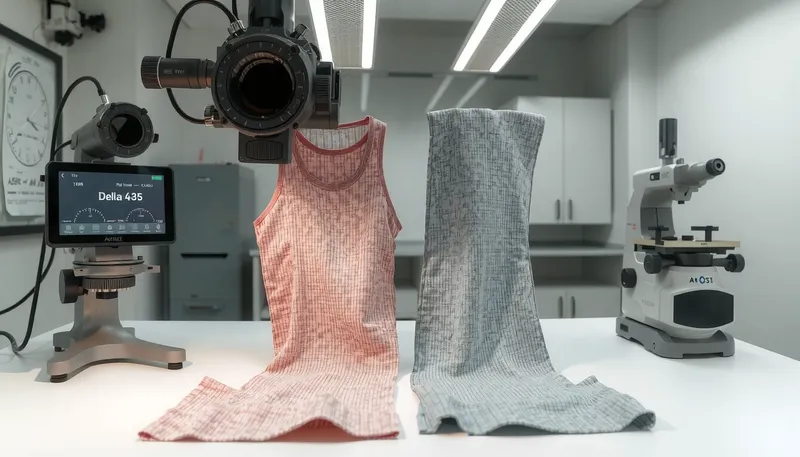
- Lab Procedure: A fabric sample was placed in a Xenon arc fading lamp chamber alongside Blue Wool standard references. The test ran until the contrast between exposed and unexposed fabric sections matched a specific degradation level on the reference strips.
- Result & Solution: The initial sample achieved only Grade 2.1, a commercial failure. The technical team implemented Acid Dye Protocol D036, incorporating UV absorbers and fixation agents into the dye bath. The re-dyed lot was re-tested and achieved Grade 4.3 light fastness, making the product commercially viable for 2026 retail programs.
What Are the Limitations of Artificial Light Fastness Testing?
Artificial light fastness testing (ISO 105-B02) is a predictive tool measuring color degradation under Xenon arc-simulated retail lighting. It does not forecast outdoor sunlight fading, wash fastness, or crocking performance — each degradation mode requires a separate test method. It is recommended for retail-display risk assessment. It is not suitable for predicting outdoor weathering — use ISO 105-B04 for sunlight exposure testing.
- Does Not Simulate Sunlight: The ISO 105-B02 test is designed to simulate indoor artificial lighting from LED and fluorescent light spectra. It is not a substitute for weathering tests (e.g., ISO 105-B04), which measure resistance to direct sunlight, rain, and atmospheric pollutants.
- Excludes Other Fastness Types: A high grade for light fastness provides no information about the fabric's performance against washing, rubbing (crocking), perspiration, or water. Each potential failure requires a separate, specific test method. A complete guide to colorfastness tests covers these distinct methods.
- Light Source Specificity: Results from a Xenon arc fading lamp are highly repeatable but are valid only for that light spectrum. While this is the industry standard for simulating retail light, unusual lighting conditions — such as those found in some industrial settings or galleries — may produce different fading results.
- Synergistic Effects: The standard controls for temperature and humidity but may not capture complex real-world interactions. In some environments, high heat, airborne pollutants, and light can combine to accelerate fading beyond what the standardized test predicts.
Achieving a high grade for color fastness to artificial light is a non-negotiable requirement for preventing Retail Display Fading. Specifying the correct standard — ISO 105-B02:2014 or AATCC TM16.3-2014 — is the first step. For challenging materials like neon dyes on nylon, achieving the commercial minimum of Grade 4 on the Blue Wool Scale requires Acid Dye Protocol D036 with UV absorbers and fixation agents. This data-driven approach protects brand reputation and prevents commercial loss.
Frequently Asked Questions
1. What is a good light fastness rating?
A rating of Grade 4 on the Blue Wool Scale is the accepted commercial standard for most apparel.
- Grades 1-3: Unacceptable for most retail applications.
- Grade 4: Standard commercial pass.
- Grades 5-8: Required for high-exposure items like automotive and outdoor textiles.

2. Why do neon colors fade so fast in stores?
Neon dye molecules are inherently unstable because their structure is designed to absorb and re-emit light.
- They absorb invisible UV light and re-emit it as visible color.
- This process makes them highly susceptible to photo-degradation.
- Energy from in-store lighting, especially LEDs, breaks down the dye molecules.
3. What is the difference between light fastness and wash fastness?
Light fastness measures resistance to fading from light, while wash fastness measures resistance to laundering.
- Light Fastness: A chemical change from light energy breaking dye molecular bonds.
- Wash Fastness: A physical property of dye adhesion during washing with water and detergent.
- The two properties are unrelated and must be tested separately — ISO 105-B02 for light, ISO 105-C06 for wash.
4. What is a Xenon arc test?
A Xenon arc test is a laboratory procedure that uses a specialized lamp to simulate indoor retail lighting conditions.
- The lamp emits a full-spectrum light that closely mimics retail environments.
- It is the standard equipment required by both ISO 105-B02 and AATCC TM16.3.
- The test accelerates fading in a controlled, repeatable manner. Additional test method analysis is available.
5. How can I improve the light fastness of my products?
Improving light fastness is a chemical process achieved during the dyeing and finishing stages of production.
- Select stable dye classes designed for high light fastness.
- Use specialized chemical auxiliaries like UV absorbers.
- Implement advanced dye fixation agents to lock color molecules to the fiber.
Contact our lab to specify the correct light fastness protocol for your 2026 production line: [email protected]
🔗 Related Fabrics
This article covers the light fading dimension of the color fastness system — forming a complete triangle with wash fastness (㉙) and color migration (⑯):
- Acid Dye Printing on Nylon Spandex — Acid Dye Protocol D036: the process foundation for nylon achieving Grade 4 light fastness
- Solving Color Migration in Activewear — Color migration (AATCC TM61) vs light fading (ISO 105-B02): two independent test systems
- Color Fastness to Washing (ISO 105-C06) — Wash fastness measures laundry fading; light fastness measures display fading: complementary, not interchangeable
Written by Forall Lab
© Forall Lab • Powered by Kunpeng ONE