By Wenruo · Fabric Development Engineer, Forall Lab
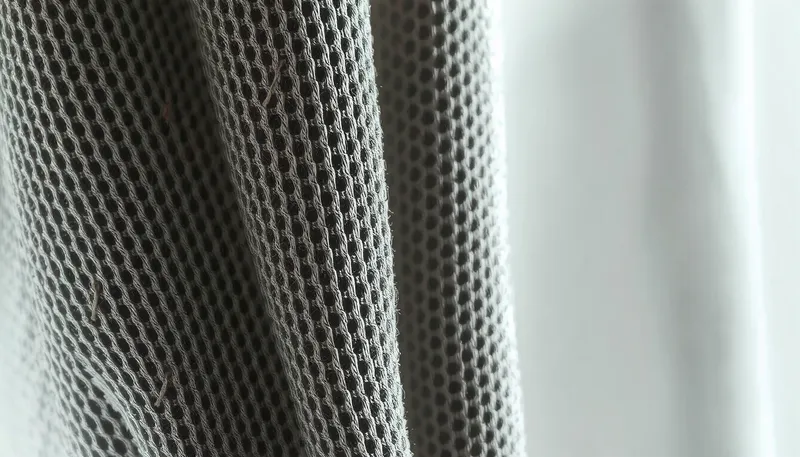
E-sports apparel fabric (also written esports apparel fabric) is a performance textile for professional gaming. The fabric manages heat through micro-ventilation and capillary wicking while the wearer sits still. Mills and brands use it for stage jerseys, practice scrims, coaching polos, and fan merchandise.
Unlike standard sportswear, e-sports jersey fabrics often incorporate an antibacterial (anti-odor) treatment to support comfort and focus during long, stationary sessions under high-stress conditions.
For a professional gaming jersey worn under stage lighting, start from a 92/8 poly/spandex knit with an engineered structure. Measure it against three buyer targets: ≥150 mm/30 min by AATCC 197, ≥200 cfm/ft² at 125 Pa by ASTM D737, and ≥99% reduction by ISO 20743.
These are targets, not pass/fail limits. The report must state the test conditions. For the ISO 20743 figure, confirm whether it is initial or post-wash activity, and ask for the method option and the test strains.
Basis labels in this article: "standard" means the text of a published test method. "Project" means Forall Lab internal data or experience. "Buyer target" means a brand-specific requirement, not a limit in any standard.
What Is Performance E-Sports Apparel Fabric?
Performance e-sports apparel fabric: a technical textile for sedentary, high-concentration athletes. Scope: professional gaming jerseys and related team apparel. Not a contact-sport fabric.
The fabric uses micro-ventilation and capillary wicking to manage heat and moisture under hot stage lights, because the wearer does not move enough to create airflow. An antibacterial (anti-odor) treatment is included to support odor control during long wear. The 12+ hour figure is a design target; this article gives no 12-hour test data, and the treatment's wash durability must be tested separately.
The core issue is sedentary heat management. Standard athletic textiles rely on evaporative cooling from airflow during motion. E-sports apparel fabric must manage heat and comfort with the wearer stationary, often under intense stage lighting. The design therefore prioritizes breathability and moisture transport at minimal body movement.
The main application is professional e-sports jerseys and other performance gaming apparel. The key difference from standard sportswear is tactility and low friction. The design target is comfortable wear against the skin for over 12 hours.
The sleeves must also give a low-friction surface for smooth forearm glide across a desk or mousepad. Drag at the forearm can disturb aim.
Low friction is a surface property, not a fabric category. A soft hand alone does not guarantee a low-friction glide. Before you approve a sleeve, confirm the glide on the actual yarn, finish, and seam layout.
Which E-Sports Apparel Programs Need Different Fabric Specs?
Pick the fabric question by program before you pick the fabric. The 92/8 knit is the default starting point for a printed stage jersey. Other programs rank other properties first, as the table shows.
| Program | Fabric priority | Why it differs | What to confirm |
|---|---|---|---|
| Pro stage jersey | Print clarity, low sheen, anti-odor | On-camera graphics and long stationary wear | Sublimation coverage, opacity under stage light, ISO 20743 on washed samples |
| Practice and scrim jersey | Wash durability, pilling, cost | More wash cycles and less camera exposure | ISO 12945-2 pilling, ISO 12947-2 abrasion, colorfastness, repeat-order consistency |
| Coaching staff polo | Collar structure, breathability, embroidery | Different silhouette and decoration method | Knit or piqué substrate, embroidery backing, shrinkage |
| Fan merchandise | Cost, print variety, MOQ | Wider size range and lower price point | Print method, minimum order, size grading |
| Creator and streaming apparel | Camera appearance, comfort, low rustle | Desk lighting and microphone proximity | Opacity on camera, hand feel, seam placement |
| Team travel and bootcamp | Packability, odor control, quick dry | Repeated wear with limited laundry | Wash durability, drying time, odor performance after wear |
These are starting points, not fixed rules. A fan shirt and a stage jersey can use the same print method and still need different fabric weights, MOQs, and wash testing. Settle the priority column first, then write the spec.
What Is 92/8 E-Sports Fabric Engineering?
92/8 e-sports knit: 92% polyester / 8% spandex, engineered knit structure, opaque face (not open mesh). Buyer targets, not standard limits: ≥200 cfm/ft² at 125 Pa (ASTM D737), ≥150 mm/30 min (AATCC 197), ≥99% reduction (ISO 20743). Silver-ion anti-odor treatment.
The knit combines micro-ventilation, capillary wicking, and silver-ion treatment in one fabric. The design target is 12+ hours under hot stage lights, with an opaque face instead of an open mesh.
In an internal wear trial (project data), we compared 12 fabric samples on 10 experienced players at 28°C / 50% RH for 8 hours. The engineered knit measured a mean skin temperature 2.3°C lower than the standard mesh control. This is an internal comparison, not a published clinical study. The trial covered 8 hours; the 12+ hour figure elsewhere in this article is a design target, not a tested duration. Ask for the report with the measurement site, device, and sample construction.
We developed the knit to provide cooling without the sheerness of an open polyester mesh. The structure uses multi-channel polyester filaments and an opaque, smooth face for dye-sublimation printing with CMYK aqueous disperse dye. Brand logos and sponsor graphics stay sharp.
The fabric works through three actions. First, micro-ventilation, measured by ASTM D737 (air permeability): engineered knit channels vent heat even when the wearer is stationary. Second, capillary wicking, quantified by AATCC 197: the structure pulls moisture away from the skin.
Third, silver-ion anti-odor treatment. ISO 20743 measures antibacterial activity. Wash durability must be tested separately.
Garments are finished with flatlock stitching using textured polyester bulk thread to reduce chafing.
Engineered micro-ventilation and open mesh differ in where the airflow comes from. An open mesh relies on large openings. Air moves well, but the fabric shows through and prints poorly. An engineered knit uses stitch architecture and filament shape to make smaller channels across an opaque face, so the fabric vents heat and still carries a full-coverage graphic.
The trade-off: airflow per unit area is usually lower than an open mesh. Match the target to the venue. Chasing the highest possible number pushes the spec back toward open mesh, with the sheerness and print loss described above.
In a seated position, convective airflow over the skin is low. The fabric has to move moisture and vapor through its structure instead of waiting for air to be forced across the body. That is the design target. The fabric does not replace room ventilation.
Why 92/8 Polyester Is a Printable Fabric for Gaming Jerseys
Printable fabric for e-sports jerseys: a fabric that accepts full-coverage dye-sublimation ink without bleeding or sheerness and without losing its moisture-wicking structure.
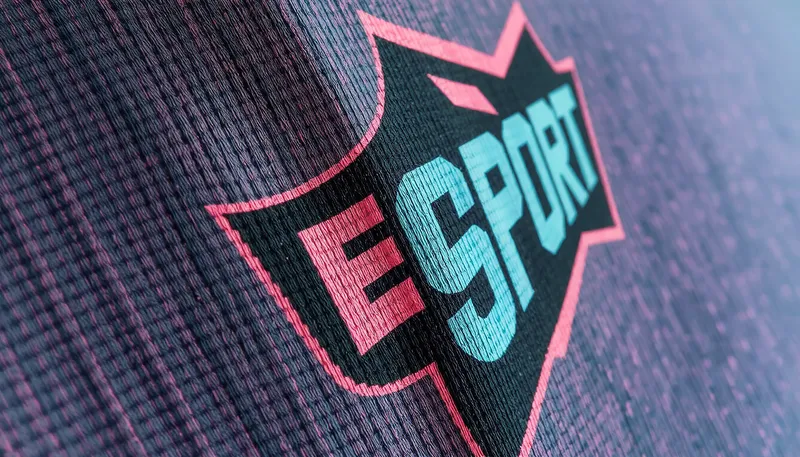
The 92/8 knit meets this requirement with an opaque, smooth polyester face that keeps sponsor graphics and player numbers sharp. For a sublimated gaming jersey, the fabric choice decides how well an all-over print survives a full LAN-tournament season.
The 92% polyester face gives CMYK aqueous disperse dye a uniform bond surface. Gradients and fine text stay crisp because there is no surface ink layer to crack or peel. The dye bonds inside the fiber, adds no hand weight, and leaves the micro-ventilation channels open.
Surface-applied inks such as screen-print plastisol or heat-transfer vinyl can block airflow and crack under 4-way stretch.
The knit contains 8% spandex, so run sublimation below the spandex heat-damage threshold. Above it, the jersey loses shape recovery through repeated washing. Ask the mill for the approved temperature, dwell time, and pressure for this spandex grade, and confirm them on a strike-off before bulk. A setpoint from another fabric does not transfer.
Sublimation protects the print from cracking and peeling. It does not make color immune to fading. If the jersey will be washed repeatedly or displayed under strong light, specify colorfastness to washing (ISO 105-C06) and to light (ISO 105-B02), and test the actual colorways. A result on one colorway does not carry to another.
Opacity matters as much as smoothness. A face that shows through dulls dark graphics and reveals underlayers. Confirm opacity and print clarity on a strike-off under the lighting used on stage, not from a lab photo. A lab photo is taken under lab light, and the stage is not. Where possible, run the strike-off on bulk-representative fabric, not only on the development sample.
92/8 E-Sports Fabric vs. Standard Polyester
Choose the 92/8 knit for sedentary athletes under hot lights and for complex graphics. Do not choose it for high-impact sport, or where the lowest-cost printable fabric sets the program. The table lists each property with its limit.
| Core Spec | Best For | The 'Gotcha' (Limitations) | Technical Rationale |
|---|---|---|---|
| Thermal Management | Sedentary athletes under hot lights. | Less effective for high-impact sports. | Micro-ventilation knit structure maximizes heat release with minimal airflow. |
| Moisture Wicking | Rapid sweat removal during high-stress moments. | Requires direct skin contact for optimal results. | Multi-channel fibers create the capillary wicking action, measured per AATCC 197. |
| Odor Control | Multi-day tournaments; long practice sessions. | Specific wash care needed (no softeners). | Silver-ion treatment; ISO 20743 measures antibacterial activity, not wash durability. Ask for results after the claimed wash cycles. |
| Aesthetics & Print | Pro-grade jerseys with complex, vibrant graphics. | Higher cost than basic printable fabrics. | Opaque, smooth face prevents sheerness and allows for crisp dye-sublimation printing. |
| Stretch & Comfort | Unrestricted arm and shoulder movement. | Over-stretching (e.g., pulling sleeves over hands) can leave a stretched mark in low-spandex blends. | Integrated spandex provides four-way stretch for ergonomic comfort. |
How Is E-Sports Fabric Performance Verified?
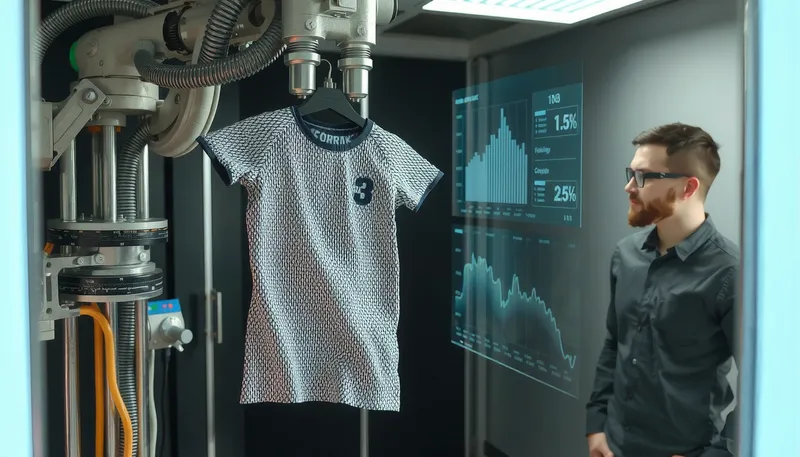
Test methods used here: ASTM D737 (air permeability, breathability), AATCC 197 (vertical wicking, wicking speed), ISO 20743 (antibacterial efficacy), ISO 11092 (thermal resistance Rct and water-vapor resistance Ret). Scope: these define the method, not a pass line or a comfort threshold.
The buyer sets the target. The report must state the conditions. A number without its conditions cannot be compared with another report.
AATCC 197, ASTM D737, ISO 20743, and ISO 11092 are test methods, not certifications. A report shows what was measured on a sample under stated conditions. OEKO-TEX STANDARD 100 is the only certification in this list. Ask for the report, not a badge, because a badge does not show the test conditions.
A claim of "breathability" is validated with ASTM D737, which measures the volume of air that passes through a fabric per unit of time. A higher number indicates better performance for sedentary heat management, but the value depends on the pressure drop and test area. The fabric is the same; the test is not. A reading taken at a different pressure drop or test area is a different number, so compare only reports that use the same settings.
Ask which lot the report was run on. A result on a development sample does not describe a bulk lot.
Several organizations publish the standards for textile performance verification:
- AATCC (American Association of Textile Chemists and Colorists): develops benchmarks for moisture management. AATCC 197 measures the speed and distance liquid is pulled vertically through a fabric, and gives a number for capillary wicking.
- ISO 20743 (International Organization for Standardization): quantifies a fabric's ability to inhibit bacterial growth (anti-odor). The method measures antibacterial activity at the tested condition. The result does not by itself prove wash durability.
- ISO 20743, wash durability: before you accept a long-lasting claim, ask for results after a stated number of home-laundry cycles, with the program (e.g. ISO 6330:2021), the method option, and the test strains. Take the wash program from the garment care label, not from the fiber type. A program harsher or milder than the label gives a result the wearer will not see.
- ISO 11092 (sweating guarded-hotplate test): reports thermal resistance (Rct) and water-vapor resistance (Ret). The method sets no comfort threshold; the buyer sets any target. The values help compare sedentary heat management when the test conditions match.
- OEKO-TEX® STANDARD 100: a third-party certification for harmful-substance testing. The standard uses product classes: Class II covers adult next-to-skin textiles, and Class I is the infant tier. Confirm the class, the certificate number, and that the scope covers the actual fabric, colorways, and trims. A certificate for another fabric or colorway does not cover yours. Certification supports a safety claim. It does not certify comfort or performance.
What Are the Limitations of Specialized E-Sports Fabrics?
Scope: the 92/8 e-sports knit is a seated-sport fabric, not a contact-sport fabric.
The limits are cost, minimum order quantity, and abrasion durability. The fine-gauge knit prioritizes micro-ventilation over abrasion durability, so the knit is a poor fit for high-impact physical sports.
Specialized yarns, silver-ion treatment, and engineered knit structures usually cost more than standard polyester. The premium depends on construction, order size, and finishing. Ask for a line-item quote rather than applying a rule of thumb. These fabrics are not intended for low-cost, promotional-grade merchandise.
Minimum order quantity (MOQ) is also a barrier. Technical mills that produce these fabrics often require higher MOQs to justify a production run, so small batches are harder to procure than off-the-shelf athletic mesh. MOQ varies by mill; confirm it per mill.
Durability must be read in context. The knit is adequate for its intended use, hours of seated gameplay. The fine-gauge structure is not designed for high-abrasion activities. The material may show pilling or wear faster than a heavy-duty textile under harsh physical contact or improper care.
When NOT to choose the 92/8 knit: entry-level team jerseys built to a very low target cost, high-abrasion sports (e.g., football, rock climbing), or programs that can only machine-dry on high heat. High heat damages spandex recovery.
Care preserves the spandex and the anti-odor treatment. The garment care label sets the wash program, not the fiber type. As a starting recommendation for this knit (project guidance): wash in cold water, avoid fabric softeners, and hang to dry. Confirm the final instructions against the care label on the production garment. Softeners can coat the fiber surface and reduce wicking.
Summary: For pro gaming jerseys, choose 92/8 poly/spandex with this engineering. Verify against buyer targets of ≥200 cfm/ft² at 125 Pa by ASTM D737, ≥150 mm/30 min by AATCC 197, and ≥99% reduction by ISO 20743, and require the test conditions in the report. Avoid for budget or high-abrasion use.
Frequently Asked Questions (FAQ)
1. What is the best material for a gaming jersey?
The recommended material is an engineered knit blend, typically a 92% polyester / 8% spandex composition with an engineered knit structure.
- It must offer sedentary heat management.
- It requires capillary wicking per AATCC 197.
- It needs an integrated anti-odor treatment, such as a silver-ion treatment.
2. Why do pro gamers wear long sleeves?
Pro gamers wear long-sleeve jerseys for a consistent forearm glide surface and for temperature regulation in both cold and hot venues.
- Reduces friction between the arm and the desk or mousepad.
- Keeps the glide surface consistent during aim adjustments.
- In cold, air-conditioned arenas, the sleeve helps maintain stable forearm muscle temperature.
- Under hot stage lighting, the sleeve's micro-ventilation helps heat escape instead of trapping it.
3. How does dye-sublimation printing work on e-sports fabric?
Dye-sublimation printing uses heat to turn CMYK aqueous disperse dye into a gas that diffuses into the polyester fibers and becomes trapped there.
- The ink becomes part of the fiber rather than a surface layer.
- There is no adhesive layer to crack or peel.
- The process adds no hand weight and does not block the knit's micropores.
4. Is spandex necessary in e-sports apparel fabric?
Yes, a small percentage of spandex is needed for four-way stretch.
- It allows unrestricted movement in the shoulders and arms.
- It ensures the jersey conforms to the body for comfort.
- It improves shape retention and durability over time.
5. What is OEKO-TEX® certification for gaming apparel?
OEKO-TEX® STANDARD 100 is a third-party certification for harmful-substance testing, not a general safety guarantee.
- It uses product classes: Class II covers adult next-to-skin textiles; Class I is the infant tier.
- Confirm the certificate number and that its scope covers the fabric, colorways, and trims actually used.
- Ask for the test report and the class claimed. A logo alone does not show the class, the scope, or the certificate number.
6. How does e-sports fabric differ from standard activewear fabric?
E-sports fabric is engineered for sedentary use. It combines micro-ventilation with capillary wicking: the knit pulls moisture away from the skin, and the engineered channels let heat and vapor escape while the wearer sits still. Standard activewear leans on airflow from motion for evaporative cooling and needs more abrasion resistance for running or training.
Standard activewear fabric also often uses more spandex for compression and dynamic movement. E-sports fabric uses 8% spandex for light shoulder mobility while seated.
The key technical differentiator is heat management under stage lighting. Wicking keeps the skin side drier, so sweat does not fill the fabric's channels, and micro-ventilation dissipates heat without requiring airflow from movement. Standard activewear is not primarily designed for that.
7. Can 92/8 e-sports fabric be used for other team apparel?
Yes. The 92/8 poly/spandex construction supports dye-sublimation printing for full-coverage team graphics. The fabric suits e-sports jerseys, coaching staff polos, and fan merchandise.
Certification and wicking results do not transfer automatically. Confirm the OEKO-TEX product class and certificate scope for each fabric and colorway, and request AATCC 197 data on the actual substrate. A certificate or wicking number from another fabric does not describe yours.
For player warm-up gear requiring dynamic movement, a different construction is worth evaluating: D083 Air-Sculpt 34™, a 66% nylon / 34% spandex air-layer knit at 170 g/m². It is not a higher-spandex version of the 92/8 e-sports knit.
8. What is the difference between 92/8 polyester/spandex and 88/12 jersey fabric?
92/8 poly/spandex and 88/12 poly/spandex are both dye-sublimation printable jersey fabrics, but they trade different priorities. The 92/8 split favors print-surface clarity and shape retention for the long stationary wear target. An 88/12 split adds a softer hand and more four-way stretch for general team apparel.
For a pro gaming jersey carrying 8-12 sponsorship patches and fine player numbers, 92/8 is usually the clearer print surface in our project experience, because the higher polyester content gives the ink a more uniform bond surface. This is project judgement; this article gives no comparative test data.
A higher spandex content also demands stricter care: lower-heat sublimation and no high-heat tumble drying, to protect spandex recovery.
9. Can you screen print on e-sports jersey fabric, or is sublimation the only option?
Sublimation is the technical preference for polyester e-sports jersey fabric, not the only option. The CMYK disperse dye enters the fiber, adds no hand weight, does not block the micropores, and leaves no adhesive layer to crack or peel.
Screen printing and heat-transfer vinyl work on polyester but sit on the surface. They can crack under the 4-way stretch, add insulation that blocks micro-ventilation, and wear faster at the forearm glide zone.
For small, high-durability details such as a team crest or a sponsor patch, embroidery or silicone/TPU transfers on an interlock panel keep the decoration off the ventilation zone.
About the Author
Wenruo is a fabric development engineer at Forall Lab, working with nylon/spandex knits for activewear, swimwear and seamless programs. She writes about fabric specification, testing and mill-floor problem solving, translating mill data into decisions that brand teams can act on. Her work focuses on the gap between lab results and bulk production.
🔗 Related Fabrics
- Anti Odor Activewear Fabric: AATCC 147 Odor Control — AATCC 147 odor control for long-wear apparel
- Anti Static Activewear Fabric: A 2026 Tech Guide — Polyester electrostatic control and thermal management for e-sports scenes
- Moisture Wicking Fabric: How Dry Fabrics Work — Capillary action and AATCC 197 test conditions
📋 Next Step
- Request the 92/8 e-sports fabric technical data sheet through the contact form, and ask which lot the test reports were run on.
- Request a swatch set (5 colorways).
- Send your jersey artwork, size range, and target quantity so the print and construction can be reviewed.
- Ask for sampling and production MOQs separately. As project guidance (Forall Lab), a 500 m sampling run is a sampling commitment; a bulk production minimum is a separate quantity and price tier. Confirm both in writing; neither implies the other.
Written by Wenruo
Textile Engineer, Forall Lab