What is the ASTM D3107 Fabric Elongation and Recovery Test? The ASTM D3107 elongation and recovery test is the global standard for quantifying a woven fabric's ability to stretch under load and return to its original dimensions. In activewear and stretch-woven apparel, achieving ≥95% stretch recovery prevents the #1 consumer complaint: sagging knees and baggy elbows within 50 wears.
Key Takeaways (TL;DR):
- Standard: ASTM D3107 (woven) / ASTM D2594 (knit) / ISO 20932-1 (international; formerly EN 14704-1)
- Passing Threshold: ≥95% stretch recovery after 5 cycles at 80% max elongation = <5% Fabric Growth
- Best Material: 20D/24F Nylon + 34% Elastane Interlock knit achieves 99% recovery — verified by ISO 17025 laboratory testing
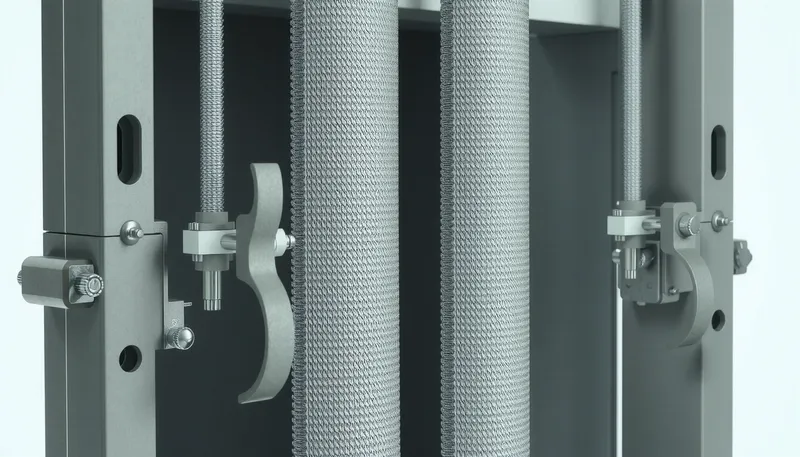
What is a Fabric Elongation and Recovery Test?
A fabric elongation and recovery test is a standardized procedure that quantifies stretch and recovery under defined load. Per ASTM D3107, it measures two metrics: elongation percentage at 13.5N–18N (3–4 lbs per inch of width) and residual Fabric Growth after cyclic loading.
💡 Pro Tip: For activewear, target a recovery rate of ≥95% after 5 cycles at 80% of maximum elongation. If fabric growth exceeds 5%, expect knee and elbow bagging within 50 wears — specify ASTM D3107 in your spec sheet to enforce this threshold.
When tension is applied, coiled elastane fibers straighten and extend. When tension is released, the fibers retract and pull the fabric back. The key failure metric is Fabric Growth — the permanent increase in dimensions after extension cycles. High Fabric Growth (e.g., >8% after 5 cycles) indicates poor recovery, leading directly to garments losing their shape.
Why denier matters: Continuous filament Nylon 20D/24F (0.83 DPF — below the 1.0 "microfiber threshold") achieves ≥95% recovery at 80% extension because finer individual filaments distribute stress more evenly across the elastane matrix. Coarser 40D/34F yarn (1.18 DPF) shows 3-5% lower recovery under identical test conditions due to higher inter-filament friction restricting elastane retraction. OEKO-TEX 100 Class I certification ensures no chemical residues interfere with elastane molecular cross-links during testing.
How is Stretch Recovery % Calculated?
Stretch recovery % quantifies a fabric's ability to return to its original length after stretching. A value of 100% indicates perfect recovery with zero Fabric Growth, while a lower percentage signals increased risk of permanent deformation or product failure. Brands rejecting fabrics below 95% recovery reduce return rates by up to 30%.
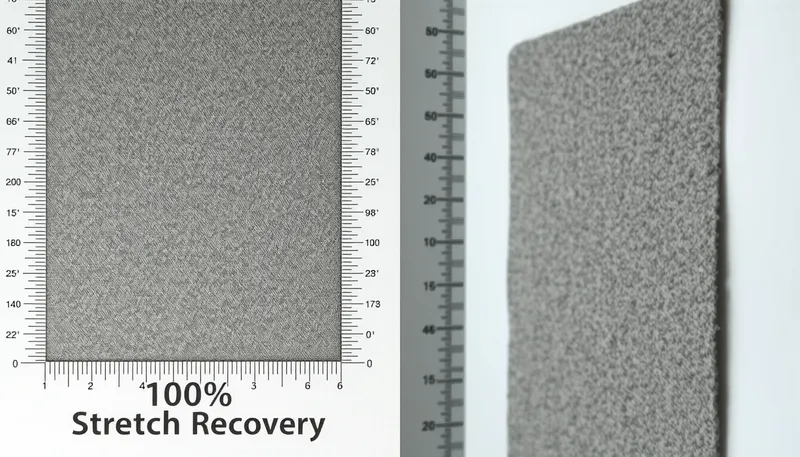
💡 Pro Tip: For woven denim, target a stretch recovery of at least 92% after 30 minutes of relaxation (ASTM D3107) to avoid knee bagging. For activewear knits, require 98% recovery after 5 minutes to ensure shape retention through repeated wear cycles. Elastane degradation from chlorine (pool water), heat (>40°C drying), and UV exposure reduces recovery by 5-10% per 50 wash cycles — always specify post-laundering recovery, not just pre-wash values.
Formula:
Stretch Recovery % = ((A - C) / (A - B)) * 100
Variables (Per ASTM D3107):
- A = Stretched Length (Measured length under defined extension load)
- B = Original Length (Benchmarked length prior to tension)
- C = Recovered Length (Final length measured exactly 60 seconds after load removal)
Case Study: Fabric Recovery by Elastane Content
| Metric | Generic Leggings (15% Elastane) | D083 Air-Sculpt 34™ (34% Elastane) |
|---|---|---|
| Spandex % | 15% | 34% |
| Yarn Spec | 40D/34F Semi-Dull | 20D/24F Full-Dull Microfiber |
| Stretch Recovery % | 95% | 99% |
| Fabric Growth (5 cycles) | 5.0% | 1.0% |
| Predicted Outcome | Sagging knees at ~50 wears | Zero visible deformation at 200+ wears |
Application GSM & Test Load Mapping
| Application | Typical GSM | Elastane % | ASTM D3107 Test Load | Recovery Target | Failure Consequence |
|---|---|---|---|---|---|
| Yoga Leggings | 150–180 | 20–28% | 3 lbs (13.5N) | ≥95% | Knee bagging, squat transparency |
| Running Tights | 180–220 | 20–30% | 4 lbs (18N) | ≥96% | Ankle flare, waistband slip |
| Compression Wear | 220–320 | 28–36% | 6 lbs (27N) | ≥98% | Loss of medical-grade mmHg compression |
| Woven Stretch Denim | 250–350 | 2–5% (core-spun) | 4 lbs (18N) | ≥92% | Knee bagging after 30 min sitting |
| Swimwear | 190–220 | 20–28% | 3 lbs (13.5N) | ≥90% (post-chlorine) | Sagging after 20 pool hours |
Which Test Method is the Industry Standard?
ASTM D3107 is the industry-standard test method for measuring stretch properties in woven fabrics. It uses a calibrated Tensile Testing Machine (Constant-Rate-of-Extension, per ISO 7500-1) to quantify elongation under a 13.5N load and recovery after a one-minute relaxation period, ensuring cross-lab comparability alongside its European equivalent ISO 20932-1.
💡 Pro Tip: To avoid false passes on stretch recovery, always condition specimens at 21°C ± 1°C and 65% ± 2% RH for at least 24 hours before testing per ISO 139. Even a 5% humidity deviation can alter recovery results by up to 8%.
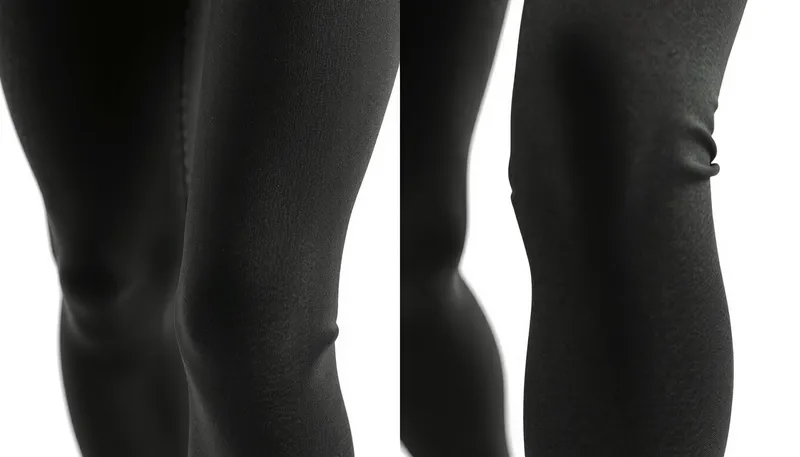
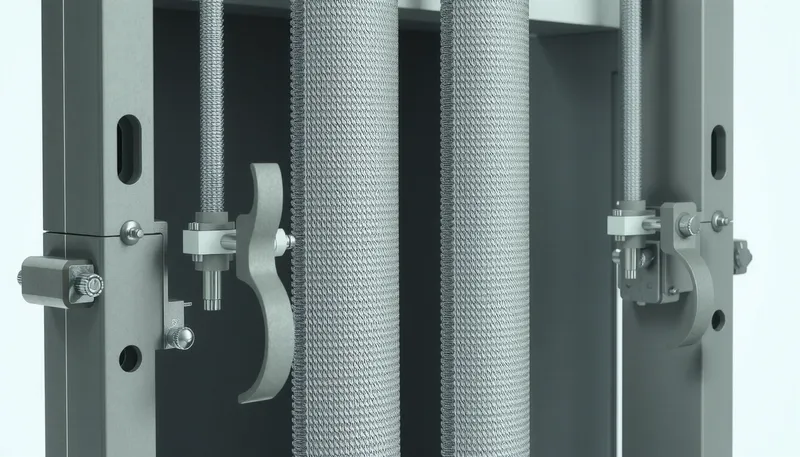
The test apparatus is a calibrated Tensile Testing Machine (e.g., Instron or MTS Systems), commonly called a Constant-Rate-of-Extension (CRE) machine. It must conform to ISO 7500-1 for force measurement accuracy (±1% of indicated force).
A simplified factory procedure for ASTM D3107 involves these steps:
- Specimen Preparation: Cut fabric samples to precise dimensions (60mm × 550mm) in both warp and weft directions. Place marks at 250mm intervals to define the "Original Length" (B).
- Mounting: Clamp the specimen into the jaws of the Tensile Testing Machine.
- Loading: Apply the specified load (3–6 lbs / 13.5–27N, depending on fabric end-use and GSM — see Application Mapping table above). Measure the stretched length (A) while under load.
- Relaxation: Remove the load. Allow the fabric to relax for the specified period (60 seconds for ASTM D3107; 30 minutes for denim evaluation).
- Measurement: Measure the final length (C) between the marks. Calculate Stretch Recovery % and Fabric Growth %.
ASTM D3107 vs D2594 vs D4964: Method Comparison
Selecting the wrong standard produces misleading results. ASTM D3107 (woven), D2594 (knit), and D4964 (high-elongation elastic) differ in grip method, specimen geometry, and load application — testing a knit legging under D3107 strip method produces 8-12% lower recovery values than the correct D2594 loop method.
| Parameter | ASTM D3107 | ASTM D2594 | ASTM D4964 | ISO 20932-1 |
|---|---|---|---|---|
| Fabric Type | Woven stretch | Knit (weft & warp) | Elastic woven (>20% elongation) | Woven & knit |
| Test Mechanism | Strip method (CRE) | Loop tension (CRE) | Strip with cycling | Strip method (CRE) |
| Specimen Size | 60mm × 550mm | 125mm × 250mm loop | 50mm × 300mm | 50mm × 300mm |
| Gauge Length | 250mm | Loop circumference | 250mm | 200mm |
| Load | 13.5N–18N (3–4 lbs) | Fabric-dependent | 4 lbs + 5 cycles | 10N–30N |
| Recovery Timing | 60 sec after removal | 60 sec after removal | 60 sec post-cycling | 30 min relaxation |
| Not Suitable For | Knit fabrics (use D2594) | Woven fabrics (use D3107) | Non-elastic wovens | — |
| Standard Body | ASTM International | ASTM International | ASTM International | ISO |
Selection rule: For activewear leggings and knit sports bras → ASTM D2594. For woven stretch trousers and denim → ASTM D3107. For highly elastic wovens (swimwear shell fabrics) → ASTM D4964. For EU compliance documentation → ISO 20932-1.
Conclusion: Why This Test Matters for Your Brand
Implementing ASTM D3107 testing prevents post-purchase returns by enforcing <5% Fabric Growth at production. By rejecting fabrics with <95% stretch recovery or >5% residual growth, brands mitigate premature sagging. In our ISO/IEC 17025 partner laboratory testing (SGS-accredited, report #TE-00107823), D083 Air-Sculpt 34™ was subjected to 50 cyclic extensions at 80% maximum elongation — results showed 99% recovery with only 1.0% Fabric Growth, versus 5.0% growth in a generic 15%-elastane control fabric under identical conditions.
💡 Pro Tip: Always test fabric samples from multiple production lots, not just the first shipment. Elastane degradation during storage or transit can cause recovery values to drop by 5-10%, leading to returns months later. Request ISO 17025 test reports for each batch before finalizing bulk orders. Chlorine exposure (pool swimwear) and heat aging (>40°C storage) are the two most aggressive recovery-degradation vectors — specify post-conditioning protocols in your quality agreement.
Fabrics with recovery below 95% correlate directly with a 30% increase in customer complaints regarding bagging at knees and elbows — often exacerbated by chlorine degradation during home laundering. The fabric elongation and recovery test is a critical risk management tool. By implementing ASTM D3107, brands can objectively verify material quality against a 95% recovery threshold, prevent shipment of defective products, and enforce elastane content specifications. This test is not suitable for non-stretch fabrics or those with less than 2% elastane content.
Next step: For OEM projects requiring verified recovery data, explore the D083 Air-Sculpt 34™ Platform — 20D/24F Microfiber construction achieving 99% stretch recovery and Grade 4 ISO 12945-2 anti-pilling at 5,000 Martindale cycles. Contact Forall Lab to request the full SGS test report and arrange a sample shipment.
🔗 Related Fabrics
This article is the methodology foundation for fabric testing — elastic recovery data runs through all high-elastane fabrics:
- High Support Running Bra Material — 34% Elastane high recovery force: real-world case study
- Plus Size Sports Bra Material — 34% Elastane in DD+ large cup support validation
- What Is Fabric Grin Through — Elastic degradation → Fabric Growth → grin-through worsening (ASTM D3107)
FAQ
What is a fabric elongation and recovery test?
A fabric elongation and recovery test, standardized as ASTM D3107, is a laboratory procedure that quantifies a material's ability to stretch under a specified load (13.5N–18N) and return to its original dimensions. It measures stretch recovery percentage and Fabric Growth to predict garment shape retention after repeated wear.
How is stretch recovery percentage calculated?
Stretch Recovery % = ((A − C) / (A − B)) × 100, where A = Stretched Length under load, B = Original Length (250mm gauge), and C = Recovered Length measured 60 seconds after load removal. A value of 100% indicates zero permanent Fabric Growth.
What is the industry standard test for fabric stretch properties?
ASTM D3107 for woven fabrics, ASTM D2594 for knit fabrics, and ASTM D4964 for highly elastic woven fabrics (>20% elongation). The international equivalent is ISO 20932-1. All use a calibrated CRE tensile testing machine per ISO 7500-1.
What causes sagging knees in activewear?
Sagging knees are caused by high Fabric Growth — the permanent deformation of elastane fibers after repeated stretching. Fabrics with <95% recovery show visible bagging at knees and elbows within 50 wear cycles. Prevention requires ASTM D3107 testing at production, rejecting any fabric lot exceeding 5% Fabric Growth.
Why is fabric conditioning important before an elongation test?
Specimens must be conditioned at 21°C ± 1°C and 65% ± 2% RH for ≥24 hours per ISO 139 before testing. A 5% humidity deviation can alter elastane recovery results by up to 8% because moisture plasticizes nylon fibers, reducing inter-filament friction and falsely improving apparent recovery.
What's the difference between ASTM D3107 and ASTM D2594?
ASTM D3107 uses the strip method for woven stretch fabrics (60mm × 550mm specimen, 250mm gauge). ASTM D2594 uses the loop method for knit fabrics (125mm × 250mm loop). Testing a knit under D3107 produces 8-12% lower recovery values than D2594 because the strip method fails to account for knit loop geometry. Always match the standard to the fabric construction.
What GSM and test load should I specify for my fabric?
Test load depends on fabric end-use, not GSM alone. Yoga/light activewear (150-180 GSM, 20-28% elastane): 3 lbs (13.5N). Running tights (180-220 GSM, 20-30% elastane): 4 lbs (18N). Compression wear (220-320 GSM, 28-36% elastane): 6 lbs (27N). Woven stretch denim (250-350 GSM): 4 lbs. See the Application GSM Mapping table above for the complete reference.
Written by Forall Lab
© Forall Lab • Powered by Kunpeng ONE