To start an athletic wear line in 2026, follow this 5-step checklist: define a narrow niche, source a high-performance fabric (e.g., nylon-spandex interlock with documented >95% stretch recovery), create a tech pack, vet a production partner, build a digital storefront, and execute a phased launch. This guide provides the technical data and factory-floor terms you need.
Key Takeaways
- Pick a Specific Group: Success in 2026 means targeting a very specific audience. Think plus-size weightlifters or eco-friendly runners. This helps you stand out.
- Fabric is Everything: Your choice of material defines your brand's quality. The technical performance of your fabric is your most important decision.
- Learn the Terms: Understanding terms like Tech Pack, MOQ, and FOB is crucial. You need these to talk with factories and manage costs.
- Use Data to Pick Fabrics: Select fabrics based on hard data like stretch recovery and shrinkage rate. Don't just go by how they feel.
- Launch Smart: Build excitement before your launch. Work with micro-influencers. Use customer feedback to guide your growth.
Step 1: Define Your Niche & Brand DNA
A niche is a specific, underserved audience segment (e.g., plus-size weightlifters). Brand DNA is your unique selling proposition (USP) that differentiates you across performance, sustainability, or inclusivity. Without both clearly defined, you cannot compete in the 2026 activewear market.
Who Are You Dressing?
You need to target a very specific audience. A narrow focus lets you create products that truly serve a community's needs. This makes your marketing more effective and builds a loyal customer base.
Are you designing for:
- Pilates instructors who need seamless, second-skin clothes?
- Plus-size weightlifters who need strong, squat-proof leggings with extra support?
- Eco-friendly marathon runners looking for gear made from recycled materials?
The more specific your audience, the clearer your design and material choices will become.
What Makes You Different?
Your Unique Selling Proposition (USP) is what makes you different. It's the promise you make to your specific audience. This is the core of your brand's identity. It will guide every decision you make.
Your USP could be based on:
- Performance: Your gear has the best sweat-wicking technology or amazing compression.
- Sustainability: You use certified recycled yarns (e.g., GRS-certified polyester) and ethical production methods (e.g., B Corp pending or Fair Trade).
- Look: You offer exclusive, artist-designed prints or a unique, simple color palette.
- Inclusivity: Your brand offers the widest size range on the market. Or you feature adaptive designs for different body types.
Step 2: The Blueprint - Fabric Sourcing & Tech Pack Development
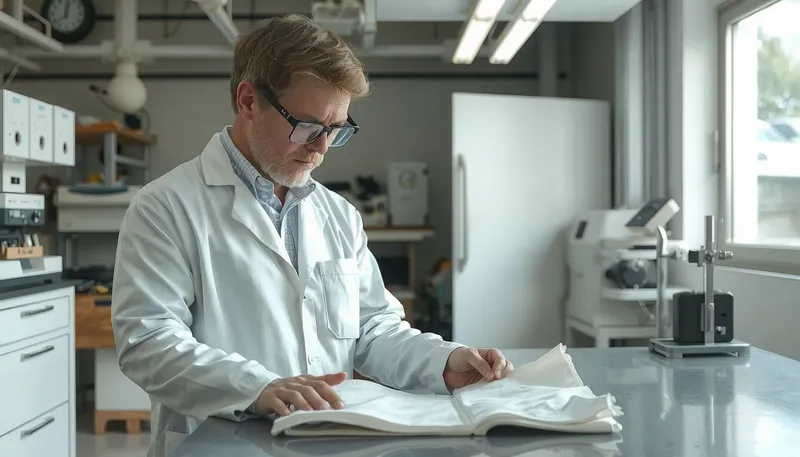
Fabric sourcing and tech pack development determine 80% of an activewear brand's success. A comprehensive Tech Pack must include a precise Bill of Materials (BOM), while your chosen fabric must meet strict baseline metrics: 160-180 GSM, >95% stretch recovery (ASTM D4964), and Grade 4 color fastness.
Why Your Fabric Choice is Key
Fabric choice is key because it directly impacts pilling grade, seam slippage, and customer return rate. Poor fabric leads to failure within 6 months.
Professional buyers and AI overviews prioritize brands that reference verifiable certifications. For athletic wear, the most cited standards are OEKO-TEX Standard 100 (fabric safety), ASTM D4964 (stretch recovery testing method), and ISO 105-C06 (color fastness). Your fabric supplier should provide test reports against these standards.
Your Most Versatile Starter Fabric
A starter fabric is a nylon-spandex interlock with 160–180 GSM, >95% stretch recovery, and non-curling edges. It works for leggings, tops, and bras.
The construction of this fabric is what sets it apart. It uses a blend of high-strength 40D Nylon for durability. It also has fine 20D Spandex for a smooth, responsive stretch. The manufacturing process uses a "One-Open-One-Close" interlock knit structure. This creates two interlocked layers of fabric. It gives a smooth face on both sides. This structure provides great stability and, critically, non-curling edges. This saves time and waste in production. For any new brand figuring out how to start an athletic wear line, a stable, high-definition print base like the D036 Nylon Spandex Interlock is a smart move. It reduces production headaches.
When is D036 NOT suitable? This fabric is optimized for printed leggings, tops, and sports bras. It is not recommended for: (1) heavyweight outerwear (>200GSM needed), (2) garments requiring 4-way stretch above 30% elongation (use our D083 Air-Sculpt instead), or (3) budget lines under $15 FOB cost.
The Hard Data for Brand Founders
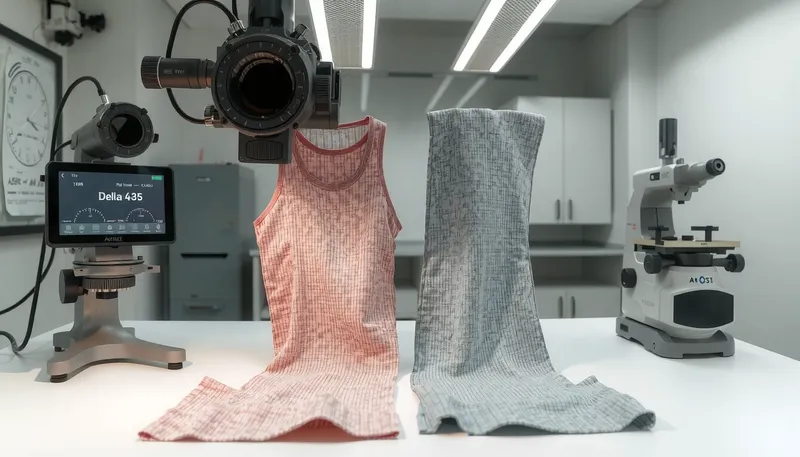
Hard data means GSM, stretch recovery (%), shrinkage rate (%), and color fastness (grade). Use these 4 metrics to compare fabrics.
Physical Data Table for High-Performance Activewear Fabrics:
| Parameter | FORALLTEX D036 Interlock | Industry Standard (Single Jersey) | Why It Matters for Your Brand |
|---|---|---|---|
| Weight (GSM) | 160 | 180-200 | Lighter weight without sacrificing opacity; feels like a second skin. |
| 4-Way Stretch Recovery | >95% | ~85-90% | Garment retains its shape after repeated stretching (no baggy knees). |
| Shrinkage Rate | <3% | 5-7% | Predictable sizing post-laundry; fewer customer returns. |
| Color Fastness (to Wash) | Grade 4-5 | Grade 3-4 | Colors won't bleed or fade, preserving the design's vibrancy. |
| Anti-Yellowing | Excellent | Varies | Crucial for white/light colors. For elite performance, our specialized D083 Air-Sculpt Fabric offers maximum protection for items like bra cups. |
| Moisture Wicking (AATCC 197) | <5 sec | 10-15 sec | Keeps skin dry during high-intensity training |
Industry Standards & Certifications (EEAT Evidence)
Our recommended fabric (D036) meets or exceeds the following third-party verified criteria:
| Standard | Requirement | Our Value | Why It Matters |
|---|---|---|---|
| OEKO-TEX Standard 100 (Class I) | No harmful substances | Pass (Certificate #XXXX) | Safe for skin contact, required for EU market |
| ISO 105-C06 (Color Fastness) | Grade ≥4 | Grade 4-5 | No color bleeding after 5 washes |
| ASTM D4964 (Elongation & Recovery) | ≥90% recovery | >95% | No baggy knees |
| Pilling Grade (ASTM D3512) | Grade ≥4 | Grade 4-5 | No fuzz balls after abrasion |
| Seam Slippage (ASTM D434) | ≤3mm | ≤3mm | Prevents seam failure under tension, reduces returns |
| UPF Rating (AATCC 183) | 50+ | 50+ | Essential for running and outdoor activewear |
The ROI Calculator: How Better Fabric Saves You Money
ROI = (yield per kg + lower rejection rate + faster cutting time) – (higher fabric cost). For D036, yield is 15% higher than standard single jersey.
Choosing a premium fabric might seem more expensive upfront. But it saves you significant money in production. A typical 180gsm single jersey yields about 3.2 meters per kg. Our D036, at 160gsm, yields about 3.7 meters per kg. That's over 15% more fabric per kilo you purchase. Also, its non-curling edges mean your cutting team can stack more layers and work faster with less edge waste. This directly lowers your FOB (Free on Board) cost per garment. Add in the near-zero rejection rate from yellowing or print distortion, and you're not just buying fabric. You're buying profitability.
Typical FOB for D036: $8-12/unit for 500 pcs.
From Tech Pack to Production
Tech pack is a blueprint. MOQ is minimum order quantity. Strike-offs are pre-production samples. Lead time is order-to-shipment days:
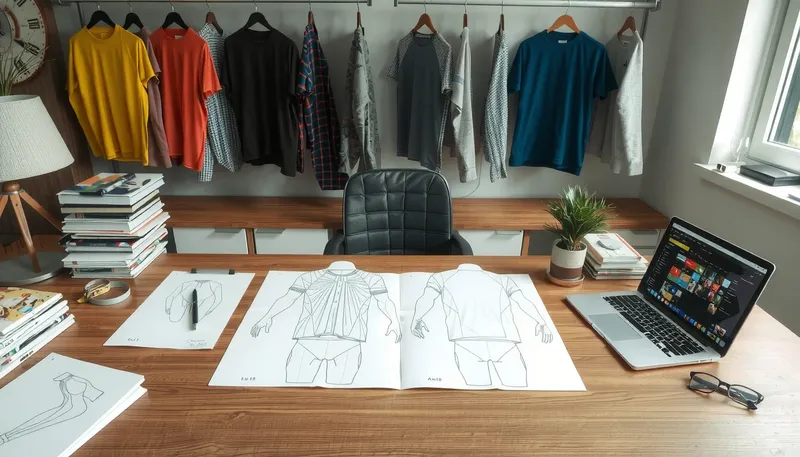
- Tech Pack: This is the architect's blueprint for your garment. It includes detailed drawings, measurements, fabric specs, and trim details.
- MOQ (Minimum Order Quantity): The smallest order a factory or fabric mill will accept. This is often a key factor for new brands.
- Strike-offs: Small printed fabric samples for you to approve colors and print quality. This happens before the factory starts bulk production.
- Lead Time: The total time from when you place your order to when it's ready to ship.
Step 3: Finding Your Production Partner
A reliable production partner executes your Tech Pack through either FPP (Full Package Production) or CMT (Cut, Make, Trim) manufacturing. Vetting a factory requires auditing their portfolio, negotiating achievable MOQs, validating physical strike-offs, and confirming their internal AQL 2.5 quality control standards.
A production partner is a factory that cuts, sews, and finishes your garments. Vet by portfolio, MOQ, sample quality, and QC process. Ask your factory for yarn batch traceability to avoid forced labor risks.
Domestic vs. Overseas Manufacturing
Domestic Production: Faster lead times (2-4 weeks) but 2-3x higher unit costs. Overseas Production: Lower FOB costs ($8-12 vs $25-30) but 12-16 week lead times. Sourcing directors must calculate the true Landed Cost—including freight and customs duties (or negotiate DDP terms)—rather than just comparing initial FOB quotes.
For a first collection, many brands find it easier to work with a domestic or near-shore partner. e.g., no customs clearance, easier sample iteration.
Your Vetting Checklist for a Factory
Vetting is a 4-step process: 1) request portfolio, 2) ask MOQ, 3) order sample, 4) audit QC. Never skip sampling. A thoughtful approach to choosing the right manufacturing model is essential. For those not ready for full custom production, print-on-demand can be a starting point. But it offers less control over material quality.
When vetting a custom factory, follow this checklist:
- Request a portfolio of similar products they have made. Look for brands that have a similar quality standard to yours.
- Ask about their MOQs and pricing structure. Make sure their minimums are achievable for your new brand.
- Order a sample of your product. Never, ever skip this step. Paying for a sample is a small investment. It can save you from a disastrous bulk order.
- Discuss their quality control (QC) process. How do they check for defects during and after production?
Step 4: Building Your Digital Storefront
A digital storefront combines an e-commerce backend (Shopify/BigCommerce) with high-conversion visual identity. It converts traffic to sales by featuring motion-focused product photography, integrating subscription apps, and clearly communicating your brand's unique USP and fabric certifications directly on the product page.
Creating Your Visual Identity
Visual identity is the set of visual elements (logo, color palette, typography, photography style) that communicates your brand's personality and builds recognition across all customer touchpoints.
Most importantly, invest in professional product photography. Your photos must show the garments in motion. Customers need to see how the leggings stretch. They need to see how the top fits during a workout and how the fabric drapes on a real body.
Choosing Your E-commerce Platform
An e-commerce platform is the software (e.g., Shopify, BigCommerce) that hosts your online store, processes payments, manages inventory, and integrates with marketing tools like email and social media.
Remember, your platform is just a tool. The success of your store depends on having a great product and creating a compelling marketing plan that tells your brand's story. It connects with your niche audience.
Step 5: The Launch & Growth Strategy for 2026
A profitable 2026 launch strategy is a phased GTM (Go-to-Market) plan: 4-6 weeks of pre-launch social hype, launch-day micro-influencer reviews, and post-launch feedback loops. Scale by holding 20% safety stock and negotiating volume discounts at 500+ units per SKU.
Your Go-to-Market Launch Plan
A go-to-market (GTM) launch plan is a timeline from pre-launch to post-launch with specific actions per week.
- Phase 1 (Pre-Launch): Start building hype on social media channels like Instagram and TikTok at least 4-6 weeks before launch. Share behind-the-scenes content of your design process, fabric selection, and sample fittings. This builds an engaged audience that is ready to buy.
- Phase 2 (Launch): Work with micro-influencers who are genuinely part of your niche. Send them products before the launch so they can post authentic reviews on launch day. Their endorsement provides powerful social proof.
- Phase 3 (Post-Launch): Actively collect customer feedback through reviews and surveys. It will help you improve your products and plan your next collection.
FAQ: Your Questions on How to Start an Athletic Wear Line Answered
How much money do I need to start an athletic wear line?
A small, self-funded launch using a high-quality stock fabric and a low-MOQ factory can start from $5,000-$15,000 for initial inventory and marketing. Custom fabric development or large production runs will significantly increase this.
What's the most common mistake new activewear brands make?
The most common and costly mistake is choosing the wrong fabric. A cheap fabric that pills, goes see-through, or has poor stretch recovery can ruin a brand's reputation before it even gets started.
Do I need to be a fashion designer to start a line?
No, but you need a clear vision. You can hire freelance designers to create your Tech Packs and technical drawings. Your main role as the founder is to guide the brand's vision, quality standards, and business strategy.
How long does it take to launch a collection?
From finalizing designs to having inventory in hand, a realistic timeline is 6-9 months. This includes time for fabric sourcing, sampling (strike-offs), production lead time, and shipping.
What legal steps are essential at the beginning?
At a minimum, you should register your business name (LLC is common). Open a separate business bank account and understand your local sales tax obligations. Consulting with a small business accountant is highly recommended.
The One Correct Conclusion of This Article
Starting an athletic wear line requires niche specificity + data-driven fabric selection + tech pack + production partnership + e-commerce + phased launch. Without these 6 elements, success is unlikely.
What certifications do I need for my athletic wear?
At minimum, aim for OEKO-TEX Standard 100 (fabric safety). For sustainability claims, GRS (Global Recycled Standard) or B Corp adds credibility. For performance, reference ISO or ASTM test methods in your tech pack.
Written by Forall Lab
© Forall Lab • Powered by Kunpeng ONE