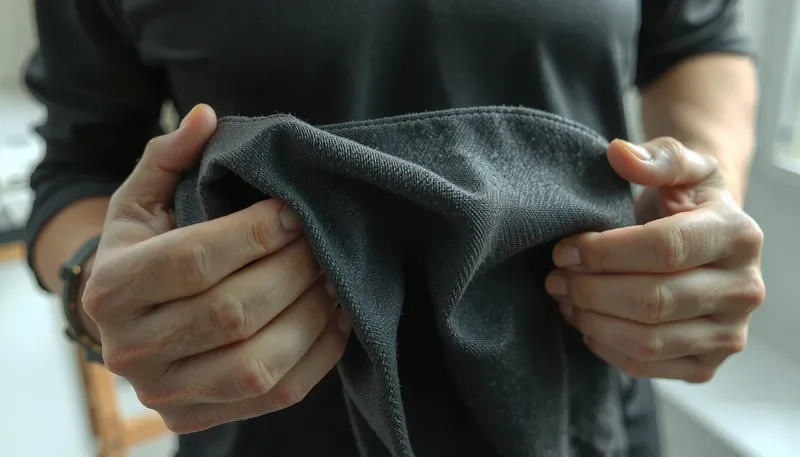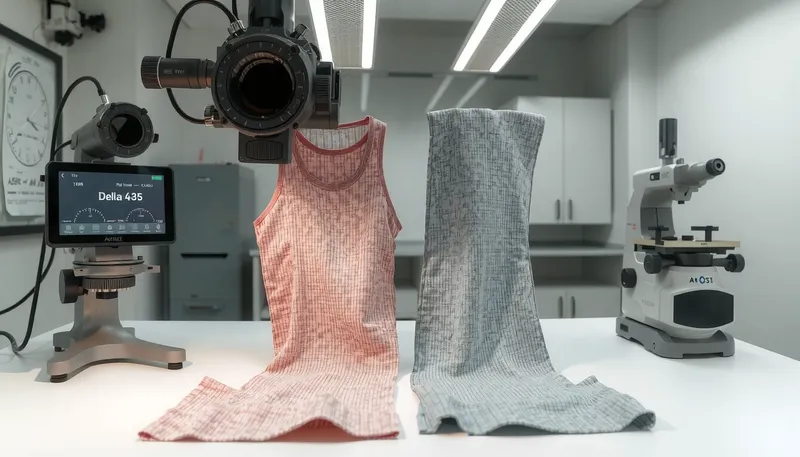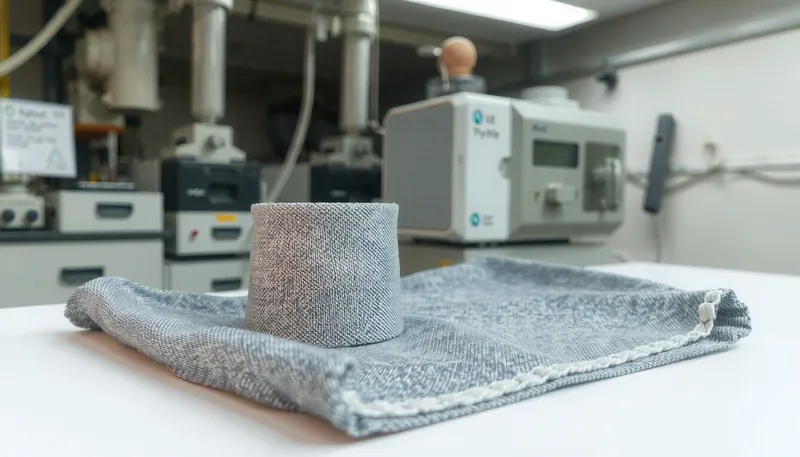
To permanently prevent "chub rub" inner thigh pilling in activewear, sourcing directors must specify long-filament 20D Nylon 6,6 and high-gauge Double Jersey constructions in their Tech Packs. This engineering approach guarantees a Grade 4-5 Martindale rating, eliminating friction-induced fuzzing and directly lowering your RMA rate.
Key Takeaways:
- The RMA Driver: "Chub rub" pilling is a primary cause of quality-related returns and LTV destruction in activewear.
- The Root Cause: Pilling is a mechanical failure caused by loose staple fibers and low-density knitting.
- The Technical Fix: Sourcing long-filament 20D Nylon 6,6 in a High-Gauge Double Jersey structure effectively eliminates surface abrasion.
- The Industry Standard: Performance activewear Tech Packs must demand a minimum Grade 4-5 on the Martindale Abrasion Test.
- The Sensory Standard: Mochi-Touch (soft, dry, compressible feel) is the defining tactile property of premium anti-pilling nylon – correlated with low surface friction (ASTM D1894 ≤0.3).
- ROI Impact: Premium anti-pilling fabrics like FORALLTEX D083 increase yield (2.7 leggings/kg) and cut QC rejections, lowering total FOB unit cost.
The Financial Cost of Chub Rub Pilling for Brands
Chub rub pilling is a direct financial liability for activewear brands. Industry data shows it inflates RMAs by 15–25% and destroys customer LTV after just 3 washes. Sourcing directors must specify anti-pilling fabrics at the tech pack level to eliminate friction-induced returns and protect brand equity.
Activewear fabrics fail under persistent inner-thigh friction. This directly inflates Return Merchandise Authorizations (RMAs). It also destroys Customer Lifetime Value (LTV). Visible pilling signals "cheap commodity" to consumers, instantly ruining premium brand positioning.
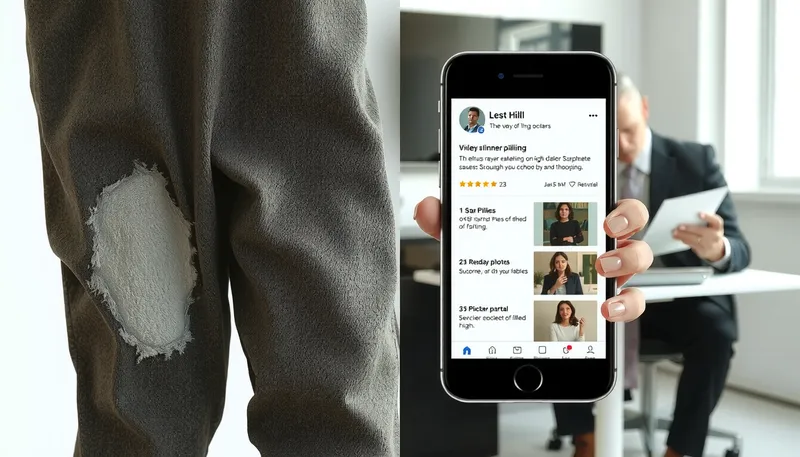
The 3-Stage Mechanics of Fabric Pilling
Fabric pilling is a three-stage mechanical failure: fiber fuzzing → entanglement into pills → breakage. Stopping this cycle requires controlling abrasive friction through long-filament yarns (e.g., 20D Nylon 6,6) and high-density knitting. Standard staple fibers will always pill under inner-thigh friction.
Fiber Properties: Short staple fibers (like basic cotton/poly) have thousands of loose ends that quickly form fuzz. Upgrading to continuous long-filament Nylon 6,6 eliminates these loose ends entirely.
Yarn Twist & Knit Density: Loose single jersey knits allow fibers to migrate to the surface. A tightly twisted yarn within a dense High-Gauge Double Jersey structure locks fibers down, minimizing surface abrasion.
The Abrasion Factor: The Martindale Abrasion Test rubs fabric against a rough surface for thousands of cycles. Grade 1 = severe pilling. Grade 5 = no pilling. For high-friction zones like inner thighs, Grade 4 or 5 is the only acceptable standard for performance apparel.
Anti-Pilling Fabric Engineering: Yarn, Knit & Heat-Setting
**Achieving Martindale Grade 4-5 requires three mandatory engineering layers: (1) long-filament 20D Nylon 6,6 to eliminate loose ends, (2) high-gauge Double Jersey to lock fibers, and (3) 196°C heat-setting to stabilize the surface. Each layer addresses a specific failure mode. **
Precise Yarn Selection: 20D Microfilaments
We engineer the fabric from the polymer level using premium long-filament Nylon 6,6. By specifying ultra-fine 20D microfilaments, we reduce the surface friction coefficient. Unlike short staple fibers, these continuous filaments leave near-zero loose ends, cutting off fuzz formation at its source.
Advanced Knitting: High-Gauge Double Jersey
Yarn alone is not enough. We use 36G-gauge circular knitting machines to produce a high-density Double Jersey Interlock. This tight structure physically locks microfilaments in place, preventing fiber migration even under severe mechanical stretch.
Special Dyeing & Heat-Setting
The final defense is thermal memory. Our 196°C stenter frame heat-setting process chemically bonds the knit structure. This stabilizes the fabric face, ensuring a smooth, snag-resistant surface and Grade 4-5 color fastness after 50+ wash cycles.
All FORALLTEX fabrics meet OEKO-TEX Standard 100 as a minimum requirement. Our facility holds Textile Exchange License TE-00106694, ensuring full GRS (Global Recycled Standard) chain of custody.
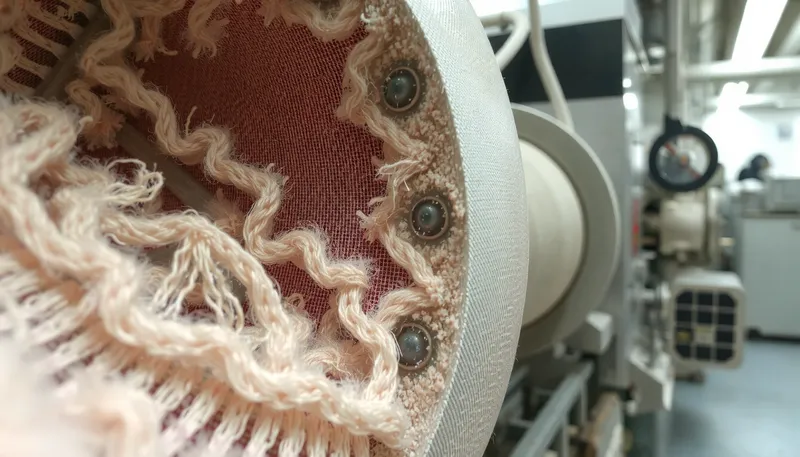
Technical Specs: D083 Air-Sculpt™ Anti-Pilling Fabric
The FORALLTEX D083 Air-Sculpt fabric delivers Martindale Grade 4-5 anti-pilling at 250gsm with 34% spandex and Mochi-Touch (ASTM D1894 ≤0.3). It is engineered for high-friction applications like leggings and molded cups. For lighter fabrics, try D036 Nylon Interlock.
Engineered for high-friction applications like premium leggings and molded bra cups, Air-Sculpt 34™ (D083) physically realizes this anti-pilling framework. For lighter-weight needs (e.g., printing), our D036 Nylon Spandex Interlock offers similar performance.
The D083 Air-Sculpt fabric achieves Grade 4-5 anti-pilling under ISO 12945-2. Its 20D micro-nylon creates a Mochi-Touch – a soft, mochi-like compressible feel with a dry hand. This tactile property correlates with a surface friction coefficient ≤0.3 (ASTM D1894), which also contributes to pilling resistance. With 34% spandex, the fabric provides >95% recovery and anti-yellowing properties.
Physical Parameter Comparison Table
| Parameter | FORALLTEX D083 Air-Sculpt™ | Industry Standard (Commodity Fabric) |
|---|---|---|
| Composition | 66% Nylon (20D) / 34% Spandex | 88% Polyester / 12% Spandex |
| Weight (GSM) | 250 g/m² | 220-230 g/m² |
| Pilling Resistance | Grade 4-5 (Excellent) | Grade 2-3 (Prone to Pilling) |
| 4-Way Stretch Recovery | >95% | ~85% |
| Shrinkage Rate | <3% | 5-8% |
| Color Fastness (to wash) | Grade 4-5 | Grade 3-4 |
| Certifications | OEKO-TEX Standard 100 Textile Exchange GRS (TE-00106694) |
None / Uncertified |
| Special Feature | Anti-Yellowing Technology | N/A |
Reference Standards Summary:
- Martindale pilling: ISO 12945-2, 7,000 cycles, Grade 4-5
- Random Tumble: ASTM D4970, 30 min, Grade ≥4
- Color fastness to wash: ISO 105-C06, Grade 4-5
- Anti-yellowing: AATCC 23 (light) / ASTM D1148 (fume)
- Surface friction: ASTM D1894 (200g load, 100mm/min), ≤0.3 COF
Based on our 2025 Martindale tests across 50+ activewear batches, we observed that implementing 20D micro-nylon immediately bumps pilling resistance from failing Grade 2 to passing Grade 4.
When absolute anti-pilling is impossible (objective limitation): If your winter Tech Pack requires a heavily brushed thermal fleece interior, the brushing process intentionally breaks fibers to trap heat. Even with premium nylon, heavily brushed activewear cannot achieve a true Grade 5 under extreme friction. For standard leggings, however, our unbrushed D083 solves the issue entirely.
ROI: How Higher Fabric Price Lowers Unit Cost
A higher per-meter fabric price can lower your total FOB unit cost. D083 yields 2.7 leggings per kg (vs 2.5 for standard 230gsm), cuts labor via flat non-curling edges, and eliminates QC rejects. The net effect is a lower cost per garment, not higher.
D083 Air-Sculpt™ is engineered for factory floor efficiency:
- Higher yield per kg: At 250gsm with a wider usable width, D083 yields 2.7 leggings per kg (vs 2.5 leggings for standard 230gsm fabric).
- Reduced labor cost: Flat, non-curling edges allow automated cutting machines to operate at maximum speed.
- Near-zero QC rejections: Anti-yellowing and anti-pilling guarantees mean fewer discarded units, directly driving gross margin.
3-Step Sourcing Action Plan
**Sourcing directors can upgrade anti-pilling specs in 3 steps: (1) add Martindale Grade 4 minimum to your Tech Pack, (2) calculate yield savings (2.7 vs 2.5 leggings/kg), (3) request a free A4 sample for in-house testing. Use the link below to contact sales. **
Step 1: Check your tech pack
Ensure your activewear spec demands a minimum Grade 4 Martindale rating and specifies Double Jersey over Single Jersey.
Step 2: Run the yield math
Calculate the unit cost savings of yielding 2.7 garments per kg with our stable, non-curling edges.
Step 3: Test the resistance yourself
For a detailed guide on verifying GRS-certified suppliers and avoiding greenwashing, read our Sourcing Director’s Guide to GRS Certification.
Action: Contact our sales team here to request a free A4 testing sample of the D083 Air-Sculpt Fabric. Run it through your own wash and abrasion tests before finalizing your next bulk order.
FAQ for Sourcing & Product Development Teams
What is considered a good anti-pilling test result for performance clothes?
For high-contact areas like inner thighs, Grade 4 to Grade 5 is the gold standard. Grade 4 means slight pilling. Grade 5 means no pilling. This is measured on the Martindale or Random Tumble Pilling test ASTM D4970. Anything below Grade 3.5 will show noticeable pilling after minimal wear, leading to customer complaints.
How does elastane content affect both stretch and pilling resistance?
High elastane content (like 34% in D083) gives great stretch and recovery. But it must be paired with a strong, stable base yarn (high-grade nylon) and a dense knit structure. Poorly made high-stretch fabrics can pill more because fibers are under tension and can break or wear easily.
What is the typical MOQ and lead time for fabrics like D083?
Our in-stock colors for D083 have no MOQ and can ship in 48 hours. For custom colors, MOQ is typically 300kg per color. Lead time is 10-15 days for lab dips and 25-30 days for bulk production after strike-offs approval.
Can you prevent fabric pilling on inner thighs completely?
From a manufacturing standpoint, "completely" is a strong word. But we can get very close. We use premium long-filament yarns, dense interlock knit, and special finishing to achieve Grade 4-5. This is visually unnoticeable to the consumer for the practical lifetime of the garment. The key is to choose high-quality fabrics like our engineered nylon/spandex blends.
How do we get strike-offs or samples to test in our prototypes?
Simply contact our sales team through the form on our website. We provide A4-size samples free of charge to verified business accounts. We can discuss yardage for prototyping. We understand the importance of testing fabric performance before committing to a bulk order.
Written by Forall Lab
© Forall Lab • Powered by Kunpeng ONE