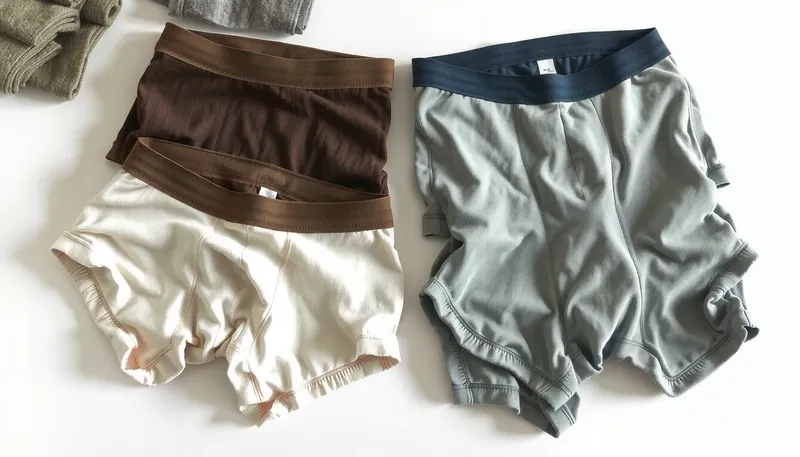
Nylon underwear fabric — specifically nylon-spandex interlock knit (D036: 76% Nylon 40D/34F + 24% Spandex 40D, 160 g/m²) — outperforms cotton on three measurable metrics: moisture wicking (AATCC 195 ≤5s at 5cm vs >30s), shape recovery (ASTM D3107 ≥92% vs <70%), and pilling resistance (ISO 12945-2 Grade 4 vs Grade 2-3). It is recommended for active and all-day wear. It is not suitable for contact dermatitis requiring 100% natural fiber or chlorine-bleach sanitization routines. Three further claims — antibacterial, breathability and wash resistance — appear often in product copy and rarely in test reports; the protocols below show what to ask for and how to compare like with like.
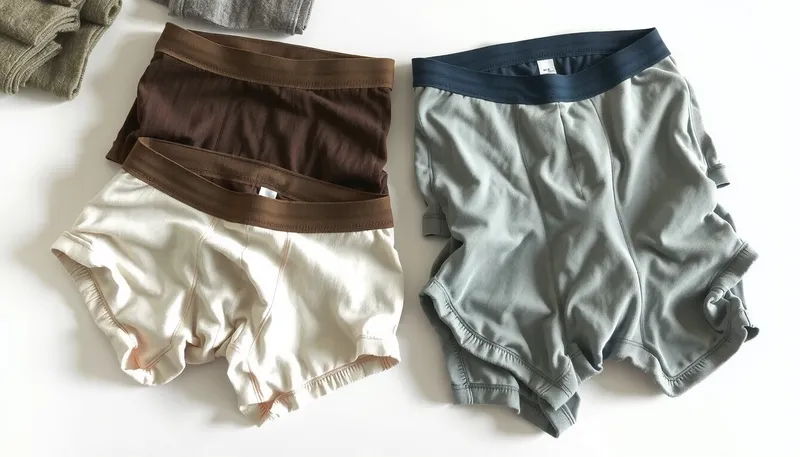
Cotton Underwear Fabric: Properties and Limitations
Cotton underwear fabric is cellulose-based (≥95% cotton fiber) with 8.5% moisture regain and <70% stretch recovery per ASTM D3107. It absorbs sweat into the fiber lumen — swelling 20-25% in diameter when saturated — and holds moisture against skin with AATCC 195 wicking time exceeding 30 seconds at 5 cm vertical rise. It is suitable for low-activity lounging under 4 hours. It is not suitable for workouts, hot weather above 28°C, or all-day wear where moisture-induced fiber swelling causes leg-opening sag exceeding 3 mm after 6 hours.
Cotton's hygral expansion — the dimensional increase caused by water absorption into the cellulose structure — is the root cause of underwear sagging. A 100% cotton brief exposed to 5-10 mL of sweat (typical for 2 hours of office wear) expands 15-18% in the warp direction. Once dried, the fabric does not fully recover — creating permanent bagging at stress zones (leg openings, center front pouch, rear seat). This is not a construction defect; it is a material property of the cellulose fiber.
The term "diaper effect" used by wearers describes the combination of retained moisture weight (cotton holds 8.5% of its dry weight in water, adding 13-17 g to a 160 g/m² brief) and loss of elastic recovery — a valid subjective description of an objective material failure.
What Men's Underwear Demands: The Three Measurable Metrics
Men's underwear fabric performance can be reduced to three measurable metrics. All three must be satisfied simultaneously; failing any one produces a product that underperforms within the first 4-6 hours of wear.
| Metric | Test Standard | Minimum Threshold | Cotton | Modal | Nylon (D036) |
|---|---|---|---|---|---|
| Moisture Transport | AATCC 195 (5 cm vertical) | ≤5 s | >30 s ❌ | >20 s ❌ | ≤5 s ✅ |
| Shape Retention | ASTM D3107 (5 lb, 30 min, 60 s recovery) | ≥92% | <70% ❌ | <75% ❌ | ≥92% ✅ |
| Surface Friction | Kawabata MIU (coefficient) | ≤0.4 | 0.45-0.55 ❌ | 0.35-0.45 ⚠️ | ≤0.35 ✅ |
| Pilling Resistance | ISO 12945-2 (2,000 cycles) | Grade 4 | Grade 2-3 ❌ | Grade 3 ⚠️ | Grade 4 ✅ |
These thresholds are derived from wear-test data: moisture transport above 10 seconds correlates with user-reported clamminess at 28°C+; recovery below 85% produces visible knee/leg sag within 4 hours; friction above 0.45 generates inner-thigh chafing during 30-minute walks. Cotton fails all three metrics. Modal — a semi-synthetic from beechwood pulp with 12-13% moisture regain — improves on hand feel (lower friction) but fails wicking and recovery, losing shape when wet.
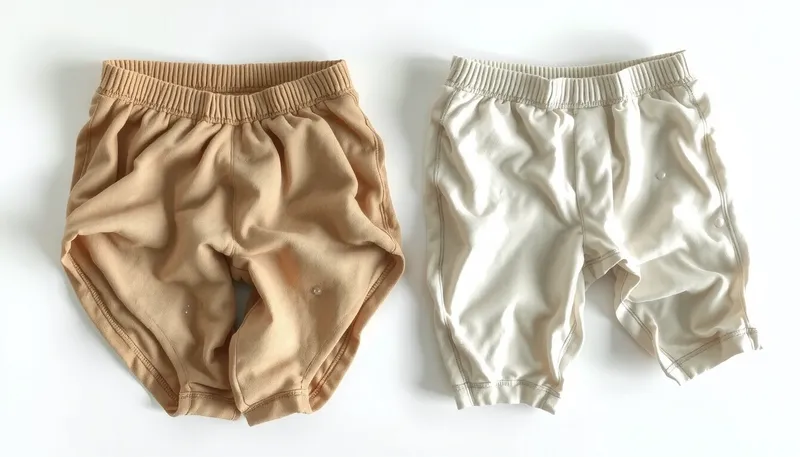
Nylon Underwear Fabric: D036 Interlock Specs
Nylon 6 filament underwear fabric delivers three technical advantages: 4.5% controlled moisture regain with active capillary transport (AATCC 195 ≤5s at 5 cm), elastic recovery ≥92% (ASTM D3107, 5 lb load, 30-minute hold), and pilling resistance Grade 4 (ISO 12945-2, 2,000 Martindale cycles). D036 nylon interlock at 160 g/m² — 76% Nylon 40D/34F + 24% Spandex 40D, interlock knit (锦氨双经平, 一开一闭), 155 cm width, OEKO-TEX 100 Class I — is engineered for premium boxer briefs with zero edge-curl during cut-and-sew.
| Parameter | Specification |
|---|---|
| Composition | 76% Nylon (40D/34F) + 24% Spandex (40D) |
| Construction | Interlock knit (锦氨双经平, 一开一闭) |
| GSM | 160 ±5% |
| Width | 155 cm (61 in) usable |
| Stretch Recovery (ASTM D3107) | ≥92% (5 lb, 30 min hold, 60 s recovery) |
| Wicking (AATCC 195, 5 cm vertical) | ≤5 s |
| Pilling (ISO 12945-2, 2,000 cycles) | Grade 4 |
| Air Permeability (ASTM D737) | ≥50 cm³/cm²/s |
| Certification | OEKO-TEX 100 Class I (skin-contact safe) |
| Edge Curl | None (interlock balanced structure) |
Nylon's moisture management differs fundamentally from cotton's. Cotton absorbs water into the fiber interior (intra-fiber absorption) and releases it slowly — the fabric feels wet because water remains in the fiber. Nylon absorbs only 4.5% moisture by weight but transports sweat through capillary action along the filament surface (inter-fiber wicking), spreading it across a larger surface area for faster evaporation. The result: the fabric feels dry to the touch even when actively transporting moisture. Nylon's 4.5% moisture regain also exceeds polyester's 0.4%, which is why nylon builds less static than polyester in the same garment construction.
The interlock knit construction solves a known underwear production problem. Single jersey knits — common in lightweight cotton and modal underwear — curl at cut edges during sewing, forcing factories to add 2-3 cm seam allowance waste per panel. D036's interlock structure (two interconnected 1×1 rib layers) eliminates edge curl, reducing fabric waste 4-6% per garment and enabling clean flatlock seams that lie flat against skin. A brushed variant of the same nylon platform raises surface softness while keeping the interlock base.
Our fabric engineering team runs a three-point verification on every D036 production lot before release: AATCC 195 wicking re-tested on cut samples (≤5 s at 5 cm), ASTM D3107 recovery on 5 specimens (≥92%), and interlock edge-curl checked on the first 5 panels of each spread. A 160 gsm fabric with visible curl or sub-threshold recovery is rejected before it reaches the cutting table — the claims in this guide are reproducible on your own swatch.
Antibacterial, Breathability and Wash Resistance: Three Claims That Need Test Data
Three more properties decide whether an underwear fabric survives a production season: antibacterial performance, air permeability and wash-cycle stability. All three are routinely claimed in marketing copy and all three can be measured. The difference between a defensible claim and an empty one is not the adjective — it is whether a named test method was run on the finished fabric, at a stated cycle count, against a stated control.
| Property | What is being measured | Test method | D036 nylon interlock | Cotton / modal | Conditions for a fair comparison |
|---|---|---|---|---|---|
| Antibacterial | Reduction of bacteria by a finish on the finished fabric | ISO 20743 (quantitative), AATCC 100 (quantitative), AATCC 147 (qualitative screening) | No inherent fiber claim; silver-ion or quaternary-ammonium finish available on request and tested on finished fabric | Same — the fiber alone provides no antibacterial function | Same strains, inoculum, contact time and neutraliser; report reduction % vs untreated control; re-test after 20 and 50 washes |
| Breathability | Airflow through the fabric | ASTM D737 | ≥50 cm³/cm²/s at 160 g/m² | Construction- and weight-dependent; no single value is valid | Same GSM, same test area and pressure drop, dry specimen, same face of fabric |
| Wash resistance | Dimensional and elastic stability after repeated laundering | AATCC 135 or ISO 6330, then ASTM D3107 | ≥90% recovery after 50 cycles | Progressive relaxation and shrinkage; quantify on your own swatch | Same temperature, detergent, ballast and drying method; report at 5 / 10 / 25 / 50 cycles |
Antibacterial performance is a finish, not a fiber. Nylon 6, cotton and modal are all non-antimicrobial in greige form; none of them kills bacteria by being what it is. Antibacterial underwear uses a finish — silver-ion, quaternary ammonium or chitosan — applied to the fabric, so the finish has to be tested on the finished, laundered fabric rather than on raw yarn. ISO 20743 and AATCC 100 are the quantitative methods; AATCC 147 is the qualitative agar-diffusion screen. Ask for the report and read four things in it: the strains tested (typically Staphylococcus aureus and Klebsiella pneumoniae), the inoculum, the contact time, and the reduction percentage against an untreated control. Then ask for the same test after 20 and 50 home launderings, because the finish — not the fiber — is what decays. A "99% antibacterial" line without that report is an unverified claim, and in the EU an antibacterial treatment is also regulated as a biocidal product. Nylon's contribution is indirect: it moves moisture away from skin faster than cotton, removing the damp microclimate in which odor bacteria multiply.
Breathability is construction- and weight-dependent. Air permeability per ASTM D737 depends on cover factor, yarn count and finishing, not on fiber family. D036 interlock at 160 g/m² measures ≥50 cm³/cm²/s; a heavier cotton rib or a tightly knit modal brief can measure well below that, while a loose cotton mesh can measure above it. Quote the number with the GSM and the pressure drop attached, and confirm it on your own swatch. For underwear, air permeability is a secondary comfort metric: AATCC 195 wicking time and drying behaviour predict clamminess better than airflow alone, because a tight waistband limits ventilation regardless of the fabric's open area.
Wash resistance is two tests, not one. Dimensional and elastic stability after laundering is measured with AATCC 135 (home laundering) or ISO 6330 (domestic washing and drying procedures), then recovery is re-measured by ASTM D3107 after the stated number of cycles. Cotton and modal relax and shrink progressively; nylon-spandex interlock is dimensionally stable, but its elastane can degrade with heat and chlorine. D036 holds ≥90% recovery after 50 cycles under the care instructions below. Always report the cycle count: comparing a 50-cycle nylon result with a 5-cycle cotton result is not a comparison, it is two different tests. Match wash temperature, detergent, ballast load and drying method on both fabrics, and report recovery at 5, 10, 25 and 50 cycles so the trend is visible rather than a single end-point.
High-Stretch Underwear Fabric: The 34% Spandex Standard
D036's 24% spandex ratio is the everyday baseline — a 160 gsm fabric that holds all three metrics through the 4-hour boundary. When the specification calls for higher elastic power, the same interlock platform scales to 34% spandex in D083 Air-Sculpt 34™ (product specs): 20D/24F micro-nylon face yarns with 34% elastane, delivering ASTM D3107 recovery above 95%. This 24%→34% step is the working definition of high-stretch underwear fabric in the lingerie trade.
The seamless waistband built on high-spandex interlock eliminates the three most common underwear complaints: the roll-down waistband, the visible panty line (VPL), and wedgie-ride-up under movement. A 34% spandex waistband exerts enough circumferential recovery force to stay anchored without a separate elastic insert — which is also why seamless performance briefs can drop 2-3 cm of seam allowance waste per garment. The same 34% platform also carries into loungewear and maternity support, where the recovery requirement is similar but the fit allowance is larger.
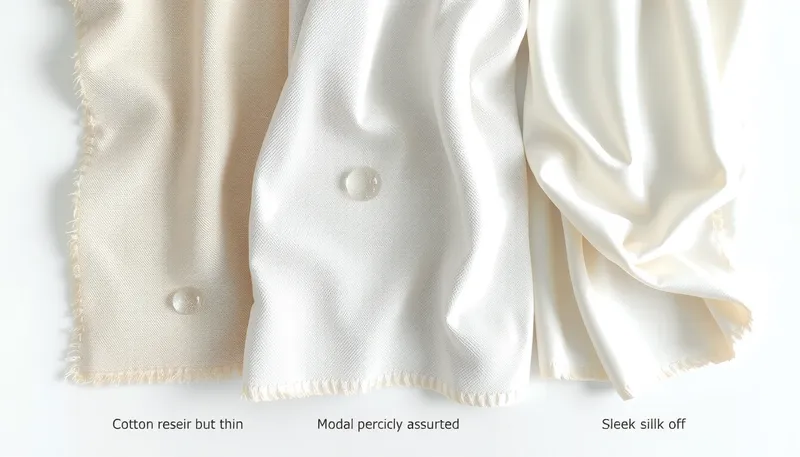
Fabric Selection: Activity-Based Decision Matrix
Underwear fabric selection follows an activity-time-temperature matrix. The decision tree below matches fabric type to wear scenario based on the three-metric thresholds established above.
| Scenario | Temp Range | Wear Duration | Recommended Fabric | Reason |
|---|---|---|---|---|
| Workout / Running / Gym | 20-35°C | 1-3 h | Nylon-Spandex Interlock (≥160 g/m², ≥20% spandex) | ≤5s wicking, ≥92% recovery under repeated stretch cycles |
| All-Day Office + Commute | 22-28°C | 8-14 h | Nylon-Spandex Blend (160-200 g/m², ≥20% spandex) | Shape retention through 12+ hours; wicking prevents afternoon clamminess |
| Hot Weather / Travel | 28-38°C | 6-12 h | Nylon-Spandex Interlock (D036, 160 g/m²) | ≤5s wicking + ≥50 cm³/cm²/s air permeability (ASTM D737) |
| Lounging at Home | 18-25°C | <4 h | Cotton or Modal | Acceptable — moisture accumulation and sag become noticeable only beyond 4 h |
| Overnight / Sleep | 18-22°C | 6-8 h | Cotton or Modal (loose fit) | Low activity, low sweat — cotton's moisture issues are minimized |
The 4-hour boundary is the critical threshold. Cotton and modal underwear perform acceptably for the first 3-4 hours of static wear. Beyond this window, hygral expansion exceeds 15%, elastic recovery drops below 65%, and subjective comfort ratings decline sharply. For any scenario exceeding 4 hours or involving sweat-inducing activity, nylon-spandex interlock is the only fabric type meeting all three metric thresholds.
Limitations and Care
Nylon underwear fabric has three documented limitations that inform material selection and maintenance.
Skin sensitivity. Nylon 6 filament is non-allergenic and OEKO-TEX 100 Class I certified, but the occlusive environment created by tight-fitting underwear can aggravate pre-existing contact dermatitis or intertrigo (skin-fold inflammation). Affected users should select 100% organic cotton with a looser cut and change garments every 4 hours. This is a fit-and-ventilation issue, not a fiber chemistry issue.
Chlorine bleach incompatibility. Nylon's amide bonds (-CO-NH-) hydrolyze under chlorine bleach (sodium hypochlorite, NaOCl), reducing tensile strength 15-25% per exposure and causing progressive yellowing. Use oxygen-based stain removers (sodium percarbonate) only. Hydrogen peroxide at 3% concentration is safe for spot treatment.
Dark color see-through at stretch. Nylon at weights below 160 g/m² in single jersey construction may exhibit translucency when stretched over curved body surfaces — a cosmetic limitation, not a structural defect. Specify interlock construction (not single jersey) and yarn-dyed dark colors for deep black/navy briefs; the fix is construction and color depth, not a surface coating.
Care instructions. Machine wash cold (≤30°C) on gentle cycle. Hang dry or tumble dry on low (≤60°C). Do not use fabric softener — silicone-based softeners coat nylon filaments and reduce wicking performance 40-60%. Do not iron above 110°C. Do not chlorine bleach. With correct care, D036 nylon interlock underwear retains ≥90% of original recovery after 50 wash cycles. Recovery is measured after a 5 lb load held 30 minutes and 60 seconds of relaxation, the same protocol used above.
Frequently Asked Questions
Is nylon underwear breathable?
Yes. Nylon 6 interlock knit achieves air permeability ≥50 cm³/cm²/s per ASTM D737 — comparable to lightweight cotton broadcloth. Combined with AATCC 195 ≤5-second wicking, nylon underwear transports moisture away from skin and permits airflow simultaneously. The subjective difference versus cotton is that nylon feels dry during moisture transport, while cotton feels wet because water is held inside the fiber rather than moved along its surface.
Why does cotton underwear sag during the day?
Cotton fibers absorb water into their internal structure (intra-fiber absorption), swelling 20-25% in diameter. This hygral expansion stretches the yarn and fabric structure. When the fabric dries, it does not return to its original dimensions — ASTM D3107 testing shows <70% recovery after a single wet-dry cycle. Over 6-8 hours of wear with intermittent sweating, cumulative dimensional loss produces the visible sagging at leg openings and seat.
What is the difference between nylon and modal for underwear?
Modal is a semi-synthetic fiber manufactured from beechwood cellulose pulp. It has higher moisture regain (12-13%) than cotton but, like cotton, absorbs water into the fiber interior rather than wicking it along the surface — resulting in AATCC 195 wicking times exceeding 20 seconds. Modal's elastic recovery is <75% per ASTM D3107, producing shape loss similar to cotton when wet. Modal's advantage is lower surface friction (Kawabata MIU 0.35-0.45), giving it a softer hand feel — but this does not compensate for its moisture-management and shape-retention failures in underwear applications.
Is nylon underwear safe for sensitive skin?
For the majority of users, yes. D036 nylon interlock is OEKO-TEX 100 Class I certified — the highest safety class for skin-contact textiles, including infant products. Nylon 6 filament is non-allergenic and does not support bacterial growth when kept dry through wicking. However, the tight-fitting nature of performance underwear creates an occlusive microclimate that may aggravate pre-existing contact dermatitis or intertrigo. Affected individuals should choose loose-fit 100% organic cotton and change every 4 hours.
How should nylon underwear be maintained?
Machine wash cold (≤30°C) on gentle cycle. Hang dry or tumble dry low (≤60°C). Do not use fabric softener — it coats filaments and degrades wicking 40-60%. Do not chlorine bleach — sodium hypochlorite hydrolyzes nylon's amide bonds, causing 15-25% strength loss per exposure. Do not iron above 110°C. With correct care, D036 nylon interlock retains ≥90% recovery and ≥50 cm³/cm²/s air permeability after 50 wash cycles.
What is stretch recovery and why does it matter for underwear?
Stretch recovery is the percentage by which a stretched fabric returns to its original dimensions after the load is released. In underwear, it determines whether the waistband, leg openings, and seat hold their shape through a full day. The measurable threshold is ASTM D3107 ≥92% recovery after a 5 lb load held 30 minutes; below 85%, visible sag appears within 4 hours. This is the objective test behind the consumer complaint of underwear that "stretches out" or loses its snap.
How do you run a fabric recovery test on underwear fabric?
Cut a specimen in the stretch direction you need to validate — for a waistband, that is the direction that wraps around the body. Clamp it under a 5 lb load for 30 minutes per ASTM D3107, release, and measure the recovered length after 60 seconds. Recovery = (stretched length − residual length) ÷ (stretched length − original length) × 100. A pass is ≥92% for all-day underwear and >95% for seamless waistbands. Apply the same protocol to the waistband and leg-opening directions, not only to the body panel.
How much spandex should underwear fabric contain?
5-24% is the functional range for everyday underwear; D036 uses 24% at 160 gsm. Below 5%, spandex adds fit elasticity but not recovery — a 95% cotton / 5% spandex blend still sags when wet because cotton's hygral expansion (15-18% warp growth) overwhelms the low elastane content. For high-stretch briefs, shapewear, and seamless waistbands, specify 30-34% spandex (D083 Air-Sculpt 34™) to reach >95% ASTM D3107 recovery and hold a waistband without rolling down.
What is the best underwear material for sweat?
Nylon-spandex interlock is the best underwear material for sweat: AATCC 195 wicking ≤5 s at 5 cm, 4.5% moisture regain, and inter-fiber capillary transport keep the skin dry during high-sweat activity. Cotton holds 8.5% of its dry weight in water (adding 13-17 g to a 160 gsm brief) and exceeds 30 s wicking, which is why it feels wet. For heavy sweaters, pair D036 nylon interlock with a looser fit to combine wicking with ventilation.
Is seamless underwear better than seamed underwear?
For performance use, yes. Seamless underwear built on high-spandex interlock eliminates edge-curl seam allowance (saving 4-6% fabric), removes the seams that chafe during 30-minute walks (surface friction ≤0.35 Kawabata MIU), and prevents the three consumer complaints: roll-down waistband, visible panty line (VPL), and wedgie-ride-up. The trade-off is less design freedom for multi-color paneling; if your line needs color-blocked panels, seamed construction with flatlock seams remains the better choice.
Does nylon underwear kill bacteria?
No. Nylon 6 does not kill bacteria by itself, and neither does cotton or modal. Antibacterial performance comes from a finish applied to the fabric — typically silver-ion, quaternary ammonium or chitosan — and it has to be tested on the finished fabric with ISO 20743 or AATCC 100 against named strains, with a reduction percentage versus an untreated control. Ask for the report plus a re-test after 20 and 50 home launderings, because the finish degrades before the fiber does. Nylon helps indirectly by moving moisture away from skin, which removes the damp environment odor bacteria prefer.
How many washes does nylon underwear last?
With correct care, D036 nylon interlock retains ≥90% recovery after 50 home laundering cycles, tested per AATCC 135 or ISO 6330 with recovery re-measured by ASTM D3107. The useful specification is not a single "lasts N washes" number but the cycle count at which recovery falls below your threshold — for all-day underwear, 85% is where visible sag begins. Ask suppliers to report recovery at 5, 10, 25 and 50 cycles so you can see the curve, and compare fabrics only at matched cycle counts.
Conclusion
Nylon-spandex interlock knit — specifically D036 at 160 g/m² with 76/24 Nylon/Spandex composition — replaces cotton and modal as the material standard for performance underwear. The data supports the switch: AATCC 195 wicking ≤5 seconds (vs >30s for cotton), ASTM D3107 recovery ≥92% (vs <70% for cotton), ISO 12945-2 pilling Grade 4 (vs Grade 2-3 for cotton), and OEKO-TEX 100 Class I skin-contact certification. Cotton retains a valid role in sub-4-hour low-activity wear. For any scenario exceeding 4 hours or involving sweat, nylon interlock is the only underwear fabric type meeting all three performance thresholds simultaneously.
🔗 Related Fabrics
- D036 Nylon Interlock Knit — Full Tech Specs — GSM, width, composition, OEKO-TEX Class I
- AATCC 195 — Liquid Moisture Management Properties — Wicking test methodology
- ASTM D3107 — Stretch Properties of Fabrics — Recovery test standard
- ISO 12945-2 — Pilling Resistance (Martindale) — Pilling grading standard
- D083 Air-Sculpt 34™ — Product Page — 34% spandex high-stretch platform, >95% ASTM D3107 recovery
- Luxury Lounge Wear Fabric: Cashmere & Premium Materials — D083 Air-Sculpt 34 in loungewear, same high-stretch platform
- Maternity Yoga Pants Wholesale: Adaptive High-Stretch Support — 34% spandex adaptive support, recovery-engineered platform
Next Step: Request a D036 nylon interlock swatch and test wicking + recovery on your own hand → Order D036 Sample
Written by Wenruo
Textile Engineer, Forall Lab