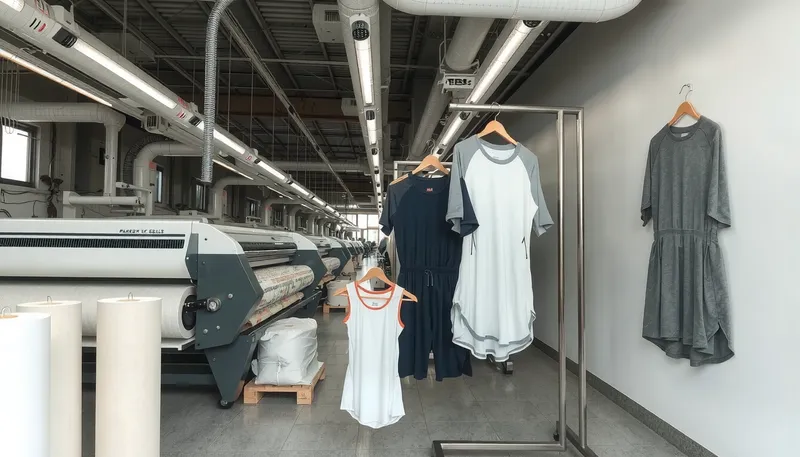
Padel clothing fabric is a performance knit engineered for the stop-and-go, high-intensity demands of court sport — the benchmark is 75% nylon / 25% spandex Interlock at 160 gsm with >95% four-way stretch recovery and UPF 50+ under AATCC 183. This guide walks sourcing teams from yarn and knit structure through dyeing and factory ROI, so decisions are made on spec-sheet data instead of marketing claims.
Key Points
- Technical Specifications: Padel high-performance fabrics must have >95% four-way stretch recovery, dynamic moisture management, and Grade 4+ color fastness. These parameters exceed regular sportswear thresholds.
- Quality Makes a Difference: The yarn choice (Nylon vs. Polyester), the knit type (Interlock vs. Single Jersey) and the finishing steps are the direct performance affecting clothing quality.
- Data Over Marketing Claims: Instead of marketing claims use real data such as GSM, stretch recovery rates, and color fastness grades in both the choosing and approving stages of your fabric.
- Fabric ROI: Quality fabric is the most effective lever for cost-cutting. Higher yield per kilogram, non-curling edges for faster cutting, and fewer quality rejections can directly elevate your factory's profits.
Why Padel Clothing Fabric Needs a Higher Technical Standard
Padel clothing fabric must outperform standard gym-wear because the sport stacks three stresses at once: explosive lateral lunges that stretch the knit, heavy sweat that saturates it, and repeated abrasion against the court surface. A regular single jersey fails on all three — it pills, curls, and bags out within a season.
Players lunge, pivot, and smash in all directions. The fabric needs >95% four-way stretch recovery to snap back after each movement; otherwise the garment buckles and "bagging out" sets in at the knees and elbows.
Padel is a high-sweat, stop-and-go sport. Even a small amount of trapped moisture becomes a problem between points. The fabric must pull sweat away from the skin and dry fast so the player does not feel cold during the 20-second changeovers.
Durability is not optional either. Court surfaces and the player's gear constantly abrade the fabric. A standard single jersey pills and wears out quickly. Understanding how textiles make modern tennis gear perform at a professional level is a useful reference, but the spec sheet below translates that into measurable targets.
Performance Dissection: Fabric Quality Assessed from a Different Angle
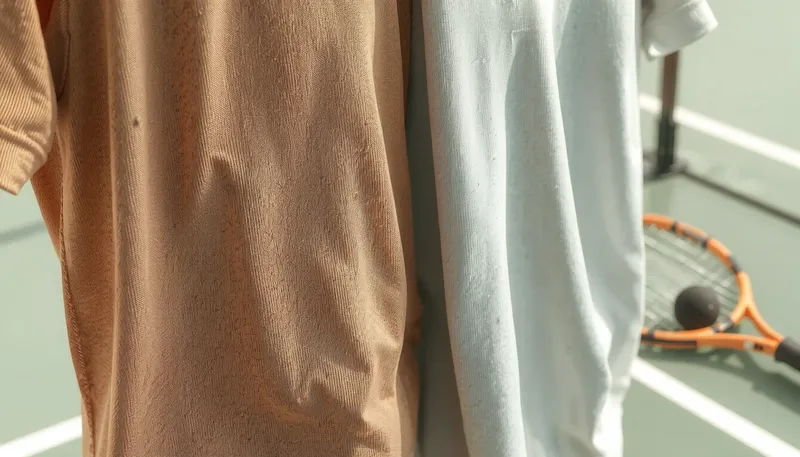
Padel clothing fabric quality is decided at three stages before the fabric ever reaches a sewing line: yarn selection, knit structure, and dyeing/finishing. Each stage sets measurable parameters — denier, weight, stretch recovery, and fastness grades — that belong in your Tech Pack.
Yarn Selection: Nylon 6 or Polyester for Padel Wear
The base yarn is your primary decision. Nylon is gentler on the skin and feels cotton-like, with higher abrasion resistance than polyester — the reason premium padel brands pay for it. Polyester is less expensive and inherently water-repellent, making it the value option for entry-tier collections. We usually work with 20D or 40D spandex blends: the lower denier gives a lighter, softer hand-feel for tops, while 40D adds firmer compression for leggings. The yarn denier changes final fabric weight, transparency, and elasticity.
Knit Structure is the Cornerstone: Interlock vs. Single Jersey
The knit structure carries most of the performance and manufacturing efficiency. A Double Jersey knit such as Interlock is the benchmark choice for padel skirts and tops: two layers of loops interlock to stabilize the fabric, smooth on both sides, and — most importantly for factories — the edges do not curl when cut, so there are no "potato-chip" or roll-up edges fighting the cutting table. Single jersey, by contrast, curls and twists, wasting material and time during production. If you are evaluating knit structures from scratch, our double jersey interlock guide breaks down the construction difference.
Dyeing and Finishing: The Crucial Elements of Color and Function
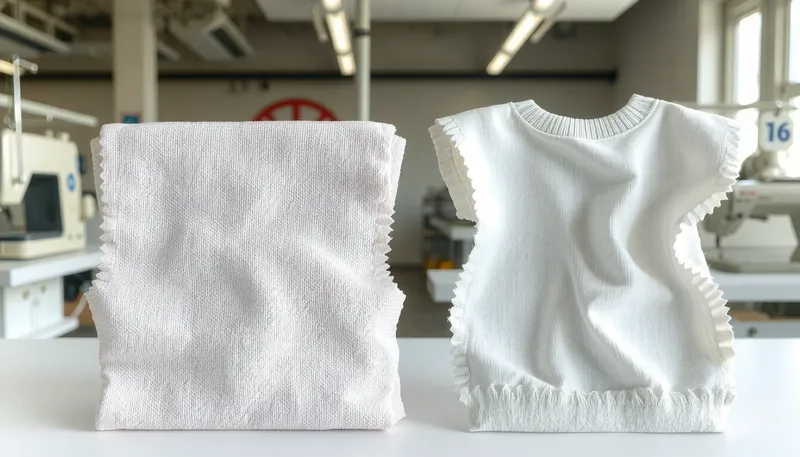
This final stage adds the functions that separate a commodity knit from a padel-ready one. We typically use piece-dyeing for solid colors, which assures consistency across a dye lot. Finishing can then deliver three measurable results: UV protection rated UPF 50+ under AATCC 183, anti-odor properties, and color fastness of Grade 4-5 to perspiration and laundering per ISO 105-E04 and ISO 105-C06. Grade 4-5 means minimal color bleeding through sweat or repeated washing — which is what keeps a brand's reputation intact.
The Spec Sheet That Matters: Key Physical Data for Sourcing Padel Fabric
A padel fabric spec sheet should lock five measurable parameters: composition, GSM, four-way stretch recovery, shrinkage, and color fastness. Below is the table that compares our recommended D036 specifications for padel against a generic activewear baseline — the data sourcing teams and factories both rely on.
| Parameter | FORALLTEX D036 Standard | Industry Average (Generic Activewear) | Why It Matters for Padel |
|---|---|---|---|
| Composition | 75% Nylon / 25% Spandex | 88% Polyester / 12% Spandex | The cotton-like softness, longer-lasting, and better stretch quality overall. |
| Weight (GSM) | 160 g/m² | 180-200 g/m² | It is lightweight for better speed, breathability, and visibility. |
| 4-Way Stretch Recovery | >95% (Warp & Weft) · per ASTM D3107 | ~85-90% | Avoids bagging at knees/elbows; retains fit after strenuous activity. |
| Shrinkage Rate | <3% after 5 washes · per AATCC 135 | 5-7% | Stable fit across washes protects brand equity and reduces size-return claims. |
| Color Fastness to Perspiration | Grade 4-5 · per ISO 105-E04 | Grade 3-4 | Prevents color bleeding onto skin or other garments during match play. |
| UPF Rating | 50+ · per AATCC 183 | 30+ or untested | Critical for outdoor match protection in midday sun. |
The ROI of Premium Fabric: A Yield Calculator for Your Factory
The ROI of premium padel fabric is measured in three concrete numbers: yield per kilogram, cutting time saved, and rejection rate. Choose fabric on those three metrics, and a higher-priced roll often costs less per finished garment than a cheap one. Material waste is usually the silent profit killer in FOB pricing.
Finding Your True Cost-Per-Garment
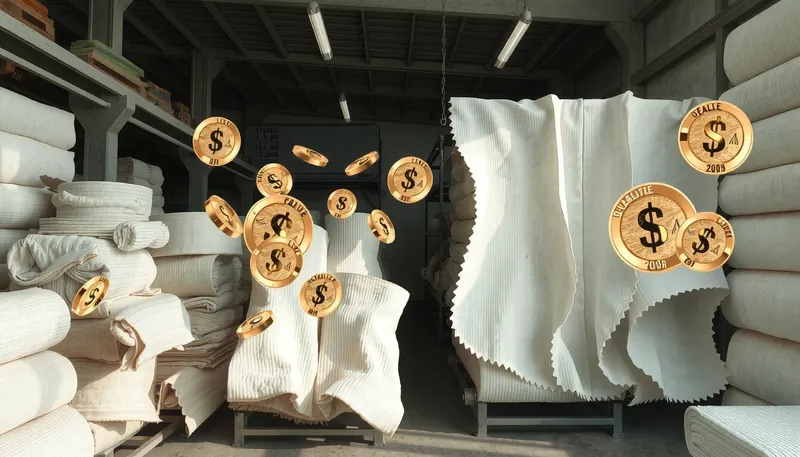
A stable lightweight fabric like our 160gsm D036 Nylon Spandex Interlock yields more cuttable meters per kilogram than a heavier alternative, directly lowering the material cost per garment. Our fabric yield calculator guide shows how a 160gsm vs 220gsm choice changes cost-per-garment.
What does "One Open One Close" mean? In a proper Interlock, each loop locks with the neighboring loop on both sides, so cut edges do not curl. Your cutting team can stack more layers and work faster — a direct labor-cost reducer. Those saved minutes add up to real savings across a production run.
Quality Control is the third lever. Fabrics with embedded performance reduce rejections. Our D083 Air-Sculpt Fabric, for example, ships with anti-yellowing properties for white garments and bra cups, preventing color change during warehouse storage and saving you the cost of rejected goods and rework.
Sourcing Fabric for Padel & Tennis Wear: The 2027 Boom & Beyond
The racket-sports apparel market is one of the fastest-growing segments in sportswear, and padel is its engine: court construction, club membership, and media coverage are all expanding, pulling apparel demand with them. Sourcing decisions made now determine which collections catch that wave.
Recent market research confirms the trend — the tennis and padel wear market continues to see robust growth, with padel named among the most significant growth factors. The global tennis-wear market is projected to reach a new scale by 2032.
Future fabric trends are already visible on the supply side. Sustainability leads: GRS-certified recycled nylon and dope-dyed yarns cut water use significantly. Smart textiles with bio-sensing or temperature-control finishes are in development, and high-resolution digital printing on stable base fabrics enables greater personalization in future collections.
FAQ for Padel Fabric Sourcing
What is a realistic MOQ for custom-colored performance fabric?
At FORALLTEX, our typical Minimum Order Quantity (MOQ) for custom dye lots is around 300-500kg per color. This ensures color consistency and is an efficient run for our dyeing machines.
How does the strike-off and lab dip process work?
Once you provide a Pantone TCX code in your Tech Pack, we produce a small swatch (lab dip) for color approval within 7-10 days. For prints, we provide a strike-off on the chosen base fabric. This process is crucial before bulk production commitment.
What is the average lead time from PO to FOB shipment?
Standard lead time is about 25-35 days for our in-stock greige fabrics after lab dip approval. This can vary based on custom requirements and finishing processes.
Can you accommodate different fabric weights for a full collection (e.g., tops, leggings, bras)?
Yes. We specialize in creating coordinated collections. For example, you can pair our 160gsm D036 Nylon Spandex Interlock for tops with a 220gsm version for leggings. This ensures color and performance consistency.
What is the best fabric for padel skirts and tops?
A 75% nylon / 25% spandex Interlock at 160 gsm is the benchmark for padel skirts and tops: four-way stretch recovery above 95% keeps the garment from bagging at the knees, the double-jersey structure prevents edge curl, and UPF 50+ blocks sun during outdoor matches. For a firmer, more compressive bottom, spec a 220gsm version of the same construction.
Does padel clothing fabric need UPF 50+?
Yes, when the court is outdoors. Padel is often played midday, so a UPF 50+ rating tested under AATCC 183 is a defensible specification for match-day kits. If your line targets indoor clubs only, UPF is optional — but it costs little to add and expands your sell-through into outdoor venues.
What GSM should padel clothing fabric be?
Start at 160 gsm for tops and skirts, and 200-220 gsm for leggings and shorts that need compression. Lighter fabric moves and breathes better in hot conditions; heavier fabric holds shape longer against the sliding and lunging of padel play. Matching weights across a collection keeps dye lots consistent.
Why is Nylon/Spandex often preferred over Polyester/Spandex for premium padel clothing fabric?
While polyester has strong moisture-wicking properties, premium brands often choose Nylon for its better "hand-feel" (softness). It also has higher wear resistance and more compressive, cotton-like feel against the skin. Customers see this as higher value.
Your Partner in Performance: Sourcing with FORALLTEX
Sourcing the right padel clothing fabric is complex. It requires deep understanding of materials, making, and the specific needs of the athlete. A mistake can be costly. It affects performance, brand reputation, and your bottom line.
FORALLTEX (Haining Forall Digital Technology Co., Ltd.) is more than a supplier. We are an expert partner with the technical knowledge and making capability to deliver high-performance textiles. These give you a competitive edge. We understand the details that make a difference on the factory floor and on the padel court.
Ready to elevate your 2026 padel collection? Contact our textile specialists to discuss your Tech Pack and request a D036 160gsm Interlock swatch — verify the zero-curl cutting and UPF 50+ on your own production line.
🔗 Related Fabrics
This article introduces the D036 Nylon Spandex Interlock platform for padel and racket-sports apparel, delivering >95% four-way stretch recovery with UPF 50+ and zero-edge-curl cutting efficiency:
- Cycling Jersey Side Panels: Better Than Mesh for 2026 — UPF 50+ finishing for outdoor court sport
- How to Test Fabric Stretch Recovery: Expert Guide 2026 — Factory acceptance testing for bagging prevention
- Fabric Elongation and Recovery Test: The Complete Guide to ASTM D3107 — The ASTM D3107 test standard behind the >95% recovery spec
- Activewear Fabric Shrinkage Prevention: <3% Guaranteed — AATCC 135 shrinkage control for stable fit
- Fabric Yield Calculator Per Kg: 160gsm vs 220gsm Cost Guide — The ROI-per-kilogram math for 160gsm sourcing
- What is Double Jersey Interlock Fabric? Complete Guide 2026 — Interlock construction explained for non-curling edges
- D036 Nylon Spandex Interlock — The 160gsm fabric specified throughout this guide
Written by Forall Lab
© Forall Lab • Powered by Kunpeng ONE