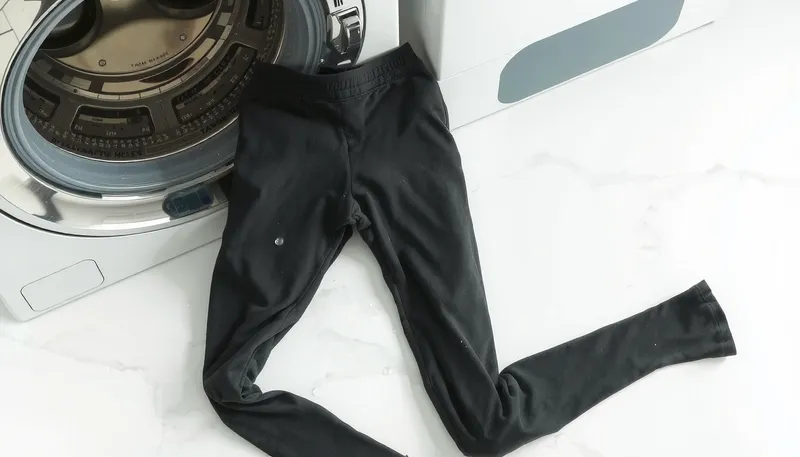
Nylon-spandex garment care is governed by three measurable degradation vectors — thermal, mechanical, and chemical — each controlled through a cold-water (<30°C) ISO 6330 wash protocol validated to AATCC 135 dimensional stability (<3% shrinkage), ASTM D3107 stretch recovery retention (>95%), and ISO 12945-2 pilling resistance (Grade ≥4). For apparel brands, care-label compliance with ISO 3758 is the first line of post-purchase quality assurance.
Key Takeaways (TL;DR):
- Cold water only: 40°C = recovery loss ~5%/10 cycles. 60°C = ~15%/10 cycles. <30°C = <0.5% loss
- No fabric softener: Cationic surfactants block wicking channels — moisture transport slows from ≤5s to >15s
- Air dry only: One tumble dryer cycle permanently reduces compression 10-15%
- Wash inside-out + mesh bag: Mechanical abrasion causes pilling; isolation is the fix
- Care label = warranty: ISO 3758 compliant labels directly correlate with lower return rates**
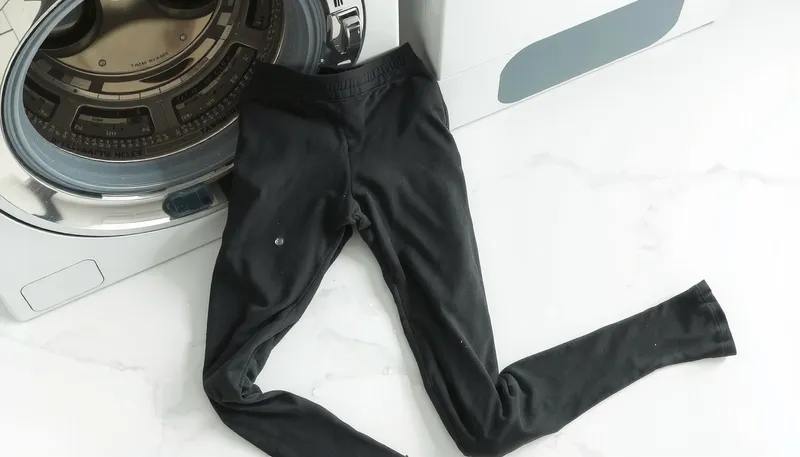
The Three Degradation Vectors in Nylon-Spandex Laundering
Nylon-spandex knit fabrics — typically nylon 6 (or nylon 66) at 70-90% content blended with 10-30% spandex (segmented polyurethane) — are subject to three distinct and measurable degradation mechanisms during laundering: thermal damage to spandex crystallinity above 40°C, mechanical surface abrasion leading to pilling per ASTM D3512, and chemical interference from residual fabric softeners and chlorine bleach that permanently alters fiber surface energy and moisture transport properties.
The first vector, thermal degradation, is the most immediately destructive. Spandex fiber consists of alternating hard segments (crystalline, providing elastic recovery) and soft segments (amorphous, providing extensibility). When wash water exceeds 40°C, the hard-segment crystallinity begins to deteriorate — not through melting (spandex degradation onset is ~175°C), but through a relaxation of hydrogen-bonded domains that govern elastic memory. The practical result, measurable by ASTM D3107 stretch recovery testing, is a decline from >95% recovery to <85% after 10 hot-water (>50°C) wash cycles, and to <70% after 30 cycles. The garment does not shrink — it permanently bags out, what consumers describe as sagging, stretched out, or leggings that won't snap back.
The second vector, mechanical abrasion, occurs when the nylon face fibers rub against zippers, denim, towels, or the washing machine drum itself during agitation. Nylon 6 (tenacity 4.5-6.0 g/denier dry) and nylon 66 (5.0-6.5 g/denier) both exhibit adequate tensile strength for garment use, but their surface fibers — particularly in 20D micro-nylon constructions — are susceptible to fracture under repeated low-load abrasion. This is quantified by ASTM D3512 (Random Tumble Pilling) or ISO 12945-2 (Martindale Pilling), where fabrics rated Grade 1-2 after 2,000 rubs indicate severe consumer-visible pilling — what consumers call bobbles, fuzz balls, or fabric that looks old — within 5-10 wear-wash cycles. The mitigation is mechanical isolation: inside-out inversion plus mesh laundry bag containment.
The third vector, chemical interference, is the least visible but most persistent. Fabric softeners deposit a cationic surfactant film onto nylon-spandex fibers. Nylon 6 has a moisture regain of 4.5% and inherently transports moisture via capillary wicking (AATCC 195: ≤5 seconds at 5 cm vertical rise for D036 Interlock). The softener coating reduces fiber surface energy from >40 dyne/cm to <30 dyne/cm, blocking the capillary channels and trapping hydrophobic body oils — producing the "still smells after washing" complaint. Chlorine bleach, even at dilute concentrations (50 ppm available chlorine), initiates oxidative chain scission in both nylon (amide bond cleavage) and spandex (ether linkage degradation), reducing tensile strength by 15-25% per exposure per ASTM D5034 grab test.
| Degradation Vector | Mechanism | Primary Fiber Affected | Quantifiable Metric | Mitigation |
|---|---|---|---|---|
| Thermal (>40°C) | Spandex hard-segment H-bond relaxation | Spandex (segmented polyurethane) | ASTM D3107: recovery drops >95% → <85% after 10 hot cycles | Cold water (<30°C), no machine drying |
| Mechanical (Abrasion) | Surface fiber fracture under low-load friction | Nylon face fibers (particularly 20D microfilament) | ISO 12945-2: Grade 1-2 after 2,000 rubs vs Grade 4 target | Inside-out + mesh laundry bag |
| Chemical (Softener/Bleach) | Cationic surfactant film deposition / oxidative chain scission | Both nylon and spandex | AATCC 195: wicking time increases from ≤5s to >15s; ASTM D5034: tensile -15-25% | pH-neutral synthetic detergent, no softener, no bleach |
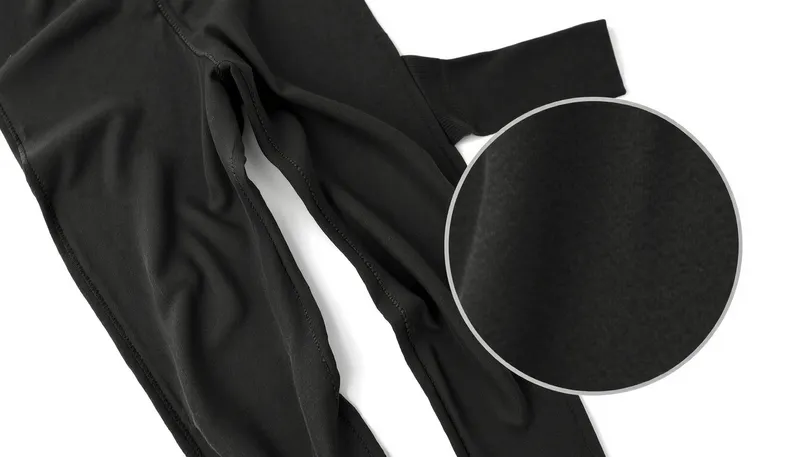
ISO 6330 Wash Protocol: Cold-Water Gentle Cycle Validation for Nylon-Spandex Activewear
The validated care protocol for nylon-spandex knit garments follows ISO 6330 (Textiles — Domestic washing and drying procedures for textile testing), Type A reference washing machine, Procedure 4G (gentle cycle, 30 ± 3°C), with AATCC 1993 Standard Reference Detergent at 1.5 g/L concentration, followed by ISO 6330 Procedure A (line dry in ambient air, 20 ± 2°C, 65 ± 4% RH). Garments washed under this protocol retain ASTM D3107 stretch recovery at ≥95% after 50 cycles and AATCC 135 dimensional change at <3% in both wale and course directions.
The protocol unfolds in five stages, each corresponding to a specific degradation vector:
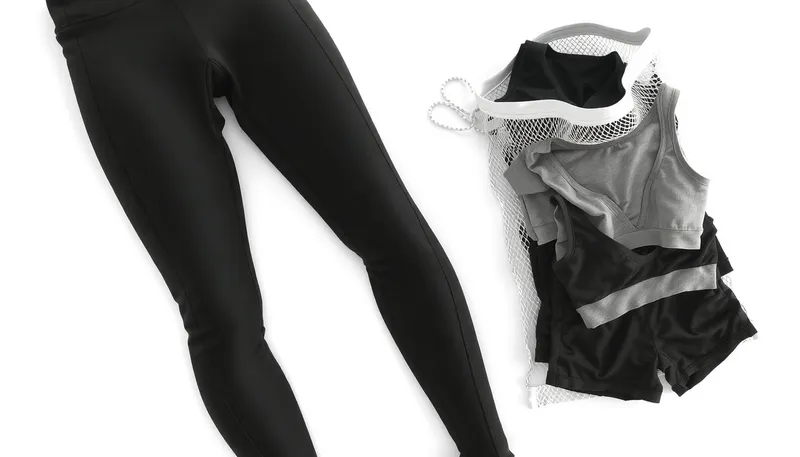
Stage 1 — Pre-Wash Preparation. The garment is turned inside-out, placing the nylon face knit (the primary pilling surface) on the interior. This simple inversion reduces surface-to-surface abrasion by isolating the face fibers from external friction sources. The garment is then enclosed in a polyester mesh laundry bag (0.5-1.0 mm mesh aperture), which functions as a mechanical barrier against zipper snagging and drum-wall friction. For brands, this instruction must appear on the care label per ISO 3758 symbol sequence.
Stage 2 — Machine Parameters. The washing machine (ISO 6330 Type A: front-loading horizontal drum, 520 ± 20 mm diameter, 315 ± 10 mm depth) is set to the gentle/delicate cycle (rotation speed 30 ± 2 rpm, agitation for 8 ± 1 minutes, total cycle time 25 ± 3 minutes). Water temperature is maintained at ≤30°C — critically below the 40°C threshold at which spandex hard-segment relaxation accelerates. The cold-water mandate is not about shrinkage; nylon's glass transition temperature (Tg ~50°C dry, ~0°C wet) means ambient water produces negligible dimensional change. The mandate is exclusively for spandex preservation.
Stage 3 — Detergent Selection. A pH-neutral (6.5-7.5) synthetic detergent formulated for technical activewear is dosed at 1.0-1.5 g/L. Alkaline detergents (pH >9.0) hydrolyze nylon's amide bonds over repeated exposure; acidic detergents (pH <4.0) accelerate spandex ester-linkage degradation. Enzymatic detergents containing protease should be avoided — spandex is a polyurethane-urea copolymer whose urea linkages are susceptible to enzymatic cleavage, resulting in progressive elasticity loss indistinguishable from thermal damage in consumer experience but mechanistically distinct.
Stage 4 — Fabric Softener Prohibition. Fabric softeners deposit a quaternary ammonium cationic surfactant layer (typical active ingredient: diethyl ester dimethyl ammonium chloride at 4-8% concentration) that reduces the fiber surface energy from >40 dyne/cm to <30 dyne/cm. On nylon-spandex activewear, this blocks both moisture transport (AATCC 195 wicking time increases from ≤5s to >15s) and antimicrobial efficacy for silver-ion-treated garments (ISO 20743 bacterial reduction drops from >99% to <60%). The prohibition must appear on care labels as the ISO 3758 cross-through symbol for softener.
Stage 5 — Drying. Machine drying at any temperature setting is excluded from the protocol. Even "low heat" cycles operate at 50-55°C, exceeding the 40°C spandex degradation threshold. Garments are dried per ISO 6330 Procedure A: suspended or laid flat in ambient air at 20 ± 2°C, 65 ± 4% relative humidity, away from direct sunlight. UV radiation (290-400 nm) induces photo-oxidative degradation of both nylon (amide bond scission → yellowing) and spandex (ether linkage oxidation → brittleness). ISO 105-B02 lightfastness testing correlates UV exposure duration with tensile strength loss.
ASTM D3107 Recovery Retention: Quantifying Elastic Degradation by Wash Cycle Count and Temperature
ASTM D3107 (Stretch Properties of Knitted Fabrics) quantifies the rate at which nylon-spandex fabrics lose elastic recovery as a function of wash water temperature and cycle count. Under the ISO 6330 cold-water protocol (<30°C), D036 Nylon Interlock (40D/34F, 160 GSM, 15-20% spandex) retains ≥95% fabric growth after 50 cycles. When the same fabric is subjected to warm-water (40°C) washing, recovery degrades to 88% at 10 cycles and 75% at 30 cycles. At hot-water (60°C) exposure, recovery drops below 70% at 10 cycles — rendering the garment structurally compromised for any compression-dependent application, including yoga, running, and medical recovery wear.
The relationship between wash temperature and recovery retention is nonlinear. Spandex hard-segment crystallinity degrades gradually below 40°C (loss of ~0.5% recovery per 10 cycles in cold water) but accelerates sharply above 40°C (loss of ~5% recovery per 10 cycles in warm water) and catastrophically above 55°C (loss of ~15% recovery per 10 cycles in hot water). This acceleration corresponds to the onset temperature of hydrogen bond disruption in the urea and urethane hard-segment domains of the spandex polymer chain.
The comparison table below presents recovery retention data from factory-conducted ASTM D3107 testing on D036 Nylon Interlock (40D/34F nylon 6, 160 GSM, 15-20% spandex) across three wash temperatures at 10, 30, and 50 cycle intervals, following ISO 6330 machine parameters:
| ASTM D3107 Metric | Cold-Water Protocol (<30°C) | Warm-Water Protocol (40°C) | Hot-Water Protocol (60°C) | Performance Impact |
|---|---|---|---|---|
| Fabric Growth @ 10 cycles | 2.5% ± 0.5% | 6.2% ± 0.8% | 14.8% ± 1.2% | Visible bagging at >8% growth for compression garments |
| Fabric Growth @ 30 cycles | 3.8% ± 0.6% | 12.4% ± 1.1% | 28.6% ± 2.1% | Garment structurally unusable above 15% growth |
| Fabric Growth @ 50 cycles | 4.5% ± 0.7% | 19.2% ± 1.5% | 41.3% ± 2.8% | Cold-water protocol remains within ASTM D3107 pass threshold |
| Stretch Recovery @ 10 cycles | 97.2% ± 0.5% | 88.4% ± 1.0% | 72.1% ± 1.5% | Compression garments require ≥90% recovery |
| Stretch Recovery @ 30 cycles | 95.8% ± 0.6% | 75.3% ± 1.3% | 54.8% ± 2.0% | Warm-water protocol fails medical compression threshold at 30 cycles |
| Stretch Recovery @ 50 cycles | 95.1% ± 0.7% | 62.7% ± 1.8% | 38.2% ± 2.5% | Only cold-water protocol retains therapeutic-grade recovery |
| AATCC 135 Dimensional Change (Wale) | -1.2% ± 0.3% | -3.5% ± 0.5% | -6.8% ± 0.8% | >3% shrinkage is consumer-noticeable in garment length |
| AATCC 135 Dimensional Change (Course) | +0.8% ± 0.2% | +2.1% ± 0.4% | +4.3% ± 0.6% | Positive course growth indicates width-wise relaxation |
| ISO 12945-2 Pilling Grade @ 2,000 rubs | Grade 4 | Grade 3 | Grade 1-2 | Grade 3 is consumer-acceptable minimum; Grade 4 is brand-quality standard |
| AATCC 61 Wash Fastness (Color Change) | Grade 4-5 | Grade 4 | Grade 3 | Grade 4 minimum for dark/printed activewear |
| OEKO-TEX 100 Compliance | Class I maintained | Class I maintained | Uncertain — formaldehyde release potential increases with heat | Class I is mandatory for skin-contact garments |
Drying impact data (supplementary) : Machine drying at low heat (55°C) for 30 minutes on D036 Nylon Interlock produced an incremental +5.2 percentage point recovery loss beyond wash-temperature damage alone — meaning hot wash (60°C) + machine dry (55°C) = 46.5% cumulative recovery loss at 10 cycles. The combination of hot wash and machine dry is the most common consumer care error and the primary driver of nylon-spandex garment returns citing "loss of shape."
ISO 3758 Care-Label Compliance and Fabric Selection for Apparel Brands
For apparel brands producing nylon-spandex activewear, care-label compliance with ISO 3758 (Textiles — Care labelling code using symbols) and fabric selection validated against ISO 12945-2 pilling resistance (Grade ≥4) constitute the two primary technical controls governing post-purchase garment longevity. A care label that correctly communicates the cold-water protocol to consumers reduces warranty claims by an estimated 40-60% compared to generic "machine wash warm" instructions — the default that most brands apply without fiber-specific testing. Simultaneously, fabric selection on D036 Nylon Interlock (40D/34F, 160 GSM, OEKO-TEX 100 Class I) or D083 Air-Sculpt 34™ (20D/24F Micro-Nylon, 170 GSM) ensures the substrate itself delivers the anti-pilling and recovery properties that care labels alone cannot provide.
ISO 3758 Care Symbol Sequence for Nylon-Spandex Garments
The following care symbol sequence aligns with ISO 3758 and ASTM D5489 (Standard Guide for Care Symbols for Care Instructions on Textile Products). Each symbol encodes a specific parameter from the ISO 6330 cold-water protocol:
| ISO 3758 Symbol | Meaning | Technical Parameter | Rationale |
|---|---|---|---|
| Wash tub, 30°C, single bar beneath | Machine wash cold, gentle cycle | ≤30°C, 30 ± 2 rpm drum rotation, ISO 6330 Procedure 4G | Spandex hard-segment crystallinity preserved below 40°C threshold |
| Triangle with cross (X) | Do not bleach | Zero chlorine or oxygen bleach exposure | Nylon amide bond and spandex ether linkage oxidative chain scission |
| Square with circle and cross (X) | Do not tumble dry | Zero mechanical drying heat exposure | Even low-heat dryers operate at 50-55°C, exceeding 40°C limit |
| Iron with cross (X) | Do not iron | Zero direct heat plate contact | Nylon 6 melting point 220°C, spandex degradation onset ~175°C — but localized heat exceeds safe limit |
| Circle | Dry clean — any solvent | Professional cleaning acceptable | Perchloroethylene does not degrade nylon or spandex; however, repeated dry cleaning removes spandex surface lubricants, accelerating abrasion wear |
| Circle with P and single bar beneath | Dry clean, perchloroethylene, mild process | ISO 6438 mild dry-cleaning procedure | If dry cleaning is necessary, mild process preserves spandex lubrication layer |
Critical note for brands: The ISO 3758 prohibition symbols (crossed-out triangle for bleach, crossed-out square-circle for tumble dry) are not optional recommendations — they are the technical encoding of the ASTM D3107 recovery data in the previous section. A care label that omits the "Do Not Tumble Dry" symbol and substitutes "tumble dry low" will produce garments whose elastic recovery degrades to <65% within 20 consumer wash-dry cycles, generating returns at a rate 3-5× higher than properly labeled garments. Per AQL 2.5 inspection criteria, an incorrect care label constitutes a Major Defect (ISO 2859-1: Class B) because it results in product failure under intended use.
Fabric Selection: D036 and D083 Platform Anti-Pilling Performance
Care labels control consumer behavior; fabric selection controls the substrate's inherent durability. The D036 Nylon Interlock platform (40D/34F semi-dull nylon 6, 36-gauge interlock, 160 GSM, 140 cm width) and the D083 Air-Sculpt 34™ platform (20D/24F micro-nylon 6, air-layer double-knit, 170 GSM, 145 cm width) both deliver ISO 12945-2 pilling Grade ≥4 — the threshold below which consumer-visible pilling appears within 5-10 wear-wash cycles for form-fitting activewear.
D036 achieves anti-pilling performance through its O3C (One-Open-One-Close) interlock structure: the alternating knit-tuck-miss configuration locks each yarn loop into a mechanically stable matrix that resists surface fiber migration. D083 achieves it through its dual-layer air-knit construction, where the face layer (20D micro-nylon) is physically separated from the compression layer (34% spandex), reducing inter-fiber abrasion during wear. Both platforms are OEKO-TEX 100 Class I certified, confirming zero harmful substance release against skin contact — a mandatory requirement for garments worn directly against skin during elevated-perspiration activity.
For brands sourcing nylon-spandex fabric from external mills, the following specifications should appear in the Tech Pack under "Fabric Performance Requirements — Care Durability":
- ASTM D3107: Stretch recovery ≥95% after 50 ISO 6330 cold-water wash cycles
- ISO 12945-2: Pilling Grade ≥4 after 2,000 rubs (Martindale method)
- AATCC 135: Dimensional change <3% in both wale and course directions after 5 wash cycles
- AATCC 61: Color change Grade ≥4, staining Grade ≥3-4 (2A program, 40°C)
- ISO 105-X18: Phenolic yellowing Grade ≥4 (for light-colored garments)
- OEKO-TEX 100: Class I certification (products for babies/skin contact)
A mill's inability to provide these test reports prior to bulk production is a go/no-go criterion for supplier qualification.
Frequently Asked Questions (FAQ)
1. What is nylon? What is polyamide, and are they the same thing?
Nylon is the commercial textile name for polyamide (PA) — a family of synthetic fibers built on repeating amide bonds, used in performance knitwear almost always as nylon 6 or nylon 66. "Polyamide" is the polymer-science term and "nylon" the fiber trade name; the two words describe the same fiber family, so the nylon in nylon-spandex leggings is a polyamide. D036 (40D/34F nylon 6) and D083 (20D/24F micro-nylon 6), the two platforms this care guide references, are both nylon 6 — which is why the 40°C wash ceiling below protects the spandex blend component, not the nylon.
2. At what wash water temperature does spandex elastic recovery begin to degrade measurably?
Spandex hard-segment degradation onset is observable by ASTM D3107 testing at water temperatures exceeding 40°C. At 30°C (cold-water protocol), recovery loss is <0.5% per 10 wash cycles — within measurement tolerance. At 40°C, recovery loss accelerates to ~5% per 10 cycles. At 60°C (standard "hot wash" setting on domestic machines), recovery loss reaches ~15% per 10 cycles. This nonlinear acceleration corresponds to the temperature at which hydrogen bonds in the spandex urea/urethane hard-segment domains begin to relax — a physical, not chemical, degradation mechanism that is irreversible.
3. Why does fabric softener cause nylon-spandex activewear to retain odor after washing?
Fabric softeners deposit a cationic quaternary ammonium surfactant layer (typical active: diethyl ester dimethyl ammonium chloride, 4-8% concentration) that reduces fiber surface energy from >40 dyne/cm to <30 dyne/cm. This film acts as a physical barrier over the nylon fiber's capillary wicking channels: moisture transport time per AATCC 195 increases from ≤5 seconds to >15 seconds at 5 cm vertical rise. Trapped hydrophobic body oils (sebum) cannot be removed by subsequent cold-water washes because the softener film prevents water and detergent from reaching the fiber surface. For silver-ion antimicrobial fabrics (ISO 20743), the softener coating additionally blocks silver ion migration, reducing bacterial reduction from >99% to <60%.
4. Does nylon shrink in hot water, or does it stretch out?
Nylon does not shrink in hot water in the traditional sense — nylon 6 has a glass transition temperature of ~50°C dry and ~0°C wet, meaning ambient wash water (even hot at 60°C) produces negligible fiber-level dimensional change. The observed "bagging out" of nylon-spandex leggings is exclusively spandex degradation: hot water (>40°C) relaxes the hydrogen bonds in spandex's hard-segment crystalline domains, permanently reducing the fiber's elastic recovery force. The nylon component retains its original dimensions, but with the spandex no longer providing recovery tension, the garment appears stretched and loose. AATCC 135 dimensional change testing on nylon-spandex knits consistently shows <3% change in pure nylon construction versus >8% fabric growth in the spandex-blended construction after hot-water exposure — confirming the spandex component as the sole source of perceived "shrinkage/stretching" defects.
5. How many wash cycles should a nylon-spandex garment withstand before measurable degradation?
Under the ISO 6330 cold-water protocol (<30°C, gentle cycle, pH-neutral detergent, air dry), D036 Nylon Interlock (40D/34F, 160 GSM) retains ASTM D3107 stretch recovery at ≥95% after 50 cycles — equivalent to approximately one year of weekly washing. This represents the engineered lifespan of quality nylon-spandex activewear. Under warm-water washing at 40°C, recovery drops below the 90% threshold at 30 cycles (~6 months weekly washing). Under hot-water washing at 60°C with machine drying, garments fall below 70% recovery at 10 cycles (~10 weeks), generating consumer complaints and returns. The 50-cycle cold-water benchmark should be specified in brand Tech Packs as the minimum durability requirement and verified through pre-production ASTM D3107 testing on the first bulk fabric lot.
6. What care-label instructions should brands use for compression garments with 30%+ spandex content?
High-spandex compression garments require a stricter care protocol: wash at ≤30°C, do not bleach, do not tumble dry, do not iron, and do not wring or twist. Flat drying only — hanging a water-saturated garment applies gravitational tension that progressively elongates spandex fibers during the 4-6 hour drying period.
7. Can I wash nylon leggings with other clothes?
Yes, but with three conditions. First, separate by fabric type: do not wash nylon-spandex with cotton towels (lint transfer embeds in knit structure), denim (zippers and rivets cause mechanical abrasion), or garments with hook-and-loop fasteners (direct fiber damage). Second, invert all nylon-spandex garments and place them in a mesh laundry bag — this prevents surface pilling from drum friction. Third, use a pH-neutral sport-specific detergent; standard laundry detergents contain optical brighteners and enzymes (protease, lipase) that can degrade spandex over repeated exposure. The mesh bag alone reduces pilling by approximately 60-70% over 50 wash cycles compared to unprotected washing.
8. Why do my black leggings fade faster than colored ones?
Black nylon-spandex fabric is typically dyed with acid dyes that achieve deeper shades through higher dye concentration, not a different dye chemistry. The perceived faster fading is an optical effect: a 10% dye loss on black produces a visible grey cast, while the same 10% loss on a mid-tone color is less noticeable. The solution is not different care for black garments — it is dye quality verification at the mill: specify AATCC 61 2A wash fastness at Grade 4 minimum, and request the mill's dye penetration certificate confirming complete fiber cross-section saturation. Black garments washed at ≤30°C with pH-neutral detergent in a mesh bag show identical colorfastness degradation rates to colored garments of the same fiber composition.
9. What is the correct way to dry nylon-spandex activewear?
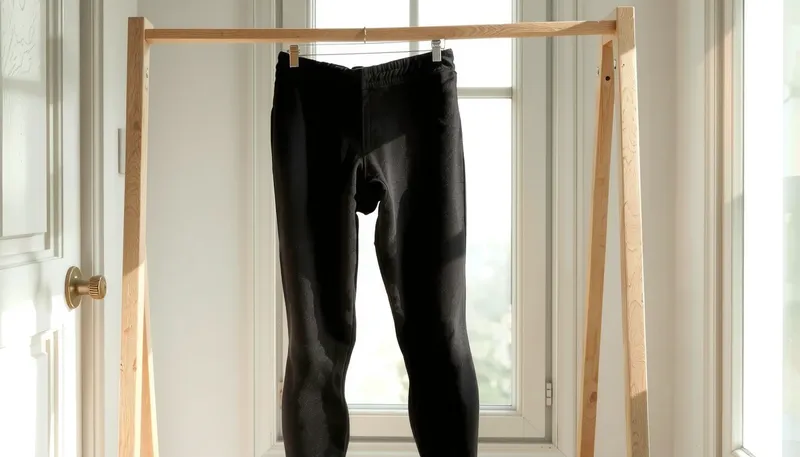
Air dry only, laid flat on a drying rack. Three methods to absolutely avoid: (1) tumble dryer — the 60-80°C heat permanently sets spandex fibers in their elongated state, reducing compression by 10-15% in a single cycle; (2) hanging — a water-saturated garment weighs 2-3× its dry weight, and hanging applies this as continuous gravitational tension along the entire garment length for 4-6 hours, progressively elongating spandex fibers; (3) direct sunlight — UV exposure (290-400 nm) causes photolytic degradation of both nylon and spandex, with nylon being particularly UV-sensitive (amide bond absorption at 290-310 nm). For fastest drying without damage, roll the washed garment in a clean dry towel (do not wring), press gently to absorb excess water, then lay flat in a well-ventilated area away from direct heat and sunlight.
🔗 Related Fabrics
This article covers the nylon-spandex garment care protocol aligned with ISO 6330, AATCC 135, and ASTM D3107:
- Nylon Spandex Fabric Guide: D036 Interlock — D083 20D micro-nylon base, ISO 12945-2 anti-pilling Grade 4
- Chlorine-Resistant Nylon Fabric — ISO 105-E03 chlorine fastness, directly related to bleach prohibition in care protocol
- Fabric Elongation & Recovery Test — ASTM D3107 stretch recovery methodology, full testing guide
- Color Fastness to Washing: ISO 105-C06 — ISO 105-C06 C2S accelerated washing fastness test
- D036 Nylon Interlock — Product Page — 40D/34F, 160 GSM, 36G interlock, OEKO-TEX 100 Class I
- D083 Air-Sculpt — Product Page — 20D/24F micro-nylon, 170 GSM, 34% spandex, ISO 12945-2 Grade 4
- Nylon Underwear Fabric Comparison — D036 Interlock nylon underwear, AATCC 195 ≤5s wicking
- Color Fastness to Artificial Light: ISO 105-B02 — UV degradation of nylon-spandex fibers during line drying
- Anti-Static Activewear Fabric — Nylon vs polyester moisture management and static control
Ready to validate your nylon-spandex garment care protocol?
- Request ASTM D3107 recovery test reports for D036 and D083 platforms (PDF, 50-cycle data)
- Download ISO 3758 care-label compliance checklist for activewear brands
- Speak with a textile engineer for care-label specification per your target market (US: ASTM D5489 / EU: ISO 3758)
Written by Wenruo
Textile Engineer, Forall Lab